
Pruning
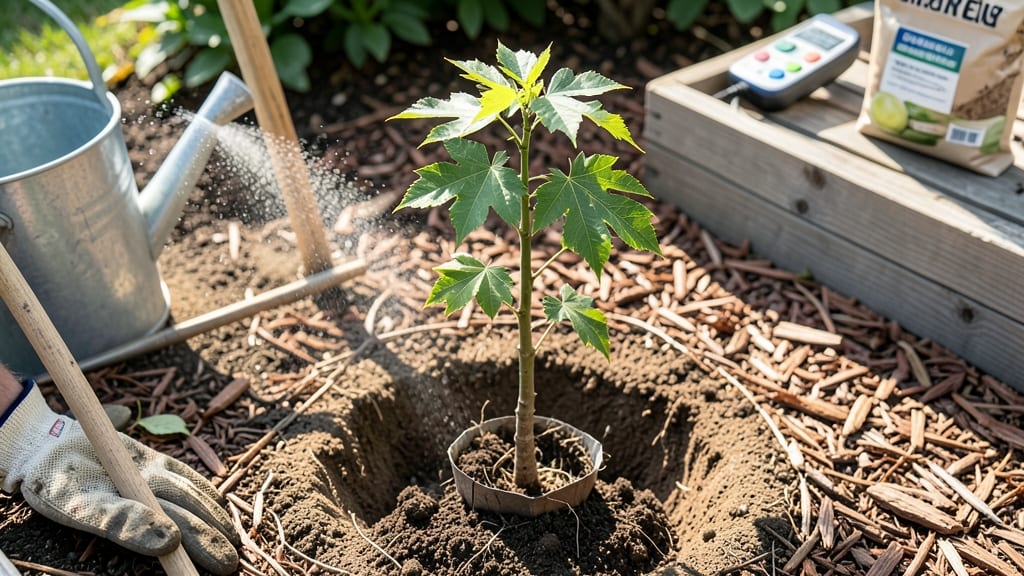
Caring for a maple tree sapling starts with the right soil and watering routine—skimp here, and you’ll fight to keep it alive for years. 🌱 I’ve nursed maples from scraggly sticks to sturdy 6-foot trees by mastering these early habits, and the first two years set the stage for a tree that’ll last centuries.
The secret? Mimicking nature’s rhythm: deep watering when the soil’s dry, mulch that mimics fallen leaves, and pruning that encourages strong branches, not weak ones.
Your sapling needs full sun (at least 6 hours daily) and soil that drains well—maples hate soggy roots. A 3-inch layer of mulch keeps moisture in and weeds out, but keep it 6 inches from the trunk to prevent rot.
Water deeply once a week (or more in summer heat), and fertilize lightly in spring with a balanced formula—too much sends energy to leaves, not roots. Prune only to remove dead branches or crossing limbs; let the tree grow its own structure.
By year three, you’ll see the payoff: a tree with a thick trunk, vibrant fall colors, and branches that reach for the sky. The key is consistency—maples forgive early mistakes but reward patience.
Watch for signs of stress (yellow leaves, slow growth) and adjust water or mulch before problems spiral. With the right care, your sapling will outlive you, its leaves turning your yard into a golden masterpiece every autumn.
This works for sugar maples, red maples, or silver maples—just adjust watering for your climate. In drought-prone areas, water twice a week; in rainy zones, check soil moisture before watering.
The first three years are about building roots and strength, not speed. Stick with it, and you’ll have a tree that’s the envy of the neighborhood—and a legacy for generations.
📚 In This Guide
- What you need
- Instructions
- Tips and common mistakes
- Wrapping up and next steps
What you need
- ● Maple tree sapling: Choose a hardwood maple (e.g., sugar, red, or silver maple) from a reputable nursery—ensure it’s disease-free and 1–3 feet tall.
- ● High-quality potting soil: 5–10 gallons of well-draining, slightly acidic soil (pH 6.0–7.0). Mix with 20% perlite or compost for aeration.
- ● Container or planting hole: For containers: A 5–15 gallon pot with drainage holes (size depends on sapling height).
- ● For ground planting: Dig a hole 2–3x wider than the root ball but no deeper.
- ● Watering can or hose: With a gentle spray nozzle or drip irrigation for consistent moisture.
- ● Organic mulch: 2–3 inches of shredded bark, wood chips, or pine straw to retain moisture and regulate soil temp.
- ● Fertilizer: Balanced, slow-release fertilizer (e.g., 10-10-10) or organic options like composted manure (apply sparingly).
- ● Pruning tools: Bypass pruners (for branches <¼-inch thick).
- ● Loppers (for thicker branches, if needed).
- ● Sterilizing solution (rubbing alcohol or bleach water) to clean tools between cuts.
- ○ Tree support (optional but helpful): Stakes or bamboo poles (2–3, 4–6 feet tall).
- ● Soft tree tie (nylon or fabric strap) to secure sapling without damaging bark.
- ● Soil moisture meter to monitor water levels (especially in containers).
- ● Tree guard or protective wrap for young trunks (e.g., burlap or plastic tree shelters to deter pests).
- ● Epsom salt (1 tbsp/month) for magnesium boost in nutrient-deficient soil.
- ● Pest control: Neem oil or insecticidal soap for aphids or mites.
- ● Weatherproof label to track planting date, variety, and care notes.
Step-by-Step guide to nurturing a maple tree sapling
Here’s how I’ve helped young maples thrive—from their first spring flush to winter’s quiet dormancy.
🌱 Step 1: Plant in the Right Spot with Proper Soil Prep
Maple saplings need full sun to partial shade (at least 6 hours of sunlight daily) and well-draining soil. I dig a hole twice as wide as the root ball but no deeper—this prevents root suffocation. Loosen the sides of the hole with a shovel to encourage root spread.
Mix the native soil with 2-3 inches of compost (or the organic matter you have) to improve drainage and fertility. Place the sapling in the hole so the top of the root ball sits 1 inch above ground level. This prevents water from pooling around the trunk. Tap the soil gently to remove air pockets, then water deeply to settle everything.
💧 Step 2: Water Deeply and Mulch Correctly
Water once a week for the first month, then every 10-14 days thereafter—unless it rains. You’ll know it’s enough when water drains 6-8 inches deep. Overwatering is the biggest mistake; maples hate soggy roots. I use a 3-inch layer of wood chips or shredded bark around the base (but keep it 6 inches away from the trunk to prevent rot).
Replenish mulch annually in early spring—this keeps roots cool in summer and insulated in winter. A healthy sapling will show new growth by late spring, with leaves unfolding in 3-4 weeks after buds swell. If leaves appear yellow or wilted, you’re either overwatering or underwatering.
☀️ Step 3: Protect and Prune for Strong Growth
Young maples need support in windy areas. I stake only if the sapling leans more than 30 degrees—use two stakes on opposite sides and tie loosely with soft fabric strips (never wire, which can girdle the trunk). Prune only to remove dead, broken, or crossing branches in late winter or early spring. Never top the tree—it weakens growth and invites disease.
Watch for aphids or spider mites on new leaves. A strong spray of water usually knocks them off, but if they persist, use neem oil (mix 1 tablespoon per gallon of water). Healthy saplings grow 12-24 inches per year—if yours stunts, check for compacted soil or root binding from the original pot.
⏰ Step 4: Winterize for Long-Term Survival
Before the first hard frost, water deeply one last time to build root reserves. Wrap the trunk with tree guard (not plastic) to protect against voles and rabbits—they’ll gnaw bark in winter. I also mound 4-6 inches of mulch around the base for extra insulation, but never pile it against the trunk.
Prune any dead branches in late winter (February), but avoid heavy pruning—maples bleed sap aggressively. By early spring, you’ll see buds swelling—that’s your sign the tree survived winter. If buds stay dormant past mid-April, check for drought stress or root damage from last year’s planting.
Tips & tricks for perfect maple tree sapling care
These little details make all the difference between a struggling sapling and a thriving young maple that'll reward you for years.
Location Intelligence: That 6 hours of sunlight requirement in Step 1 is non-negotiable, but here's the thing: morning sun is more important than afternoon. Maple leaves burn easily in intense afternoon heat. If you're planting in a spot with afternoon sun, provide afternoon shade using nearby trees or a temporary shade cloth until the sapling establishes its root system.
Root Ball Preparation: Before planting, gently loosen the root ball if it's tightly bound—this encourages roots to spread into the surrounding soil. I like to score the sides of the root ball with a knife if it's very compacted. This creates channels for roots to grow outward immediately. Just don't cut too deep—you're not trying to sever roots, just create pathways.
Watering Wisdom: The 6-8 inch deep watering depth in Step 2 is crucial, but here's how to check: Use a long screwdriver or metal rod to poke the soil after watering. If it slides in easily, you've reached the right depth. I also recommend watering in the morning—this gives roots plenty of time to absorb moisture before evening. The first month is critical, so don't skip that weekly watering even if it rains occasionally.
Mulch Mastery: That 3-inch layer of wood chips isn't just decoration—it's insulation. In summer, it keeps roots cool; in winter, it protects against freezing. But here's what nobody tells you: refresh your mulch every spring. Old mulch breaks down and can suffocate roots, and it loses its insulating properties. Spread a fresh 1-inch layer over the existing mulch rather than removing it all—this saves you work and maintains the soil's structure.
Pro Tips for Maple Tree Sapling Care
- These little details make all the difference between a struggling sapling and a thriving young maple that'll reward y...
- Location Intelligence: That 6 hours of sunlight requirement in Step 1 is non-negotiable, but here's the thing: mornin...
- Root Ball Preparation: Before planting, gently loosen the root ball if it's tightly bound—this encourages roots to sp...
Frequently asked questions
Got questions about keeping your maple tree sapling happy and healthy? Here are answers to some of the most common concerns—so you can avoid pitfalls and enjoy lush growth year-round!
How often should I water my maple sapling?
Water your sapling deeply 1-2 times per week during the first year, ensuring the soil stays moist but not soggy. Once established (after 2-3 years), reduce to every 10-14 days unless drought hits. Pro tip: Mulch around the base (2-3 inches) to retain moisture and protect roots!
When is the best time to plant a maple sapling?
Plant in early spring (just as buds swell) or fall (4-6 weeks before frost). Avoid planting in summer heat or winter—roots struggle to establish in extreme temps. If buying bare-root saplings, plant immediately upon arrival to prevent drying.
Can I prune my sapling right after planting?
Wait until spring (before new growth) to prune. Remove only dead, broken, or crossing branches—never trim more than 25% of the canopy. Why? Pruning stimulates growth, but overdoing it stresses young trees. Use clean, sharp shears to avoid disease.
What pests or diseases should I watch for?
Keep an eye out for aphids, scale insects, or borers (tiny holes in bark). For diseases, watch for tar spot (black spots on leaves) or verticillium wilt (yellowing leaves). Prevent: Remove fallen leaves, prune for airflow, and apply neem oil if pests appear early.
How do I know if my sapling isn’t getting enough sunlight?
Maples thrive in full sun (6+ hours/day). Signs of insufficient light: leggy growth, pale leaves, or weak branches. If shading is unavoidable, choose a sun-tolerant variety like Norway or Sugar Maple. Gradually acclimate saplings to more sun to avoid leaf scorch.
Wrapping up and next steps
Caring for a maple tree sapling is a rewarding journey that combines patience, consistency, and a little green-thumb love! 🌱 By choosing the right location, providing proper watering, mulching, and occasional pruning, you’ll set your young tree up for a lifetime of vibrant growth.
Remember, every expert gardener started with a single sapling—so don’t hesitate to roll up your sleeves and get hands-on!
Ready to watch your sapling flourish? Start by marking your calendar for seasonal check-ins—spring for pruning, summer for deep watering, and fall for mulch refreshes. With these year-round growth secrets, your maple tree will thank you for years to come!