
Plants
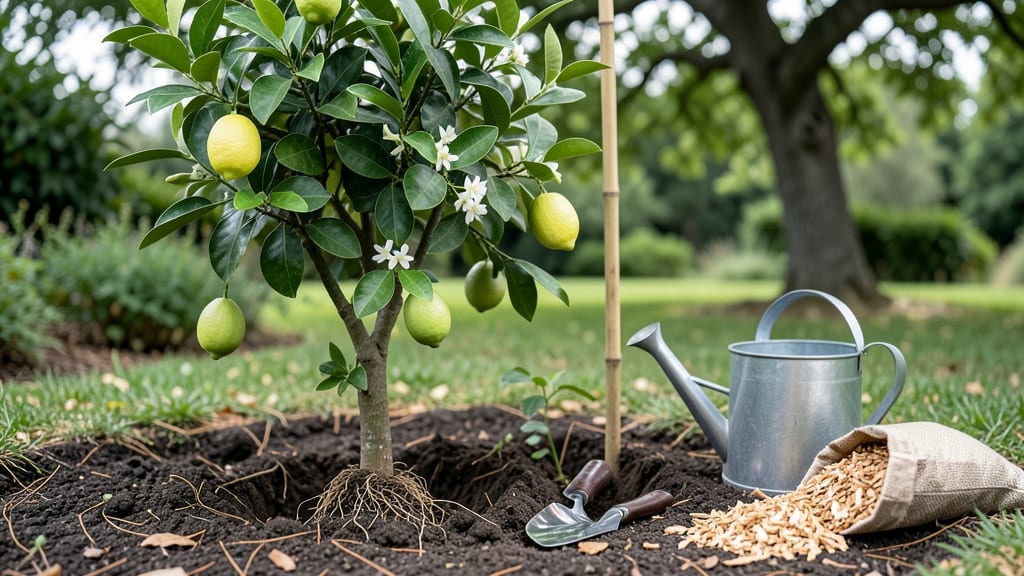
Planting a lemon tree 🍋 in the ground at the right time ensures it thrives for years, not just months—so timing is everything.
Miss the frost-free window, and your sapling could be a sad, brown pile of sticks by spring. Get it wrong, and you’ll spend years waiting for fruit instead of enjoying it.
The good news? With the right timing, your lemon tree can bear fruit in as little as 3 years—and that’s a game-changer for homegrown lemons.
In cooler zones like USDA 6a-10a, the best time to plant is after your last frost—typically March to May. Warmer climates (think Zone 9b-10a) can plant in late fall or winter, avoiding the brutal summer heat.
Below, I’ll break down the exact windows, soil prep secrets, and how to avoid the most common mistakes that kill lemon trees before they even take root.
You’ll learn how to read your local frost dates, the one soil trick that keeps roots happy, and the transplanting hack that cuts shock in half. Let’s get your lemon tree off to the right start.
Optimal planting windows for lemon trees by USDA climate Zones
Lemon trees (Citrus limon) thrive in USDA Zones 9-11, where frost is rare or nonexistent. But even in these zones, timing matters—planting too early in Zone 9a or too late in Zone 10a can stress your tree.
The frost-free window is your golden opportunity to plant, but container-grown vs. bare-root trees need slightly different timing. Let’s break it down by zone and method for maximum survival rates.
For bare-root lemon trees, the best time to plant is late winter to early spring (February–April in Zones 9-10) when roots can establish before summer heat. In Zone 11, you can plant year-round, but November–January avoids peak heat stress.
Container-grown trees, however, are more flexible—they can go in anytime the soil is workable, but spring or fall still wins for root establishment.
🌱 Pro Tip: Check your last frost date (use the National Weather Service or Almanac) and add 2–4 weeks for bare-root trees. Container-grown trees can handle 1–2 weeks earlier since their roots are already established.
Here’s a zone-by-zone breakdown of the best planting windows, including adjustments for container vs. in-ground planting:
| USDA Zone | Bare-Root Planting Window | Container-Grown Planting Window | Key Consideration |
|---|---|---|---|
| 9a | March–April | February–May | Light frost risk; avoid planting before March 15. |
| 9b | February–April | January–May | Minimal frost; prioritize root establishment before summer. |
| 10a | January–March | December–April | Heat stress risk; avoid planting in June–August. |
| 10b–11 | November–February | Year-round (best in cool months) | No frost; plant in cooler seasons for faster growth. |
In Zone 9a, where light frosts can still occur, I recommend waiting until mid-March for bare-root trees to ensure roots aren’t damaged. Container-grown trees can handle February if you’re in a microclimate (like near a heat-retaining wall).
For Zone 10a and above, the real enemy is summer heat, so planting in winter or early spring gives roots time to establish before temperatures rise.
🌡️ Temperature Check: Soil should be at least 60°F (15°C) for planting. Use a soil thermometer to confirm—cool soil slows root growth and increases transplant shock risk.
Container-grown lemon trees have a 2–4 week advantage because their roots are already established. This means you can plant them 1–2 weeks earlier than bare-root trees in the same zone.
For example, in Zone 9b, I plant container-grown trees in January while waiting until February for bare-root ones. This head start helps them outcompete weeds and establish faster.
If you’re in a coastal Zone 9b–10a area, you might see warmer microclimates near the ocean. In these spots, you can plant bare-root trees as early as December, but monitor nighttime temps40°F (4°C) can still harm young trees. Use frost cloth for the first 2–3 weeks if needed.
✂️ Root Pruning Tip: For bare-root trees, trim any roots longer than 6 inches and soak roots in water for 1–2 hours before planting. This encourages faster root regrowth in the new soil.
For container-grown lemon trees, the key is minimizing root disturbance. Gently loosen the root ball and avoid breaking circular roots that form around the pot. If the tree
Soil preparation secrets: pH, drainage, and organic amendments for lemon trees
Lemon trees thrive when planted in soil that mimics their Mediterranean origins—well-draining, slightly acidic, and rich in organic matter. The right soil prep ensures strong root development and bountiful fruit production.
If your soil is heavy clay or alkaline, your tree will struggle to absorb nutrients, leading to stunted growth or leaf drop. Let’s fix that before planting!
Start by testing your soil’s pH level, which should fall between 6.0 and 7.0 for citrus trees. Most garden centers sell affordable test kits, or you can send a sample to a local extension office.
If your soil is too alkaline (above 7.0), mix in elemental sulfur or peat moss to lower the pH gradually over 2-3 months.
| Soil Requirement | Ideal Specification | Amendment Solution |
|---|---|---|
| pH Level | 6.0–7.0 | Elemental sulfur (for alkaline soil) or pine bark fines (for acidic soil) |
| Drainage | Fast-draining (no standing water) | Coarse sand or perlite (20-30% mix) |
| Organic Matter | 30-40% compost | Well-aged compost or worm castings |
| Nutrient Density | High in nitrogen, phosphorus, potassium | Citrus-specific fertilizer (6-6-6 NPK) |
| Microclimate | Warm, frost-free | Mulch with straw (3-4 inches) |
Drainage is non-negotiable for lemon trees—root rot from soggy soil is their #1 killer. If your yard holds water after rain, amend the soil with coarse sand or perlite (20-30% of the mix) to create air pockets.
For heavy clay, consider planting in a raised bed or mound the soil to elevate roots. A simple test: Dig a 12-inch hole, fill it with water, and time how long it drains. If it takes longer than 30 minutes, your soil needs help.
Next, focus on organic matter, which feeds beneficial microbes and retains moisture without suffocating roots. Aim for a 30-40% compost ratio mixed into the top 12 inches of soil. My go-to blend includes well-aged compost, worm castings, and a handful of citrus-specific fertilizer (like 6-6-6 NPK).
Avoid fresh manure—it can burn tender roots and attract pests. Spread a 3-4 inch layer of straw mulch around the base (but keep it 2-3 inches away from the trunk) to regulate soil temperature and reduce weeds.
One common mistake? Over-amending with nitrogen-heavy fertilizers too early. Lemon trees need a balanced NPK ratio (like 6-6-6) to encourage both foliage and fruit production. If you’re planting in spring, hold off on heavy feeding until new growth appears (usually 4-6 weeks post-planting).
In warmer climates (Zones 9-11), you can fertilize lightly every 6-8 weeks, but always water deeply afterward to prevent salt buildup in the root zone.
Finally, don’t forget to loosen compacted soil before planting. Use a garden fork to aerate the area to a depth of 12 inches, breaking up any hardpan. This mimics the loose, well-aerated soil of lemon tree habitats.
After planting, water deeply to settle the soil and encourage root contact with the amendments. Your lemon tree will reward you with glossy leaves and sweet fruit for decades if you nail these soil prep steps!