What this site is
This site is for gardeners who want to understand the quiet work of growing things—how soil remembers, how light shapes a plant’s reach, and why some seeds refuse to wake.
It covers the basics (when to sow, how to prune) and the overlooked (why your tomatoes split, how to coax a stubborn cutting to root).
It is not a catalog of perfect gardens. There are no curated photo spreads of flawless rows or airbrushed blooms.
The focus is on the messy, practical side: the failures, the half-learned tricks, and the small victories that come when you stop treating gardening like a performance and start treating it like conversation.
| What you will find here | What you will not |
|---|---|
| Tips for growing in dry climates | Generic advice that works everywhere |
| Step-by-step guides for propagating plants | Overly scientific jargon without context |
| Lessons from plants that died (and why) | Only success stories with no flaws |
| Practical tools and their real-world limits | Affiliate links disguised as recommendations |
Meet the author
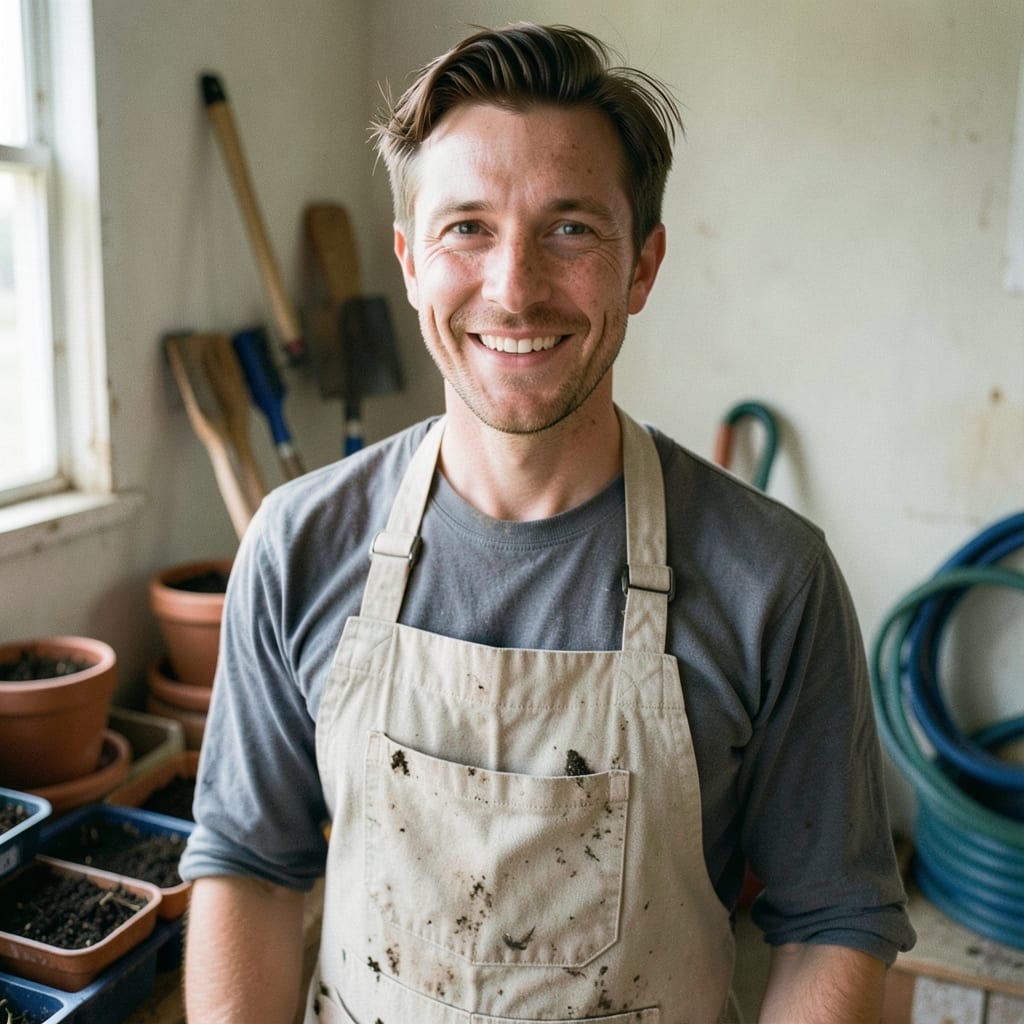
Theo Winfield is the person who still checks the soil pH after every rainstorm and emails strangers who ask about their tomato varieties.
A day in the garden
- 15:40 a.m.
I’m already outside with a thermometer, checking the ground temperature before the sun hits it. The soil is still cold, so the early peas won’t get planted today. The dog watches me from the porch, unimpressed by my excitement over a degree difference.
- 2Just after the school run
I kneel in the back corner to repot the basil that’s outgrown its pot. The roots tangle around my fingers, and I realize I’ve been watering it too much—the soil smells sour. I dump half of it out anyway, because the plant looks happier when I do.
- 3The hour before dinner
I’m weeding the strawberry patch with a butter knife, because the hoes are still in the shed and I don’t want to go back inside. The knife slips on a rock, and I nick my thumb. The strawberries don’t care. Neither does the bleeding.
- 48:30 p.m.
I’m inside now, washing dirt out of the crevices of my hands under the tap. The tomatoes I pruned this morning have already sent out two new shoots. I sigh and turn off the light, because there’s no point in arguing with them.
- 510:17 p.m.
I’m still awake, scrolling through seed catalogs for next year. The dog snores on the bed. Somewhere, a possum is rustling through the compost bin. I make a note to buy more wire for the trellis, then close the laptop. Tomorrow, I’ll forget about it until I see the cucumbers sprawling everywhere.
I keep a small notebook by the back door where I jot down what didn’t work—and why. It’s full of half-answers, like *‘zucchini needs more space’* or *‘the squash vine died because I watered it at noon.’* I refuse to buy anything that promises ‘easy’ growth.
If a tool or soil amendment claims to fix problems without effort, I leave it on the shelf.
The rules we hold ourselves to
These are the things we won’t compromise on, even if they make the site slower or harder to run.
If a plant struggles in clay soil but thrives in sand, we say so. If a trellis only works for vines under 6 feet tall, we mention it. The goal isn’t to sell you on an idea—it’s to help you decide if it’s worth trying.
Some of the best lessons come from seasons where nothing grows as planned. Those posts take longer to write because they’re not just about what worked—they’re about why it didn’t. That’s why you’ll see gaps between updates. Patience is part of the garden, too.
What we still get wrong
We overcomplicate soil advice. We’ve spent years studying pH levels and nutrient ratios, but the truth is that most home gardeners don’t have the time—or the budget—to test everything.
We’re fixing this by adding a ‘soil cheat sheet’ that cuts through the science for people who just want plants that don’t yell at them.
We underestimate how much people hate reading long introductions. Some of the most useful tips get buried in paragraphs about ‘why this matters.’ We’re testing shorter, punchier openings to get to the action faster.
How to reach us
We love hearing about the plants that outsmarted you, the tools that surprised you, or the garden moments that made you laugh.
If you’ve got a story—or a stubborn seedling that won’t quit—there’s a contact page where you can share it. (And if you’re writing to ask about a specific plant problem, include a photo. We’re not botanists, but we’ve all been there.)
The guides are grouped by category: Advice, Aphids, Blooming, Companion Plants, Container Gardens and Diseases.