
Planting
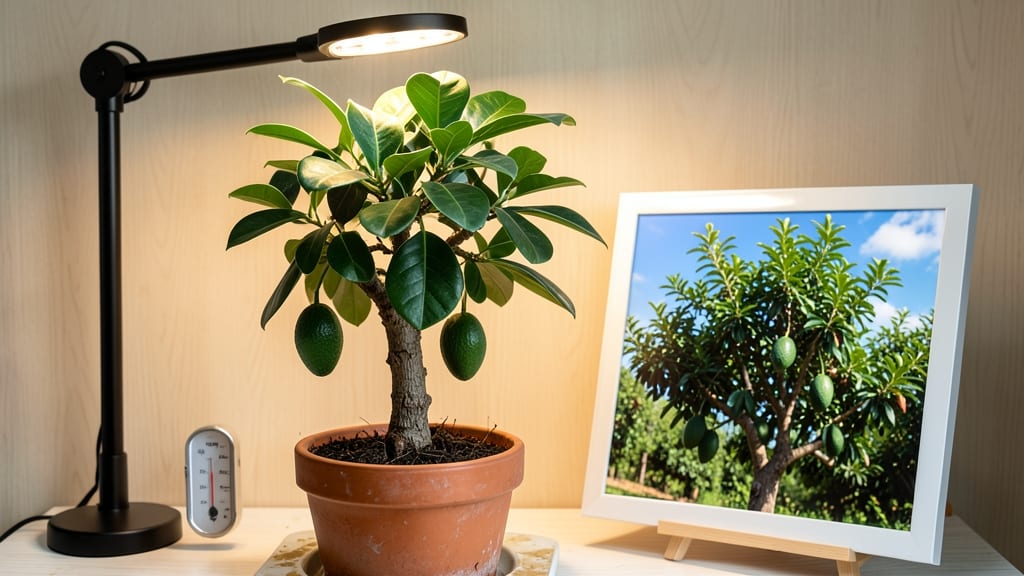
Avocado trees can grow in Ohio but only in containers and with careful winter protection, as they thrive in USDA Zones 9-11 and struggle with Ohio's freezing winters below 20°F.
Ohio's climate presents a major challenge for avocado trees, which naturally prefer tropical conditions with warm winters. 🌱 While you can absolutely grow one in containers, the key lies in protecting it from frost and sub-20°F temperatures that Ohio regularly experiences.
Many growers successfully overwinter their trees indoors or use heavy insulation and heat sources to simulate the tree's native environment. The trade-off? With proper care, you might see fruit in 5-10 years, though Ohio's short growing season can limit full-size harvests.
What's fascinating is how these trees adapt when given the right conditions. I've seen container-grown avocados in Ohio produce fruit when moved to greenhouses during winter months, proving that with enough effort, even our colder climate can support these tropical beauties.
The secret lies in mimicking their natural habitat as closely as possible while working within Ohio's seasonal limitations.
💡 In This Article
- USDA Zones and Avocado Tree Cold Tolerance Limits
- Indoor and Outdoor Growing Hacks for Ohio Avocado Trees
USDA Zones and avocado tree cold tolerance limits
Avocado trees (Persea americana) are tropical plants that evolved in USDA Zones 9-11, where winter temperatures rarely drop below 25°F. Their cold sensitivity stems from a delicate balance of cellular processes.
When exposed to 32°F or lower, the tree's leaves begin to show frost damage as ice crystals form in the cell walls, rupturing them. Ohio's winters frequently dip well below this threshold, often reaching -10°F to 20°F in colder regions, making outdoor growth nearly impossible without intervention.
The tree's roots are particularly vulnerable. Avocado roots contain a high concentration of water, which freezes and expands at 32°F, causing irreversible damage to the root system.
Even brief exposure to 28°F can kill young trees, while mature specimens may survive short periods at 25°F but will suffer long-term stress.
This explains why avocados thrive in Florida's Zone 10 climate but struggle in Ohio's Zone 5-6 winters. 🌡️ The tree's native habitat in Mexico and Central America receives minimal temperature fluctuations, making it poorly adapted to Ohio's dramatic seasonal shifts.
What makes this even more challenging is the tree's growth cycle. Avocados require 200-300 frost-free days annually to produce fruit, a threshold Ohio typically doesn't meet. The tree enters dormancy in cooler months, but Ohio's short growing season (about 150 days) limits its ability to complete necessary growth stages.
This mismatch explains why container-grown avocados in Ohio often produce smaller fruit or none at all without extended greenhouse support.
Interestingly, different avocado varieties exhibit varying cold tolerance. Mexican varieties like 'Hass' are slightly more cold-hardy than Guatemalan or West Indian types, able to tolerate brief dips to 28°F if acclimated. However, none can withstand Ohio's winter extremes without protection.
The tree's leaves also contain waxes that help prevent water loss in dry climates, but these same waxes make them more susceptible to frost damage by creating ice nucleation sites.
For Ohio growers, understanding these biological limits is crucial. The tree's inability to handle freezing temperatures isn't just about survival—it affects every aspect of growth, from root development to fruit production.
This is why container culture becomes essential: it allows growers to move the tree indoors during winter, effectively creating a microclimate that mimics the tree's tropical needs. 🌿 The key lies in understanding these physiological constraints and working around them through careful cultural practices.