
Trees
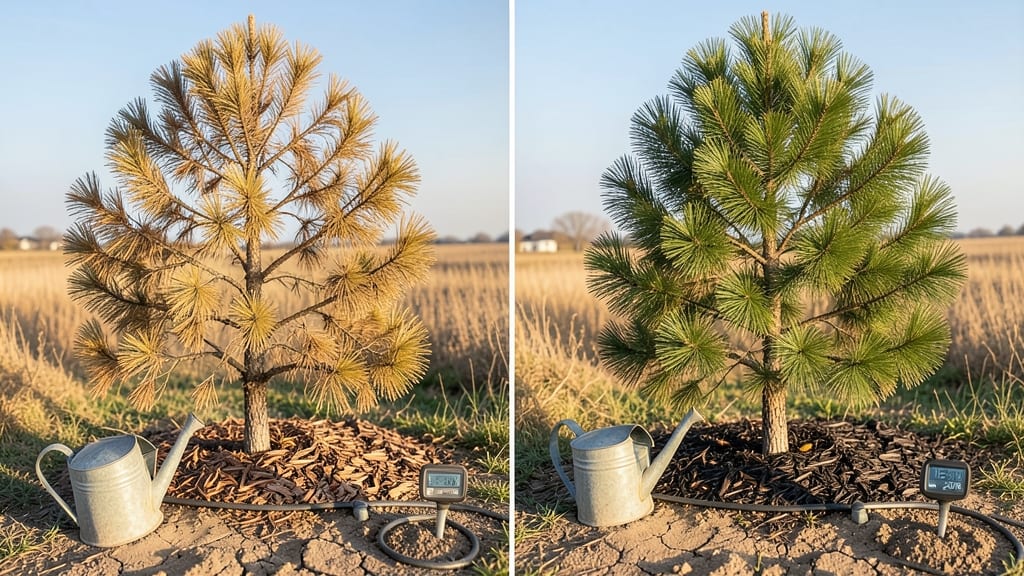
Your pine tree’s drooping needles and cracked bark aren’t just signs of age—they’re drought stress crying out for help. 🌲 I’ve watched my own mature pine trees go from vibrant green to brittle brown in just one scorching summer, and the good news?
You can bring them back with the right moves. The first clue is often needle browning starting at the tips, followed by stunted growth and that dreaded bark splitting. Pines store water in their needles, so when they’re thirsty, they show it fast.
The fix starts with deep watering—not just a sprinkle at the surface, but soaking the root zone until water drains 12 inches down. Within weeks, you’ll see fresh green needles pushing out if you combine watering with 3-4 inches of mulch to lock in moisture.
The key is consistency: pines hate dry spells, but they also hate soggy roots. Adjust your watering schedule based on rainfall and soil type—sandy soil drains fast, while clay holds moisture longer. This works for any pine species, from towering ponderosas to dwarf varieties.
The secret? Patience and prevention—once you spot the early warning signs, you’ve got a fighting chance to revive your tree before it’s too late.
Root Causes Of Tree Stress
Understanding why drought stress affects pine trees starts with their unique biology and environmental demands. Pines are resilient, but they’re not drought-proof—especially when multiple factors converge. Here’s a breakdown of the key triggers:
Pine trees rely on deep, consistent moisture to sustain their extensive root systems. When soil dries out—whether due to prolonged heat, poor irrigation, or sandy soil—roots struggle to absorb water efficiently. Here’s why it’s critical:
- Root Zone Shrinkage: Pine roots, particularly fine feeder roots, are highly sensitive to dehydration.
When soil moisture drops below 30-40% of field capacity, roots begin to die back, reducing the tree’s ability to uptake water and nutrients. - Hydraulic Failure: As soil dries, water columns in root xylem (the tree’s plumbing) break under negative pressure, causing cavitation—air bubbles that block water flow.
This forces the tree to redirect resources, weakening growth and defense mechanisms. - Shallow vs. Deep Roots: While some pines (like loblolly or slash pines) have deep taproots, others (like ponderosa pines) spread shallow lateral roots. Clay or compacted soil exacerbates stress by limiting root expansion, trapping moisture just out of reach.
Actionable Insight: 💡 Test soil moisture 6 inches deep with a moisture meter or the "squeeze test" (damp soil should hold shape when pressed). If dry, deep watering (12+ inches) with soaker hoses or drip irrigation is essential.
Pine trees lose water through transpiration—a process where leaves release vapor to cool the tree. But when temperatures soar (especially above 90°F/32°C), the demand for water outpaces supply, leading to physiological drought even in moderately moist soil.
- Stomatal Closure: To conserve water, pine needles close stomata (pores), but this also blocks CO₂ intake, halting photosynthesis.
The tree’s energy reserves deplete rapidly. - Heat Stress Proteins: Pines produce heat shock proteins to protect cells, but prolonged heat exhausts these defenses, leading to needle scorch (brown, crispy tips) or crown dieback. - Urban Heat Islands: Trees in cities or paved areas suffer 20–30°F hotter microclimates, accelerating stress. Dark bark (common in pines) absorbs heat, further raising canopy temperatures.
Actionable Insight: ✨ Mulch heavily (3–4 inches of wood chips) to retain moisture and cool roots. Avoid midday watering (water early morning or late evening) to reduce evaporation.
Wind doesn’t just dry out trees—it physically stresses them by increasing transpiration rates and tearing protective bark. Pines, with their thin, needle-covered branches, are particularly vulnerable.
- Increased Transpiration: Wind whips away the boundary layer of humid air around needles, forcing them to work harder to retain moisture. This is why exposed hilltops or open fields see higher drought stress. - Bark Damage: High winds can strip bark, exposing xylem tissue to air and pathogens.
Even minor wounds disrupt the tree’s water transport system. - Root Displacement: Shallow-rooted pines may lose anchorage in dry, cracked soil, leading to uprooting or lean—which further stresses the remaining root system.
Actionable Insight: 🌡️ Prune strategically to reduce wind resistance (remove dead branches or those rubbing together). Windbreaks (like evergreen hedges) can lower exposure by 30–50%.
A stressed pine tree is a weakened immune system—inviting pests and pathogens that worsen drought effects. Common culprits include:
| Pest/Disease | How It Exacerbates Stress | Signs to Watch For |
|---|---|---|
| Bark Beetles | Bore into phloem, disrupting water/nutrient flow. Females release pheromones, attracting swarms. | Sawdust-like frass at base, D-shaped exit holes. |
| Fusiform Rust | Fungal infection clogs xylem, reducing water transport. Spreads via windborne spores. | Cankers, swollen, cracked bark. |
| Spider Mites | Feed on sap, causing needle yellowing and premature drop. Thrive in dry conditions. | Fine webbing on needles, bronzing (silvering). |
Actionable Insight: 🎯 Monitor for early signs (e.g., beetle holes, rust pustules). Beneficial nematodes or horticultural oil sprays (for mites) can help without harming the tree further.
Even with adequate water, soil imbalances can mimic drought stress by limiting nutrient uptake or root function.
- Low Organic Matter: Organic-rich soil holds 4x more water than sandy loam. Pines in mineral-heavy or clay soils suffocate, restricting root growth. - Nutrient Deficiencies: Magnesium (Mg) and potassium (K) are critical for drought tolerance.
Deficiencies (seen as yellowing between needle veins) force the tree to allocate energy to survival over growth. - Salt Buildup: In arid regions or near roads (from de-icing), salt toxicity damages root cell membranes, reducing water absorption.
Actionable Insight: 📊 Test soil pH and nutrients (ideal range: pH 5.0–6.5 for pines). Amend with compost or sulfur if needed, and flush salt-affected soil with deep watering.
Sometimes, the problem isn’t nature—it’s human activity disrupting the tree’s environment.
- Over-Pruning: Removing >25% of foliage in one season reduces the tree’s ability to photosynthesize and transpire efficiently.
- Compacted Soil: Foot traffic, construction, or heavy machinery crush roots, limiting their access to moisture and oxygen.
- Improper Mulching: Volcanic mulch piles (touching the trunk) trap heat and moisture, promoting rot. Too little mulch leaves roots exposed to drying winds.
Actionable Insight: 👨🍳 Aerate compacted soil with a garden fork or top-dress with compost. Keep mulch 3–4 inches deep, 6+ inches from the trunk.
Reviving Your Pine Tree After Stress
When your pine tree shows signs of drought stress, acting quickly can make all the difference. Below, we’ve mapped out practical, step-by-step solutions tailored to the root causes—whether it’s soil issues, watering mistakes, or environmental factors. Follow these fixes to nurse your tree back to health and prevent future struggles.
Drought stress often starts with inconsistent watering. Pines need deep, infrequent watering—not light, frequent sprinkles—to encourage strong root growth.
✅ What to Do:
- 🔥 Adjust Your Watering Schedule:
- Newly planted pines: Water 2–3 times per week for the first year, providing 1–2 inches of water per session (check soil moisture 3 inches deep—if dry, water again).
- Mature pines: Water once every 1–2 weeks (unless in extreme heat/drought), giving 2–3 inches of water per session. Focus on the root zone (out to the tree’s drip line), not the foliage.
- 🌡️ Pro Tip: Water early morning (5–9 AM) to reduce evaporation and fungal risks. Avoid evening watering, which can promote disease.
- 👨🍳 Upgrade Your Watering Method: - Drip irrigation or soaker hoses deliver water directly to roots with minimal waste. - Mulch heavily (3–4 inches) with wood chips or pine straw to retain moisture and regulate soil temperature.
Keep mulch 6 inches away from the trunk to prevent rot. - 💡 Avoid sprinklers—they waste water and encourage needle diseases.
- ⏰ Monitor Soil Moisture:
- Use a moisture meter or the "squeeze test" (grab a handful of soil—if it crumbles easily, it’s too dry; if it sticks together, it’s soggy).
- Clay soil? Amend with compost or sand to improve drainage. Sandy soil? Add organic matter to boost water retention.
Poor soil drainage, compacted roots, or nutrient deficiencies weaken pines during drought. Let’s give your tree’s roots the support they need.
✅ What to Do:
- 🔪 Aerate Compacted Soil:
- Use a manual aerator or garden fork to poke holes 6–12 inches deep in the root zone. This helps water and oxygen reach deep roots.
- For heavily compacted areas, consider deep tilling (caution: don’t damage roots!) or gypsum amendments to break up clay.
- 🍳 Fertilize Smartly (But Sparingly): - Slow-release, organic fertilizer (like 10-10-10 or compost) in early spring provides steady nutrients without burning roots. - Avoid high-nitrogen fertilizers during drought—they encourage leafy growth but stress roots further. - 💡 Test your soil first!
A simple DIY kit (or lab test) tells you if your pine needs more phosphorus (for roots) or potassium (for drought resistance).
- 🌿 Add Mycorrhizal Fungi:
- These natural root helpers improve water and nutrient uptake. Mix mycorrhizal powder into the soil during planting or watering.
- 🎯 Best for: Newly planted pines or trees in poor soil.
Even with proper watering, intense sun, wind, or heat can push a pine over the edge. Protect your tree with these low-effort adjustments.
✅ What to Do:
- 🌳 Provide Temporary Shade:
- Use shade cloth (30–50% coverage) on the southwest side of the tree during peak summer heat (11 AM–3 PM).
- 💡 Quick fix: Place a white tarp or reflective blanket on the ground near the tree to bounce light away.
- 🔥 Reduce Wind Exposure:
- Plant windbreak shrubs (like arborvitae or juniper) on the prevailing wind side.
- For young pines: Stake the tree gently if it’s bending excessively, but avoid tight ties that restrict growth.
- 🥗 Mulch Like a Pro:
- A 4-inch layer of mulch (wood chips, bark, or straw) retains 25% more moisture and cools roots.
- ✨ Bonus: Mulch also suppresses weeds, reducing competition for water.
If your pine’s needles are browning, brittle, or falling, it’s in critical condition. Act fast with these intensive recovery steps.
✅ What to Do:
- 💦 Deep Watering + Anti-Transpirant Spray:
- Water deeply (2–3 inches) every 3–4 days for 2–3 weeks, even if it rains.
- Spray anti-transpirant (like Wilt-Pruf) on needles to reduce water loss while roots recover.
- 🌿 Prune Dead Branches (But Not Too Much!):
- Remove only brown, brittle needles and branches—never more than 20% of the canopy.
- ⚠️ Warning: Avoid pruning during drought; it stresses the tree further.
- 🍎 Boost with a Root Stimulator:
- Mix hydrogel crystals or root growth stimulator (like Sea90) into water during deep watering to revive damaged roots.
Once your pine recovers, lock in its resilience with these long-term strategies.
- 🌱 Plant in the Right Spot:
- Choose native pine varieties suited to your climate and soil.
- Avoid low-lying areas where water pools—pines hate soggy roots.
- 📅 Watering Calendar:
- First year: Water 2–3x/week (deep soaks).
- Years 2–5: Water every 1–2 weeks (unless drought conditions).
- Mature trees: Water monthly in normal conditions, but increase frequency in heatwaves.
- 🌡️ Soil Prep Before Planting:
- Amend clay soil with sand/compost.
- For sandy soil, mix in peat moss or coconut coir to hold moisture.
- 🌿 Mulch Year-Round:
- Refresh mulch annually—don’t let it break down into a thin layer.
With these targeted fixes, your pine tree should show new growth within 4–6 weeks. Stay consistent, and your tree will thank you with vibrant needles and sturdy branches for years to come! 🌲💚
Frequently asked questions
How do I tell if my pine tree is suffering from drought stress?
Look for these key signs: needle browning starting at the tips, stunted growth, and bark splitting. Pines also develop dry, brittle needles that fall easily, and the tree may appear less vibrant overall. Check the soil—if it's dry 6 inches deep, that's your first warning.
Why does my pine tree need deep watering instead of frequent light watering?
Pine trees develop deep root systems to access moisture. Light watering only wets the surface, encouraging shallow roots that dry out faster. Deep watering (12+ inches) forces roots to grow downward, making your tree more drought-resistant over time.
Can I overwater my pine tree and cause problems?
Yes! While drought stress is common, waterlogged soil suffocates roots and leads to root rot. Water only when the top 3-4 inches of soil are dry, and ensure proper drainage. Pines prefer well-draining soil—amend clay soil with sand or compost if needed.
What's the best mulch to use for drought-prone pine trees?
Use 3-4 inches of organic mulch like wood chips or pine straw. This helps retain 25% more moisture while regulating soil temperature. Keep mulch 6 inches away from the trunk to prevent rot and pest issues.
How long does it take to see improvement after fixing drought stress?
With proper care, you should see new green needles within 4-6 weeks. However, severely stressed trees may take 6-12 months to fully recover. Consistency is key—don't stop watering once you see improvement!