
Trees
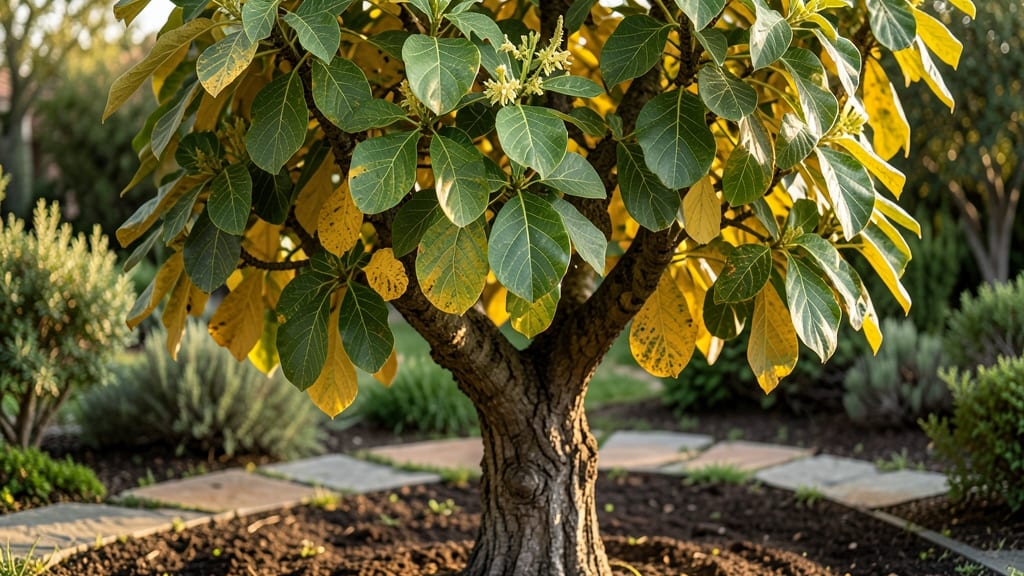
Your avocado tree’s leaves turning yellow might signal root rot—but there’s hope. 🌱 The first step is checking for three key signs: mushy brown roots, foul-smelling soil, or leaves that yellow from the bottom up.
I’ve saved multiple trees by catching this early, and the fix is simpler than you’d think.
Overwatering is the #1 culprit, but pests like root weevils or fungal infections can also trigger it. Look for gummy sap at the base of the trunk (a sign of stress) or tiny holes in leaves (pest activity).
The good news? Healthy roots mean your tree can bounce back—even if it looks bad now.
Start by letting the soil dry out completely between waterings and repot in fresh, well-draining mix. If you spot pests, neem oil or diatomaceous earth can help. Within 4-6 weeks, you’ll see new green growth as the roots recover—just don’t rush the process.
Prevention is easier than repair: water deeply but infrequently, use pots with drainage holes, and avoid soggy soil. Your avocado’s glossy leaves will return faster than you expect—once you know what to watch for.
Root Causes Behind Yellowing Leaves
When your avocado tree’s leaves start turning yellow, it’s rarely a random act of nature—it’s usually a cry for help from the roots upward. Understanding the why behind the discoloration is the first step to reviving your tree.
Below, we break down the most common culprits, backed by science, so you can diagnose the issue like a pro.
Avocado trees are drought-tolerant natives of arid regions, meaning they hate soggy roots. When soil stays too wet for too long, oxygen can’t reach the roots, leading to anaerobic conditions—a suffocating environment that triggers yellowing leaves (a condition called chlorosis).
- How it happens: Overwatering, compacted or clay-heavy soil, or containers without drainage holes trap excess moisture. Root rot fungi (Phytophthora spp.) and bacteria (Pseudomonas) thrive in these conditions, blocking nutrient uptake.
- Tell-tale signs:
- Yellowing starts at the bottom leaves and spreads upward.
- Leaves may feel soft or mushy when touched.
- Roots appear dark, mushy, or smell foul when inspected.
- Science backup: Roots need 10–15% oxygen to function. Waterlogged soil drops oxygen levels to <1%, suffocating roots and halting nutrient absorption (especially iron and nitrogen, critical for chlorophyll production).
💡 Pro Tip: Stick your finger 2–3 inches into the soil—if it’s damp, wait before watering. Avocado trees prefer dry soil between waterings (except in extreme heat).
While overwatering is the usual suspect, chronic underwatering can also trigger yellowing by starving the tree of essential nutrients. Avocado trees are shallow-rooted and rely on consistent moisture to access nutrients like magnesium, potassium, and zinc—deficiencies of which cause interveinal chlorosis (yellowing between leaf veins).
- How it happens: Prolonged drought or inconsistent watering forces roots to compete aggressively for moisture, leading to oxidative stress. The tree prioritizes survival over leaf health, shedding chlorophyll to conserve energy.
- Tell-tale signs:
- Yellowing appears on older leaves first (unlike overwatering, which hits new growth).
- Leaves may curl or crisp at the edges.
- Soil pulls away from the pot or hardens like concrete.
- Science backup: Nutrient uptake is water-dependent. Roots absorb minerals via osmosis, but dry soil creates a barrier, reducing uptake by up to 70% (University of California Agriculture Extension).
💡 Pro Tip: Water deeply once a week (or every 5–7 days in heatwaves) until water drains from the bottom. Mulch with wood chips to retain moisture—this mimics their natural habitat.
Pathogens like root rot (Fusarium or Pythium) and bacterial leaf spot (Xanthomonas) don’t just attack roots—they hijack the tree’s vascular system, disrupting nutrient flow. Yellowing leaves are often a secondary symptom of a deeper infection.
- How it happens:
- Fungal root rot: Spores in overwatered soil infect roots, clogging xylem vessels (the tree’s plumbing).
- Bacterial infections: Often spread via contaminated tools or splashing water, causing leaf spots that expand and yellow.
- Tell-tale signs:
- Yellowing paired with blackened roots or stem lesions.
- Small, water-soaked spots on leaves that turn yellow/brown.
- Stunted growth or oozing sap from the trunk.
- Science backup: Pathogens release toxins that disrupt chlorophyll synthesis. For example, Pythium produces cellulases, enzymes that break down leaf cell walls, accelerating yellowing.
💡 Pro Tip: Sterilize pruners with 70% isopropyl alcohol between cuts. For fungal root rot, apply copper fungicide (follow label rates) and repot in sterile, well-draining soil.
Avocado trees are sensitive to extreme conditions, and sudden changes—like scorching sun, cold drafts, or salt buildup—can shock the system, leading to yellowing. Think of it as the tree’s emergency response to preserve energy.
- How it happens:
- Sunburn: Direct afternoon sun (especially in hot climates) causes photooxidative stress, breaking down chlorophyll.
- Cold damage: Temperatures below 30°F (-1°C) disrupt cell membranes, halting nutrient transport.
- Salt/chemical buildup: Over-fertilizing or tap water with high sodium/magnesium can osmotically stress roots, reducing water uptake.
- Tell-tale signs:
- Yellowing on sun-exposed leaves (sunburn) or new growth (cold shock).
- White crust on soil surface (salt buildup).
- Leaves may scorch or drop prematurely.
- Science backup: Chlorophyll is light-dependent—too much UV radiation generates reactive oxygen species (ROS), which degrade pigments. Cold stress denatures enzymes like nitrate reductase, critical for nitrogen metabolism.
💡 Pro Tip: Gradually acclimate trees to full sun (harden off over 2–3 weeks). Use rainwater or filtered water to avoid salt buildup, and protect from frost with burlap wraps.
Now that you know the why, your next step is to match the symptoms to the solution. Stay tuned for our “3 Signs of Root Rot” section to learn how to rescue your tree before it’s too late!
Revive Your Avocado Tree Now
Yellowing leaves on your avocado tree aren’t just an eyesore—they’re a cry for help. The good news? Most causes of yellowing leaves are fixable with the right steps. Below, we’ve mapped out practical solutions tailored to the root causes (literally and figuratively), from overwatering to nutrient deficiencies.
Follow these fixes, and your tree will bounce back to lush, vibrant green in no time.
---
If your avocado tree’s leaves are yellowing and the soil feels soggy or smells like rot, root rot is likely the culprit. This fungal infection thrives in waterlogged conditions, choking the roots and starving the tree of oxygen.
#### Step-by-Step Rescue Plan 1. 🚰 Stop Watering Immediately - Let the top 2–3 inches of soil dry out completely before watering again. Stick your finger in the soil—if it’s damp past your first knuckle, wait.
2. 🪴 Improve Drainage - Repot (if in a container): Use a pot with drainage holes and fresh, well-draining potting mix (cactus/succulent mix works well). Add perlite or pumice (20%) to enhance aeration. - In-Ground Trees: Amend the soil with coarse sand, gravel, or compost to break up compacted areas.
Consider a French drain if water pools around the base.
3. 🧴 Fungal Treatment (If Severe) - Sprinkle copper fungicide or hydrogen peroxide (3%) around the root zone to combat the fungus. Follow label instructions. - For advanced rot, prune affected roots (sterilize tools with rubbing alcohol first) and treat with mycorrhizal fungi to promote healthy root regrowth.
4. 🌱 Monitor & Adjust - Water only when the soil is bone-dry (every 1–2 weeks in warm climates, less in winter). - Pro Tip: 💡 Use a moisture meter to avoid guesswork—aim for 40–60% moisture at the root level.
--- Yellowing leaves with green veins often signal a nitrogen deficiency, while yellowing between veins may point to iron or magnesium issues (common in alkaline soils).
#### Quick Fixes by Symptom | Symptom | Likely Cause | Solution | |---------------------------|------------------------|------------------------------------------------------------------------------| | Yellow lower leaves | Nitrogen deficiency | Apply balanced fertilizer (10-10-10) or compost tea every 4–6 weeks. | | Yellow between veins | Iron/chlorosis | Use chelated iron supplement (like Ironite) or sulfur to acidify soil (pH 6.0–7.0). | | Purple stems/leaves | Phosphorus deficiency | Feed with bone meal or a high-phosphorus fertilizer (5-10-10). | | Leaf edges browning | Magnesium deficiency | Spray Epsom salt solution (1 tbsp/gallon water) monthly or work dolomitic lime into the soil. |
Pro Tip: 🌡️ Test your soil (DIY kits cost $10) before fertilizing—overdoing it burns roots!
--- Avocado trees love bright, indirect light—too much direct sun (especially in hot climates) causes sunburn, leading to yellowing and crispy edges.
#### How to Cool It Down 1. 🌳 Provide Shade - Install shade cloth (30–50%) during peak afternoon sun (12–4 PM). - Plant fast-growing shade trees (like eucalyptus or jacaranda) nearby for natural protection.
2. 💦 Increase Humidity - Mist leaves daily in dry climates or use a pebble tray under the pot. - Group potted trees together to create a microclimate.
3. 🌱 Adjust Watering for Heat - Water deeply in the morning (not at night) to reduce evaporation and fungal risk. - Mulch heavily (3–4 inches of wood chips or straw) to retain moisture and cool roots.
--- Yellowing leaves can also stem from sap-sucking pests (like spider mites or scale) or bacterial/fungal infections.
#### Pest & Disease Solutions | Pest/Disease | Signs | Fix | |---------------------------|------------------------------------|----------------------------------------------------------------------------| | Spider Mites | Yellow stippling, webbing | Spray neem oil or insecticidal soap weekly until gone. | | Scale Insects | Sticky residue, black sooty mold | Scrape off with a soft brush, then treat with horticultural oil. | | Root-Knot Nematodes | Stunted growth, yellowing leaves | Plant marigolds (natural nematicide) nearby or use beneficial nematodes. | | Bacterial Leaf Spot | Yellow halos, dark spots | Prune infected leaves, apply copper fungicide, and improve airflow. |
Pro Tip: ✨ Inspect leaves weekly—catch pests early with a magnifying glass!
--- Once your avocado tree is back in shape, lock in its health with these habits: - 📅 Water on a schedule: Stick to a consistent routine (e.g., every 7–10 days in summer, less in winter). - 🌱 Prune properly: Remove dead or yellow leaves to redirect energy to healthy growth. - 🔄 Rotate pots: If growing in containers, rotate the pot monthly for even sunlight exposure. - 🌿 Mulch annually: Refresh mulch to retain moisture and regulate temperature. - 🧪 Test soil every 2 years: Adjust pH/fertilizer based on results.
--- Remember: Patience is key—some trees take weeks to months to recover fully. Stick with the fixes, and your avocado tree will be thriving with glossy green leaves in no time! 🌿💚
Frequently asked questions
Why do my avocado tree's leaves turn yellow first at the bottom?
This is often a sign of root stress or nutrient deficiency. Avocado trees prioritize keeping younger leaves alive, so older leaves yellow first when roots can't absorb enough water or nutrients. Check for soggy soil (overwatering) or dry, hard soil (underwatering). If the yellowing spreads upward quickly, root rot may be developing.
Can I save my avocado tree if the roots smell bad?
Yes, but act fast! A foul root smell indicates fungal root rot. Immediately stop watering and repot in fresh, well-draining soil. Trim any mushy, black roots with sterilized scissors, then treat with copper fungicide. With proper care, new healthy roots can regrow in 4-6 weeks.
Is yellowing always bad? What about normal shedding?
Avocado trees naturally shed some leaves, especially in winter or when transitioning to new growth. Healthy shedding shows leaves falling cleanly without yellowing first. Watch for more than 20% leaf loss or yellowing before dropping—this signals stress. A few scattered yellow leaves? Probably normal.
How often should I fertilize if my leaves are yellow from deficiencies?
Start with a balanced fertilizer (10-10-10) every 4-6 weeks during growing season (spring-fall). For specific deficiencies: Use chelated iron monthly for chlorosis, or Epsom salt solution every 2 weeks for magnesium issues. Always water thoroughly after fertilizing to prevent root burn.
Will pruning yellow leaves help my avocado tree recover?
Yes! Pruning removes the burden of supporting unhealthy leaves, letting the tree focus energy on new growth. Cut yellow leaves at the base with clean shears, and dispose of severely infected ones. For large branches, make cuts just above a leaf node. Just don't prune more than 25% of the canopy at once.