
Flowers
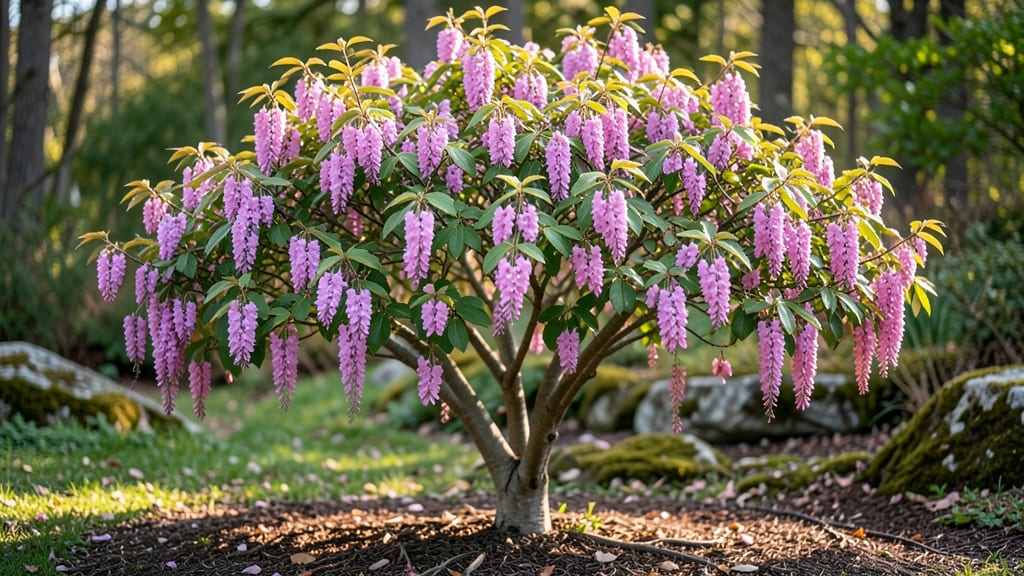
The tree with little pink flowers that transforms your yard into a pollinator paradise is the Japanese cherry (Prunus serrulata)—its delicate blooms arrive like spring’s first whisper, and the canopy stays stunning long after petals fall. 🌸 I planted mine five years ago, and every April, bees and butterflies descend as if summoned by magic, while the scent lingers for weeks.
The key to making it thrive? Full sun, well-drained soil, and patience—it takes 3-5 years for the full floral display, but once it arrives, neighbors will ask what you’ve done.
This isn’t just a spring spectacle. In summer, the glossy green leaves provide dappled shade, and by fall, the branches turn a soft gold before winter’s bare silhouette adds structure to the garden. Pair it with salvia for summer blooms or hostas for contrast—both love the same sunny spot.
The tree’s graceful shape also works as a focal point in small yards, where its height (20-30 feet) feels grand without overwhelming.
What you’ll love most is how effortlessly it fits into any design—urban courtyards, cottage gardens, or modern landscapes. Just avoid heavy clay soil (amend with compost) and prune lightly after flowering to encourage next year’s blossoms.
The trade-off? A little mess in spring (those petals!), but the payoff is worth every petal.
Perfect for zones 5-8, this tree handles heat and humidity better than most, making it a standout in southern climates too. For a low-maintenance alternative with similar charm, consider cloudberry (Rubus chamaemorus)—its pinkish-white blooms and edible fruit add another layer of interest.
Either way, you’re planting a living work of art that keeps giving.
Nature’s Blooming Triggers Explained
If you’ve ever admired a tree adorned with delicate pink blossoms and wondered why it flowers so beautifully, the answer lies in a mix of biology, environmental cues, and genetic quirks.
These trees don’t just bloom randomly—they follow precise signals from their surroundings. Let’s break down the science behind their floral displays.
Every tree has an internal clock governed by its genetic makeup. Some species, like the Cercis canadensis (eastern redbud) or Prunus serrulata (Japanese cherry), are hardwired to produce pink flowers in early spring. These genes activate in response to:
- Photoperiodism: Shorter days and longer nights in late winter signal the tree to prepare for blooming. Think of it as nature’s countdown—once daylight drops below a certain threshold, the tree “knows” it’s time.
- Chilling Requirements: Many flowering trees need a period of cold temperatures (often called vernalization) to break dormancy. Without enough winter chill (below 45°F/7°C for weeks), buds may fail to open, leaving you with a tree full of promise but no pink flowers.
- Age and Maturity: Young trees may produce sparse or no flowers until they reach 5–10 years old, as they prioritize root and trunk growth over reproduction.
Actionable Tip: If your tree isn’t flowering, check its species’ native climate. Some, like Lagerstroemia indica (crape myrtle), need full sun and heat to trigger blooms, while others, like Magnolia stellata, thrive in cooler microclimates. 🌡️
Flowers are energy-intensive, so trees only produce them when conditions are just right. Three key factors influence blooming:
| Factor | How It Works | What Happens If It’s Wrong? |
|---|---|---|
| Sunlight | Most pink-flowering trees need 6+ hours of direct sun daily to photosynthesize enough sugar for blooms. Without it, they’ll produce leaves but skip flowers. | Sparse or no flowers; tree may focus on leafy growth instead. |
| Temperature | Optimal blooming temps vary by species. For example: | Delayed or failed blooming; buds may drop before opening. |
| Water | Consistent moisture (but not soggy soil) ensures buds stay hydrated. Drought stress can cause buds to abort. | Wilting buds or flowers that fall prematurely. |
Pro Tip: If your tree is in a shady spot, consider thinning nearby branches or transplanting it to a sunnier location. For heat-loving species like Bradford pear, mulch with wood chips to retain soil moisture during dry spells. 💡
Many pink-flowering trees rely on pollinators (like bees, butterflies, and hummingbirds) to reproduce. Their blooms are often:
- Fragrant and colorful to attract pollinators.
- Rich in nectar to reward visitors.
- Timed for pollinator activity (e.g., early spring for bees emerging from hibernation).
If pollinators are scarce, some trees may:
- Produce fewer flowers (since they’re “wasting” energy on unpollinated blooms).
- Shift to self-pollination, resulting in smaller or less vibrant flowers.
- Drop buds early if no pollinators arrive.
Actionable Tip: Plant companion flowers near your tree (like lavender or coneflowers) to attract pollinators. Avoid pesticides, which can harm bees. 🐝✨
Trees are resilient, but stress from disease, pests, or poor care can halt flowering. Common stressors include:
- Root damage: Compacted soil or construction nearby can starve roots, diverting energy away from flowers.
- Pests: Aphids or spider mites sap nutrients, leading to weak blooms. Look for sticky residue on leaves or yellowing.
- Disease: Fungal infections (like powdery mildew) can cause buds to rot before opening.
- Over-fertilizing: Too much nitrogen = lush leaves but no flowers (trees prioritize foliage).
Fix It: Test soil pH (aim for 6.0–7.0 for most flowering trees). If compacted, aerate roots with a garden fork. For pests, use neem oil or introduce ladybugs as natural predators. 🛡️
Revitalize Your Blooming Beauty
Reviving a tree adorned with delicate pink blossoms—like the stunning Cercis canadensis (eastern redbud) or Cornus florida (flowering dogwood)—can transform your yard into a vibrant pollinator paradise.
Whether your tree is struggling with pests, disease, or environmental stress, these practical, step-by-step solutions will help restore its health and ensure those charming pink blooms return year after year. Let’s tackle the most common issues head-on!
If your tree’s leaves are pale, sparse, or dropping prematurely, it’s likely starving for essential nutrients. Pink-blooming trees thrive with a balanced diet, but soil depletion or poor drainage can leave them lacking.
🔥 Step 1: Test Your Soil
Before adding amendments, test your soil’s pH and nutrient levels using a home soil kit (available at garden centers). Most pink-flowering trees prefer:
- pH 6.0–7.0 (slightly acidic to neutral)
- Rich in phosphorus (for blooms) and potassium (for root strength)
🍳 Step 2: Amend the Soil
Mix compost or well-rotted manure into the top 6–12 inches of soil around the tree’s drip line (the area where branches extend).
For a quick boost: - Spring: Apply a balanced 10-10-10 fertilizer or one high in phosphorus (like 5-10-5). - Fall: Switch to a potassium-rich fertilizer (e.g., 0-0-50) to strengthen roots for winter.
👨🍳 Step 3: Mulch Like a Pro
Spread 2–4 inches of organic mulch (wood chips, shredded bark) around the base, keeping it 6 inches away from the trunk to prevent rot. Mulch retains moisture, regulates temperature, and slowly releases nutrients as it breaks down.
Too much or too little water can stress your tree, leading to dropped buds, wilting leaves, or fungal infections. Pink-flowering trees like dogwoods and redbuds prefer consistent moisture but hate soggy roots.
💧 Step 1: Water Deeply and Infrequently
- Young trees (1–3 years): Water 2–3 times per week (15–20 gallons per session).
- Mature trees: Water once a week (50+ gallons) during dry spells.
- Test soil moisture: Stick your finger 3 inches deep—if it’s dry, water again.
⏰ Step 2: Water at the Right Time
- Early morning (6–9 AM) is ideal to reduce evaporation and fungal risks.
- Avoid overhead watering (use a soaker hose or drip irrigation) to prevent leaf diseases.
🌡️ Step 3: Improve Drainage if Needed
If your tree’s location is low-lying or clay-heavy, consider:
- Raised beds for young trees.
- Sand or perlite mixed into heavy soil to improve aeration.
- French drains if water pools near the roots.
Pests like Japanese beetles, spider mites, or borers can defoliate your tree, weakening its ability to produce flowers. Early intervention is key!
🔪 Step 1: Identify the Culprit
Common pests and their signs:
| Pest | Signs | Treatment |
|---|---|---|
| Japanese Beetles | Skeletons of leaves, chewed flowers | Neem oil spray or handpick beetles. |
| Spider Mites | Yellow stippling, webbing | Blast with water or insecticidal soap. |
| Borers | Sawdust-like frass, oozing sap | Beneficial nematodes or prune infested branches. |
🎯 Step 2: Use Organic Pest Control
- Neem oil (diluted) – Spray on leaves to deter beetles and mites.
- Horticultural oil – Effective against scale insects and aphids.
- Beneficial insects – Ladybugs and lacewings eat pests naturally.
✨ Step 3: Prevent Future Infestations
- Prune regularly to remove dead/diseased wood (pests love hiding there).
- Encourage predators by planting marigolds, dill, or fennel nearby.
- Avoid broad-spectrum pesticides—they kill helpful insects too!
Fungal diseases like powdery mildew, anthracnose, or root rot can turn lush canopies into sad, bare branches. Catch these early!
💡 Step 1: Improve Airflow
- Prune to open the canopy and remove crowded branches.
- Space trees at least 10–15 feet apart to reduce humidity buildup.
🌿 Step 2: Fungal Remedies
| Disease | Signs | Fix |
|---|---|---|
| Powdery Mildew | White powdery coating on leaves | Baking soda spray (1 tsp/baking soda + 1 quart water + drop of soap). |
| Anthracnose | Dark spots, leaf drop | Copper fungicide or remove infected leaves. |
| Root Rot | Wilting, mushrooms at base | Reduce watering, improve drainage. |
🚫 Step 3: Sterilize Tools
Always clean pruners with rubbing alcohol between cuts to prevent spreading spores.
Once your tree is back in bloom, proactive care ensures those pink flowers return every spring with vigor.
- 🌱 Plant in the right spot: Most pink-flowering trees love partial shade to full sun (check your species’ needs).
- 🍂 Fall cleanup: Remove fallen leaves and debris to reduce overwintering pests/diseases.
- 📅 Prune at the right time:
- Dogwoods: Prune right after flowering (late spring).
- Redbuds: Prune late winter before buds swell.
- 🐝 Support pollinators: Plant native companion flowers (like violets or azaleas) to attract bees and butterflies.
- 🌧️ Monitor weather stress: Mulch heavily in winter to protect roots from freeze-thaw cycles.
With these targeted solutions, your pink-blooming tree will bounce back stronger than ever—ready to welcome bees, butterflies, and admiring neighbors with its graceful canopy and cheerful flowers for seasons to come! 🌸🐝
Frequently asked questions
Which trees have the smallest pink flowers that still make a big visual impact?
Look for cloudberry (Rubus chamaemorus) with its dainty pinkish-white blooms, or dwarf Korean lilac (Syringa meyeri), which produces clusters of tiny pink flowers on compact bushes (3–5 feet tall). Both create stunning groundcover effects while attracting pollinators.
Can I grow a pink-flowering tree in a small urban yard?
Try Japanese snowbell (Styrax japonica)—it grows 15–20 feet tall but has a narrow, elegant shape perfect for tight spaces. For even smaller options, dwarf cherry trees (like 'Stella Compact') stay under 10 feet while producing abundant pink blooms. Just ensure they get 6+ hours of sun daily.
Why do some pink-flowering trees lose their blooms after just a few years?
This often happens when trees aren’t getting enough sunlight, nutrients, or proper pruning. Many pink-blooming species (like Bradford pear) need full sun and regular pruning after flowering to encourage new blooms. Over-fertilizing with nitrogen can also redirect energy to leaves instead of flowers.
Are there pink-flowering trees that bloom in fall instead of spring?
Yes! Smoke tree (Cotinus coggygria) produces feathery pink plumes in late spring to early summer, while Virginia sweetspire (Itea virginica) blooms with delicate pink flowers in late spring to early summer and offers stunning fall color. For true fall bloomers, consider Japanese maple (Acer palmatum) varieties with pinkish tints.
How do I prevent pink-flowering trees from becoming invasive?
Choose native species like eastern redbud (Cercis canadensis) or serviceberry (Amelanchier), which stay contained. Always check your tree’s growth habit—some, like Bradford pear, can spread aggressively. Prune regularly to maintain shape and remove suckers. For container growing, dwarf varieties are ideal.