
Pruning
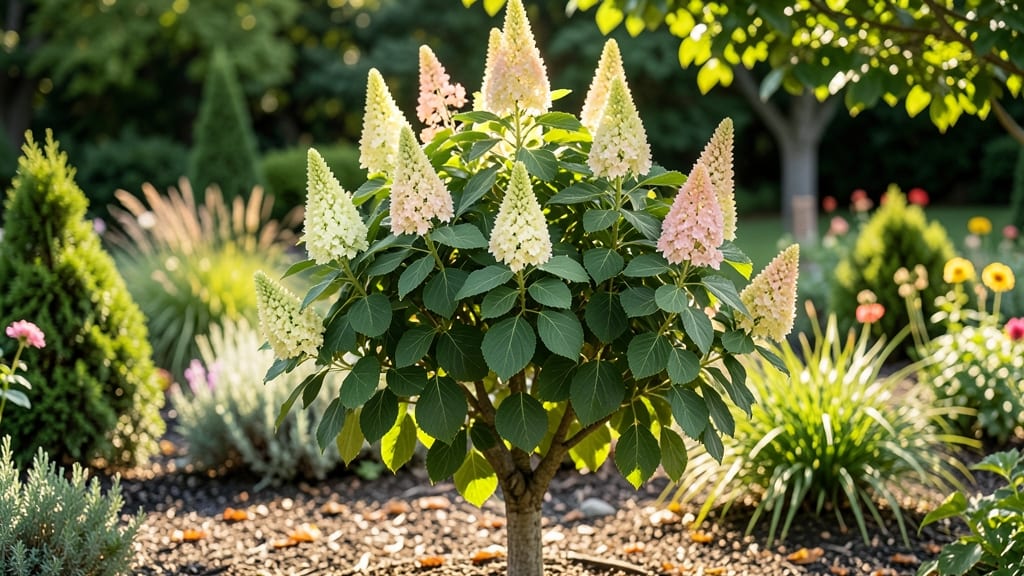
A Limelight Hydrangea Tree grows to its full size of 8-12 feet with the right care, transforming your yard into a lush, year-round spectacle of vibrant blooms.
But here’s the catch: without proper pruning, those stunning lime-green flowers can vanish, or your tree might sprawl uncontrollably. I’ve seen it happen—beautiful trees turned into unruly messes because of missed pruning cues.
This guide breaks down exactly how to keep your 🌸 Limelight Hydrangea Tree thriving at its mature height, from seasonal pruning tips to soil and water needs that make all the difference.
You’ll learn when to trim for maximum blooms, how to control its size without sacrificing flowers, and troubleshooting tricks to keep it healthy for decades.


When and how to prune a full-size Limelight Hydrangea tree for maximum blooms
The Limelight Hydrangea Tree thrives when pruned correctly, but timing and technique make all the difference. Unlike smaller hydrangeas, this 8-12 foot giant needs strategic cuts to maintain its vibrant lime-green blooms and elegant shape.
Prune at the wrong time, and you’ll sacrifice next year’s flowers—or worse, invite disease. Let’s break down the seasonal pruning timeline and cutting methods that keep your tree looking its best.
Your first decision: spring vs. late summer pruning. Most gardeners swear by late summer (after blooms fade), but spring pruning has its place too. The key is understanding how Limelight Hydrangeas produce flowers—on old wood (last year’s growth) and new wood (current season’s growth).
This dual-flowering habit means you can prune with confidence, but only if you follow the right steps.
Before you grab your shears, gather these essential tools:
- Bypass pruners (for smaller branches)
- Loppers (for thicker stems up to 2 inches)
- A sharp saw (for branches over 2 inches)
- Gloves (to protect from thorns and sap)
- Disinfectant (to clean tools between cuts)
Step-by-Step Pruning Guide for Limelight Hydrangea Trees
- 1 Timing is everything: Prune in late summer (August-September) after blooms fade but before fall frost. This encourages new growth that will flower next year.
- 2 Remove dead/diseased wood: Cut out any brown, crisscrossing, or mushy branches first. These won’t regrow and can spread disease. Use clean, sharp tools to make 45-degree cuts just above a bud or leaf node.
- 3 Shape the canopy: Thin out overcrowded branches from the inside of the tree to improve airflow. Aim to remove 1/3 of the oldest stems to encourage new growth and larger blooms.
- 4 Shorten leggy stems: Cut back last year’s growth by 1/3 to promote bushier growth and more blooms. Look for healthy buds just above where you cut.
- 5 Avoid spring pruning mistakes: If you must prune in early spring, do so before buds swell. Never prune after late spring, or you’ll cut off this year’s flower buds that form on new wood.
- 6 Clean up and mulch: Remove all pruned debris from the base to prevent disease. Apply 2-3 inches of mulch around the drip line to retain moisture and regulate soil temperature.
One of the biggest mistakes gardeners make is over-pruning their Limelight Hydrangea. If you cut back too aggressively, you’ll stimulate leafy growth over flowers, leaving you with a lush but bloom-poor tree. Aim to remove no more than 1/3 of the plant’s total volume in any given year.
For a full-size tree, this might mean removing 3-5 main branches rather than hacking away at every stem.
Another critical tip: never top your Limelight Hydrangea. Topping (cutting the top flat) creates ugly, weak growth and stresses the tree. Instead, focus on selective pruning to shape the tree naturally. If your tree is overgrown, spread the pruning over 2-3 years to avoid shock.
For example, remove 1/3 of the oldest stems one year, then another 1/3 the next year, and finally the remaining stems in the third year.
Safety is paramount when pruning a 12-foot tree. Always use a stable ladder or hire a professional if the tree is near power lines or
Size control secrets: how to keep your Limelight Hydrangea tree at its ideal 8-12 feet
Your Limelight Hydrangea Tree can grow taller than expected if left unchecked, reaching up to 12 feet or more. To maintain its ideal 8-12 foot height and prevent unruly spread, strategic pruning and early intervention are key.
The secret lies in understanding when to prune and how to shape it without sacrificing those stunning lime-green blooms.
Young trees benefit most from selective pruning in their first few years to establish a strong structure. For mature trees, late summer pruning (after blooming) is ideal to encourage next year’s flowers while controlling height.
Without proper management, your tree may develop a lopsided shape or become too dense, reducing airflow and increasing disease risk.
| Pruning Method | Best For | When to Use | Height Control |
|---|---|---|---|
| Selective Pruning | Young trees (1-3 years) | Late winter/early spring | Maintains 6-8 ft height |
| Shaping Cuts | Mature trees (3+ years) | Late summer (after blooms) | Keeps spread controlled |
| Topping | Overgrown trees only | Late winter (last resort) | Reduces height by 1-2 ft |
| Staking | Newly planted trees | First growing season | Prevents flopping |
For young Limelight Hydrangea Trees, use staking techniques to guide their growth upward. Install 3-4 stakes around the base at a 45-degree angle and tie the main stems loosely with soft twine.
This prevents them from bending under their own weight while allowing natural flexibility. Remove stakes after the first growing season if the tree establishes strong support on its own.
If your tree has already outgrown its ideal size, rejuvenation pruning can help restore it. In late winter, cut back one-third of the oldest stems to the ground while leaving younger stems intact.
This encourages fresh growth from the base while reducing overall height. Avoid heavy pruning in summer or fall, as it can stimulate tender new growth that won’t survive winter.
When shaping mature trees, always use clean, sharp pruners to make cuts just above a leaf node or bud. Angle cuts slightly downward to prevent water from pooling on wounds. For height control, focus on removing vertical shoots that grow too tall while maintaining a balanced canopy.
This method keeps your tree at 8-12 feet while preserving its natural beauty and bloom potential.
Remember, patience is key. Over-pruning can stress your Limelight Hydrangea Tree and reduce flowering. Start with small adjustments and monitor growth throughout the season. With consistent care, your tree will stay lush, healthy, and perfectly sized for years to come. 🌿✂️