
Light Requirements
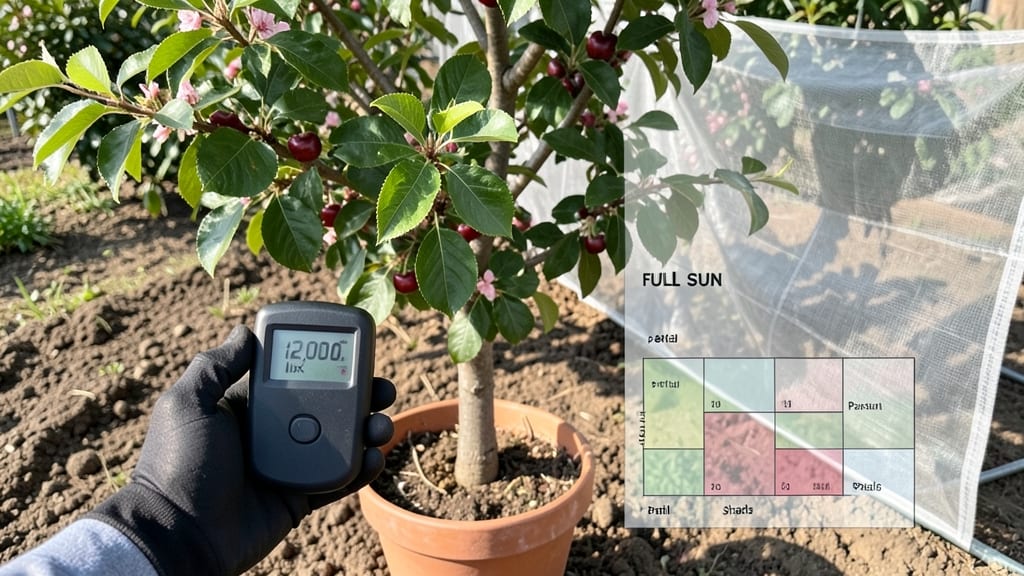
A cherry tree 🍒 needs 6 to 8 hours of direct sunlight daily to thrive, produce fruit, and resist disease—but getting the balance right can make or break your harvest.
Picture this: You’ve just planted your cherry tree, full of hope for juicy summer fruit, only to watch it struggle with weak branches or no blooms at all.
The culprit? Too little sun, or—just as bad—scorching afternoon heat without shade. Sunlight isn’t just about quantity; it’s about timing, variety, and even your local climate.
Sweet cherries, like Bing or Rainier, demand the most sun, while tart varieties like Montmorency tolerate slightly less—but never skimp below 6 hours. In hotter zones like 6a, afternoon shade can save your tree from stress, while cooler climates might need extra morning light to kickstart growth.
Below, I’ll break down the exact sunlight needs by variety, how to spot signs of over- or under-exposure, and simple adjustments to keep your cherry tree happy—so you can go from struggling sapling to fruit-bearing powerhouse.


Sunlight requirements for cherry trees: minimum hours by variety type
Cherry trees are sun-worshippers, but not all varieties demand the same amount of light. While most need full sun exposure (6+ hours daily), some dwarf varieties or tart cherries tolerate slightly less.
Understanding these differences ensures your tree thrives, flowers abundantly, and produces high-quality fruit. Let’s break down the sunlight needs by type so you can position your cherry tree for success.
Standard sweet cherry trees (like Bing or Rainier) require at least 8 hours of direct sunlight daily.
Without this, they’ll produce smaller fruit or fail to fruit altogether. Tart cherry varieties (such as Montmorency) are slightly more adaptable, often thriving with 6-8 hours of sun, especially in cooler climates.
Ornamental cherries, prized for their spring blooms, also prefer full sun but can handle partial shade in hotter regions.
Here’s the key distinction: Dwarf and semi-dwarf varieties need slightly less sunlight than standard trees—6-7 hours daily—because their smaller size makes them more sensitive to heat stress.
However, even these compact trees will struggle in deep shade, leading to weak growth and poor flowering. Always prioritize south-facing locations or areas with minimal afternoon shade.
| Variety Type | Minimum Sunlight (Hours/Day) | Ideal Sunlight (Hours/Day) | Shade Tolerance | Best For |
|---|---|---|---|---|
| Sweet Cherries (Bing, Rainier) | 8+ | 10+ (for best fruit) | Low (avoid afternoon shade) | Fresh eating, orchards |
| Tart Cherries (Montmorency, Balaton) | 6-8 | 8+ (cooler climates) | Moderate (tolerates morning shade) | Jams, pies, urban gardens |
| Ornamental Cherries (Yoshino, Kwanzan) | 6 | 8+ (for vibrant blooms) | High (partial shade in hot zones) | Landscaping, spring color |
| Dwarf Varieties (Stella, Lapins) | 6-7 | 7-8 (avoid heat stress) | Low (avoid deep shade) | Containers, small yards |
| Semi-Dwarf Varieties (Black Tartarian) | 7 | 8-10 | Moderate (morning sun preferred) | Backyard orchards |
Seasonal adjustments are critical, especially in hot climates. During summer, afternoon shade (3-5 PM) can prevent sunburn on leaves and fruit. Use lightweight shade cloth or plant near taller trees that provide dappled shade.
In cooler regions, prioritize south-facing exposure to maximize winter sun, which helps the tree harden off for dormancy.
Young cherry trees are more flexible and can adapt to partial shade for the first 1-2 years, but transition them to full sun as they mature. If you’re planting in a shady yard, consider container growing and relocating the tree to a sunnier spot in spring.
Just avoid moving established trees—root disturbance can stress them more than shade ever will.
Watch for microclimates in your yard. A south-facing wall or gravel pathway can reflect extra sunlight, giving your cherry tree an additional 1-2 hours of exposure. Conversely, dense evergreens or tall buildings can cast deep shade, reducing sunlight by 30-50%.
Always scout the site for 4+ hours before planting to gauge real-world conditions.
Soil quality also interacts with sunlight. Well-draining, fertile soil
Signs your cherry tree isn’t getting enough (or too much) sunlight
If your cherry tree looks weak, produces few blooms, or yields poor-quality fruit, sunlight exposure is likely the culprit. Cherry trees thrive with full sun exposure, but too little or too much can stress them. Watch for these visual cues to diagnose the issue early.
Yellowing leaves, especially on younger growth, often signal insufficient sunlight. This chlorosis occurs when leaves can’t produce enough chlorophyll without adequate light. Check both upper and lower leaves—if they’re pale or yellow, your tree needs more sun.
Stunted growth is another red flag. Cherry trees need 6-8 hours of direct sunlight daily to grow strong branches and develop fruit-bearing wood. If your tree’s growth is slow or sparse, it’s likely struggling with low light conditions.
⚠️ WARNING: Sunlight Stress in Cherry Trees
Poor flowering or fruit development is a clear sign of sunlight issues. Cherry trees need plenty of light to set fruit buds and produce high-quality fruit. If your tree blooms but drops flowers or produces tiny, underdeveloped cherries, it’s not getting enough sun exposure.
On the flip side, leaf scorch or crispy edges indicate too much sunlight, especially in hot climates. If leaves turn brown or brittle, your tree may be over-exposed during peak afternoon sun. Provide afternoon shade or adjust pruning to reduce direct light.
Check for poor site selection or over-pruning, which can block sunlight. If nearby structures, taller trees, or aggressive pruning are limiting light, thin out branches or relocate the tree to a sunnier spot. Adjust pruning to open the canopy for better light penetration.