
Pests and Diseases
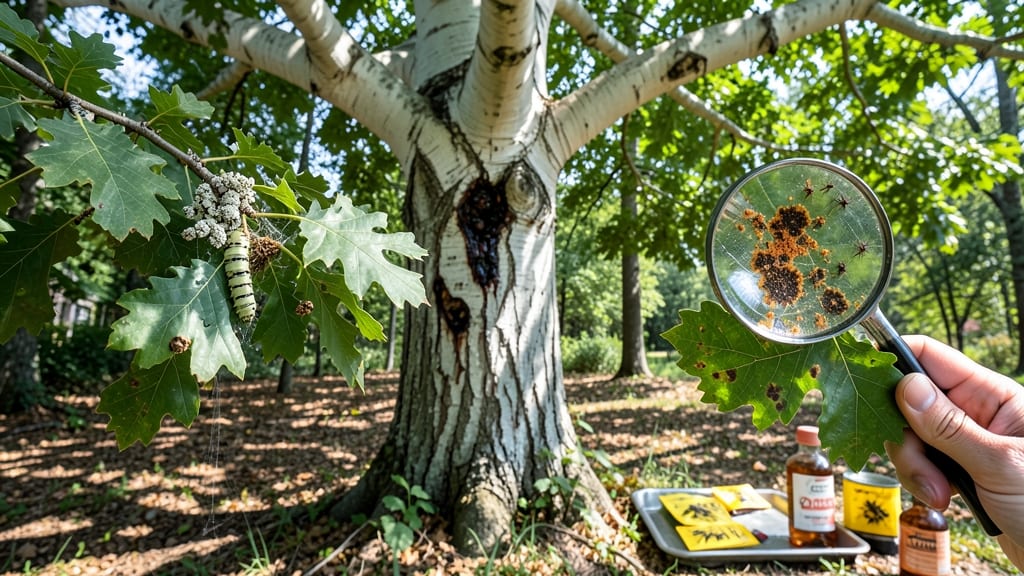
Tree pests and diseases turn a healthy yard into a battleground—until you know the enemy. 🌳 I’ve spent years watching oak trees wilt from borers and maples ooze sap from cankers, and the key to saving them is spotting symptoms early.
This guide cuts through the confusion with fast fixes for common culprits like aphids, fungal infections, and bark beetles.
The damage often starts small—yellowing leaves, tiny holes, or strange growths—but ignoring it turns minor problems into major losses. Prevention is easier than you think: proper pruning, mulching, and soil care keep trees resilient.
Once pests or diseases strike, targeted treatments (organic or chemical) can turn things around before it’s too late.
You’ll learn to diagnose issues like oak wilt or apple scab by their telltale signs, then act quickly to protect your trees. No more guessing what’s wrong or waiting until it’s too late. The goal? Trees that stay strong, green, and thriving—without the panic.
Whether you’re dealing with a single infected branch or a full-blown infestation, this guide gives you the tools to act fast. Let’s get those trees back to their best before summer heat makes things worse.
Root Causes Of Tree Struggles
Trees, like any living organism, are vulnerable to pests and diseases—but understanding why these issues arise is the first step to prevention. Often, the culprits aren’t just random attacks; they’re symptoms of deeper problems, from environmental stress to poor maintenance.
Below, we break down the science behind the most common triggers, so you can spot the warning signs early and act fast.
Trees thrive within a delicate balance of conditions, and when those conditions shift—whether due to climate, weather, or habitat changes—they become prime targets for pests and pathogens. Here’s how the environment sets the stage for trouble:
- Extreme Weather:
Drought weakens a tree’s defenses by reducing its ability to produce resin (a natural pest repellent) and sap (which transports nutrients). Result? Insects like bark beetles and borers detect stressed trees from miles away, as their chemical signals change.
Conversely, excessive moisture creates the perfect breeding ground for fungal diseases like Phytophthora, which thrives in waterlogged soil.
- Poor Soil Conditions:
Compacted, nutrient-deficient, or overly acidic soil starves trees of essential minerals (like nitrogen or potassium), leaving them malnourished. Weak trees = easy prey. For example, Armillaria root rot spreads rapidly in trees already struggling with poor soil drainage, while honey fungus exploits trees with low phosphorus levels.
- Urban Pollution & Air Quality:
Ozone and sulfur dioxide damage tree leaves, creating entry points for pests like spider mites and scale insects. Fun fact: Trees in cities often suffer from “urban decline syndrome”, where pollution weakens their bark, making them susceptible to bacterial leaf scorch.
💡 Pro Tip: Conduct a simple soil test (kits are cheap and available at garden centers) to check pH and nutrient levels. If your tree’s soil is off-kilter, amend it with compost or organic matter to boost resilience.
Pests and diseases don’t just appear out of nowhere—they’re often introduced or spread by human activity, wildlife, or natural migration. Here’s how the bad guys get in:
- Human Transport:
Firewood, nursery stock, and even hiking boots can carry invasive species like the emerald ash borer or sudden oak death pathogen across regions. Once established, these pests have no natural predators, leading to rapid tree mortality.
- Wildlife Vectors:
Birds, squirrels, and deer spread fungal spores (e.g., canker diseases) and insect eggs between trees. For instance, gypsy moth caterpillars hitch rides on wind currents, while deer browsing can create wounds that invite bacterial infections.
- Tree-to-Tree Contagion:
Fungal diseases like Dutch elm disease spread through root grafts (when trees share underground connections), while aphids excrete honeydew that attracts sooty mold—a secondary infection that further weakens the tree.
🚫 Prevention Hack: Quarantine new trees for 30 days before planting, and avoid moving firewood long distances. If you suspect an infestation, isolate the tree immediately to prevent spread.
Even well-intentioned gardening practices can create openings for pests and diseases. Here’s how common errors leave trees exposed:
- Over/Under-Watering:
While drought stresses trees (as mentioned above), overwatering is just as damaging. It promotes root rot (Phytophthora) and attracts sap-sucking insects like mealybugs. Rule of thumb: Water deeply but infrequently—aim for 1–1.5 inches per week, depending on your climate.
- Improper Pruning:
Cutting too close to the trunk or during active growing seasons (spring/summer) creates wounds that don’t heal properly, inviting fungal cankers or bacterial infections. Always use clean, sharp tools and prune in late winter/early spring.
- Ignoring Early Signs:
Yellowing leaves, oozing sap, or sawdust-like frass (insect droppings) are not subtle warnings—they’re SOS signals. Delaying treatment allows pests like borers to tunnel deeper or diseases like powdery mildew to spread uncontrollably.
✨ Expert Insight: If you’re unsure about pruning, hire a certified arborist—poor cuts can kill a tree faster than pests ever could.
By recognizing these root causes, you can preemptively strengthen your trees’ defenses. The key? Monitor, maintain, and act fast. Next, we’ll dive into how to diagnose specific symptoms so you can tackle the problem before it’s too late.
Quick Fixes for Tree Trouble
Got a tree under siege? Don’t panic—most issues have straightforward solutions if you act fast. Below, we map common tree pests and diseases to practical fixes, from early intervention to long-term prevention. Think of this as your DIY emergency kit for ailing trees!
Cause: Unwanted critters chewing, boring, or sucking the life out of your tree.
🔥 Aphids, Scale, or Mealybugs (Sap-Sucking Invaders) Fix:
- Blast ‘em away: Use a strong stream of water (💦) to knock off clusters from leaves and branches.
- Soap it up: Mix 1 tablespoon of mild dish soap (like Castile) with 1 quart of water.
Spray directly on pests—avoid overspraying nearby plants. - Neem oil spray: Apply 1 teaspoon neem oil + 1 teaspoon horticultural oil per quart of water weekly until pests vanish. Pro tip: 🌡️ Do this in the early morning or evening to avoid burning leaves.
Prevention:
- Encourage beneficial insects (ladybugs, lacewings) by planting dill, fennel, or marigolds nearby.
- Prune infested branches immediately and dispose of them in sealed bags (not compost).
🪳 Boring Beetles (Wood Destroyers) Fix:
- Remove infested wood: Cut out and burn or chip (don’t compost!) branches with exit holes or sawdust-like frass.
- Apply systemic insecticide: Use imidacloprid granules (follow label instructions) around the drip line of the tree.
This draws pests in and kills them from the inside. - Seal entry points: For young trees, wrap the trunk with tree banding material to trap emerging beetles.
Prevention:
- Keep trees healthy with proper watering and mulching—stressed trees attract borers.
- Inspect trees annually for D-shaped exit holes (a dead giveaway).
🍄 Fungal Diseases (Mushrooms, Rust, or Blight)
Fix:
- Prune aggressively: Remove all infected branches (at least 6 inches below visible lesions) using sterilized pruners (wipe with rubbing alcohol between cuts).
- Fungicide treatment: Spray with copper fungicide or baking soda mix (1 tbsp baking soda + 1 tsp dish soap + 1 quart water) every 7–10 days during wet seasons.
- Improve airflow: Thin out dense foliage to reduce humidity near the tree.
Prevention:
- Water at the base (not overhead) to keep leaves dry.
- Avoid wounding trees—use proper pruning techniques to prevent entry points for fungi.
🍃 Root Rot or Overwatering Fix: - Stop watering immediately if soil is soggy.
Let it dry out before resuming deep, infrequent watering. - Improve drainage: Dig a drainage trench around the tree or mix sand/compost into compacted soil. - Aerate roots: Use a manual aerator or garden fork to loosen soil around the root zone.
Prevention:
- Plant trees in well-draining soil and avoid planting in low-lying areas where water pools.
- Mulch properly: Use 2–4 inches of organic mulch (wood chips) but keep it 6 inches away from the trunk.
- Inspect regularly: Check for unusual spots, holes, or wilting every 2–4 weeks during growing season.
- Feed smart: Use a slow-release fertilizer in early spring to boost immunity.
- Call a pro: If the tree is large, valuable, or severely infected, consult an arborist for expert treatment.
Remember: Early action is key! Most tree issues are 100% preventable with consistent care. Now grab your hose, pruners, and a little patience—your tree’s got a fighting chance! 🌱💪
Frequently asked questions
How do I tell if my tree has pests or just normal seasonal changes?
Look for unusual signs like tiny holes in bark (borers), sticky residue (aphids), or sawdust-like frass. Normal seasonal changes cause even leaf color shifts, while pests/diseases create uneven patterns—like yellowing only on certain branches. Check for wilting, oozing sap, or unexpected leaf drop too.
Are organic treatments as effective as chemical ones for tree diseases?
Organic methods like neem oil or copper fungicide work well for early-stage issues, but severe infestations may need stronger chemicals. Start with organic solutions—especially for food-bearing trees—and escalate only if symptoms persist. Always follow label instructions for safety.
Can I save a tree if it’s already showing major damage from pests?
It depends! If the damage is localized (e.g., one branch), prune aggressively and treat the root cause. For systemic infections (like Dutch elm disease), removal may be the only option. Act fast—trees can recover from early-stage problems with proper care, but advanced cases often require professional help.
How often should I inspect my trees for pests and diseases?
Check your trees every 2–4 weeks during growing season (spring-fall). Focus on new growth, bark, and leaf undersides—these are hotspots for early signs. A quick 10-minute walk around your yard can catch problems before they spread. Keep a record of changes to spot trends.
What’s the fastest way to stop a fungal infection from spreading?
Prune all infected branches (6+ inches below lesions) with sterilized tools**, then dispose of them in sealed bags. Apply copper fungicide or a baking soda spray immediately. Reduce overhead watering and improve airflow around the tree to prevent spores from spreading.