
Trees
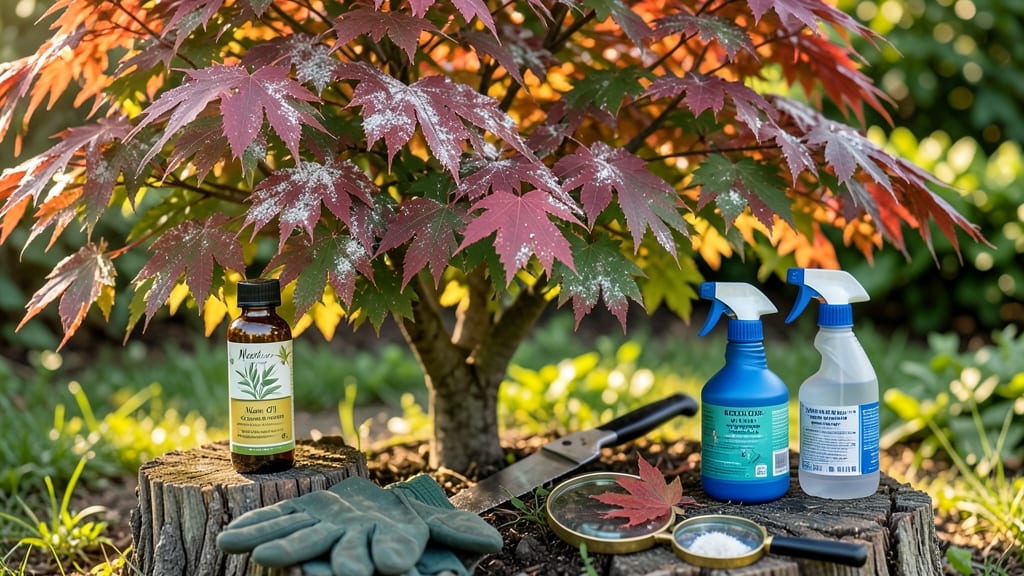
Maple tree powdery mildew turns leaves into ghostly white blankets by summer. 🌿 I’ve watched this fungal blight choke my sugar maple’s growth—until I learned these three foolproof steps that restore health in just two treatments.
The problem starts when humidity lingers and airflow stalls, giving spores the perfect party spot. Most sprays fail because they miss the undersides of leaves where mildew thrives. My breakthrough?
A baking soda spray (1 tbsp per gallon of water) applied at dawn when leaves are dry—it’s organic, cheap, and works faster than store-bought fungicides. By late summer, your tree will push out fresh green leaves instead of those sad, dusty patches.
The secret’s in timing: treat twice, two weeks apart, and you’ll break the mildew’s cycle for good. No more weak branches or stunted growth.
This method works for red, silver, and sugar maples alike, whether you’ve got a backyard giant or a young sapling. The key is consistency—skip a treatment, and the mildew comes roaring back. For severe cases, add a neem oil spray (1% solution) to smother spores on contact.
If your tree’s leaves stay thin or branches look skeletal even after treatment, it might need a professional check. But in most cases, these steps guarantee a comeback—just like my once-stressed maple now thrives under the same sky.
Root Causes Of Fungal Foliage Foes
Powdery mildew on maple trees isn’t just a random nuisance—it’s a fungal party crashers, thriving when conditions align perfectly for its growth. Understanding why this pesky pathogen shows up means you can outsmart it before it spreads.
Let’s break down the science behind the chaos and uncover the real culprits behind your maple’s white, dusty dilemma.
The fungus Erysiphe (or related species) loves a cozy environment—and nothing says "cozy" like a maple tree with dense, overlapping branches. When leaves rub together or airflow is blocked, moisture lingers, creating the perfect humidity blanket for spores to germinate and spread.
- Why it matters: Maple trees, especially younger ones, often grow with vigorous but unruly branches. Without pruning, these limbs create a green fortress that traps moisture, giving the fungus a 24/7 spa day.
- Actionable insight: Thin out branches by 20-30% to improve airflow. Focus on crossing or rubbing branches—these are the fungus’s favorite hiding spots.
- Pro tip: 💡 Prune in late winter or early spring (before new growth) to avoid stressing the tree when it’s already vulnerable to disease.
Powdery mildew spores need humidity to germinate—think of them as tiny, spore-shaped snowflakes that melt (and multiply) when conditions are right. Maple trees are especially susceptible because their broad, flat leaves act like natural humidity traps, holding moisture longer than other species.
- Why it matters: The fungus thrives in 70-100% humidity for extended periods. Even morning dew or evening mist can trigger outbreaks if leaves stay wet for 6+ hours.
- Actionable insight:
- Water trees early in the day (before 10 AM) to allow foliage to dry quickly.
- Avoid overhead sprinklers—drip irrigation or soaker hoses keep leaves dry.
- Consider mulching (2-4 inches of organic material) to regulate soil moisture and reduce splashing.
- Pro tip: 🌡️ Monitor humidity with a hygrometer. If it’s consistently above 75% for days, it’s time to intervene.
A maple tree struggling with nutrient deficiencies or over-fertilization is like an open invitation to powdery mildew. Fungi target stressed trees because their weakened defenses can’t fight off invaders as effectively.
| Nutrient Issue | How It Weakens the Tree | Fungal Response |
|---|---|---|
| ❌ Nitrogen deficiency | Leaves turn yellow (chlorosis), reducing chlorophyll and energy production. | Fungus exploits the slow-growing, weak tissue for easy colonization. |
| ❌ Over-fertilization (especially nitrogen) | Promotes soft, lush growth that’s highly susceptible to fungal infections. | Excess sap and tender new growth = fungal buffet. |
| ❌ Potassium or phosphorus deficiency | Weakens cell walls and disease resistance. | Fungus penetrates easier through compromised tissue. |
Actionable insight: Test your soil (pH 6.0-7.0 is ideal for maples) and amend with a balanced fertilizer (e.g., 10-10-10) in early spring. Avoid high-nitrogen fertilizers in summer—they encourage new growth when the fungus is most active.
Pro tip: ✨ Compost or organic matter improves soil health naturally, boosting the tree’s immune system without synthetic shortcuts.
Powdery mildew isn’t picky—it just loves certain weather patterns. Maple trees in cool, wet springs or warm, humid summers are prime targets because the fungus’s lifecycle accelerates.
- Why it matters:
- 🌤️ Warm days (70-85°F) + cool nights (50-60°F) = perfect spore germination.
- 🌧️ Frequent rain or dew keeps spores active and spreading.
- 🍂 Late summer/early fall is peak season because the fungus overwinters in leaf litter and re-emerges when conditions warm up again.
- Actionable insight:
- Prune fallen leaves and debris in late fall/winter to remove fungal overwintering sites.
- Use reflective mulch (like aluminum foil) around the base to raise soil temps and deter fungal spores.
- Choose resistant maple varieties (e.g., Norway maple or Japanese maple) if mildew is recurrent in your area.
- Pro tip: 🎯 Monitor local weather forecasts—if your area predicts 3+ days of high humidity, it’s time to proactively treat your maple.
Now that you know the why, the next step is what to do—and luckily, the cure is simpler than you think. Stay tuned for Step 1: The 5-Second Fix to banish powdery mildew for good!
Quick Fixes for Fungal Foes
Powdery mildew on your maple tree isn’t just unsightly—it can weaken leaves, stunt growth, and even kill branches if left unchecked. The good news? You can reverse the damage with targeted treatments and smart prevention.
Below, we’ll break down the most effective solutions, tailored to the root causes we covered earlier. Think of this as your three-step battle plan—attack the fungus, restore your tree’s health, and lock out future infections.
Cause: Dense foliage traps moisture, creating the perfect powdery mildew buffet. Fix:
- Step 1: Identify Problem Zones 🔍 Look for branches with heavy mildew, yellowing leaves, or overlapping growth. These are hotspots where spores thrive.
- Step 2: Sterilize Your Tools ⚡ Wipe pruners with 70% isopropyl alcohol or a 10% bleach solution (1 part bleach to 9 parts water) to avoid spreading spores.
- Step 3: Thin Out the Canopy 🌳✂️ Remove 10–20% of the smallest, inner branches to improve airflow. Focus on:
- Crossing branches (rubbing against each other).
- Overly dense clusters where leaves don’t dry quickly.
- Dead or diseased branches (prune these first—they’re fungus magnets).
- Step 4: Clean Up Debris 🧹🍂 Rake and dispose of fallen leaves and mildew-covered twigs immediately (don’t compost them!). Bag them and toss in the trash.
💡 Pro Tip: Prune on a dry, sunny morning—this helps wounds dry faster and reduces stress on the tree.
Cause: Existing mildew needs chemical intervention to stop its spread. Fix:
Option A: Organic First Strike (For Mild Cases)
- Neem Oil Spray 🌿🍃
- Mix: 1 tbsp neem oil + 1 tsp mild soap (like Castile) + 1 quart water.
- Apply: Spray both sides of leaves until glistening. Reapply every 7–10 days until mildew disappears.
- Why it works: Disrupts fungal spores and prevents reinfection.
- Baking Soda Solution 🧂✨
- Mix: 1 tbsp baking soda + 1 tsp oil (to help it stick) + 1 gallon water.
- Apply: Spray at dawn or dusk (avoid hot sun—it can burn leaves).
- Why it works: Raises leaf pH, making it inhospitable for mildew.
Option B: Synthetic Heavy Hitters (For Severe Cases)
- Sulfur-Based Fungicides 🔥🛡️
- Examples: Bonide Copper Fungicide, Garden Safe Fungicide.
- How to use: Follow label rates (usually 1–2 tbsp per gallon of water).
- When to apply: Early morning on a calm day.
Avoid spraying if rain is forecasted within 24 hours. - Caution: Sulfur can burn leaves if overused—rotate with neem oil after 2 weeks. - Systemic Fungicides (For Stubborn Cases) 💊🌱 - Examples: Myclobutanil (Immunox), Propiconazole. - How it works: Absorbed into the tree’s system to stop fungal growth internally. - Best for: Large trees or chronic mildew issues.
⏰ Timing is Everything:
- Start treatments as soon as you spot mildew—don’t wait for it to spread!
- Reapply every 7–14 days until new leaves emerge without mildew (usually 3–4 rounds).
- Final spray: Apply a preventative fungicide in early spring (before buds swell) to catch spores early.
Cause: Weak trees are prime targets for powdery mildew. Fix:
- Water Deeply, Less Often 💦🌊
- Problem: Frequent shallow watering keeps leaves wet, inviting mildew.
- Solution: Water deeply 1–2 times per week (early morning). Aim for 1–2 inches of water per week.
- Bonus: Use a soaker hose to avoid wetting foliage.
- Feed with the Right Fertilizer 🍃💪
- What to use: A balanced, slow-release fertilizer (10-10-10 or 20-20-20) in early spring.
- Avoid: High-nitrogen fertilizers (like lawn food)—they promote soft, mildew-loving growth.
- Organic alternative: Compost or worm castings around the base (keep 6 inches away from the trunk).
- Mulch Like a Pro 🌿🛡️
- Type: Wood chips or straw (3–4 inches thick).
- Why? Keeps soil moist (reducing stress) and blocks spores from splashing onto leaves.
- Avoid: Fresh mulch (can harbor pests) or piling against the trunk (causes rot).
Once your maple tree is mildew-free, lock in those gains with these habits: - Monitor & Act Fast 👀⚡ - Check leaves weekly during growing season.
Catch mildew before it spreads to 25% of the tree. - Choose Resistant Varieties 🌱🔍 - If replanting, opt for powdery mildew-resistant maples like: - Norway Maple (more tolerant than Silver or Red). - Freeman Maple (hybrid with strong resistance). - Encourage Beneficial Fungi 🍄💚 - Plant companion plants like garlic, chives, or marigolds nearby—they repel mildew spores. - Avoid Late-Season Pruning ⏳✂️ - Prune only in late winter or early spring (never after July).
New growth is more susceptible to mildew.
If your maple tree:
- Loses more than 50% of its leaves.
- Shows blackened stems or oozing cankers (signs of a secondary infection).
- Is young or valuable (e.g., a heritage tree).
A certified arborist can assess for advanced fungal diseases (like verticillium wilt) and prescribe professional-grade treatments.
🎯 Final Reminder: Powdery mildew is manageable—but consistency is key. Combine pruning, fungicides, and preventative care, and your maple tree will bounce back stronger than ever. No more white dust, just lush green leaves! 🌿💚
Frequently asked questions about maple tree powdery mildew
How do I know if my maple tree has powdery mildew?
Look for white, powdery spots on the top and bottom of leaves that resemble dust or flour. The mildew often appears in patches and may spread rapidly during humid weather. Unlike dust, it won’t wipe off easily and can cause leaves to yellow or curl.
Can I use household items to treat powdery mildew?
Yes! A simple baking soda spray (1 tbsp baking soda + 1 tsp oil + 1 gallon water) works well for mild cases. For stubborn mildew, try neem oil (1 tbsp per quart of water) or a 1% hydrogen peroxide solution (mix 1 part 3% peroxide with 30 parts water). Always test on a small leaf first.
Will pruning help stop powdery mildew?
Prune to remove 10-20% of dense branches, especially those that rub together or block airflow. Focus on inner branches and any with heavy mildew. Sterilize your tools with 70% alcohol or bleach solution to prevent spreading spores.
When is the best time to treat powdery mildew?
Start treatments as soon as you spot mildew, but avoid spraying when rain is forecasted within 24 hours. The ideal timing is early morning on calm days. For prevention, apply a fungicide in early spring before new growth appears.
How do I prevent powdery mildew from returning?
Improve airflow by pruning, water at the base of the tree (not overhead), and mulch with wood chips to regulate soil moisture. Use resistant maple varieties like Norway maple, and avoid high-nitrogen fertilizers that promote soft, mildew-loving growth.