
Pests and Diseases
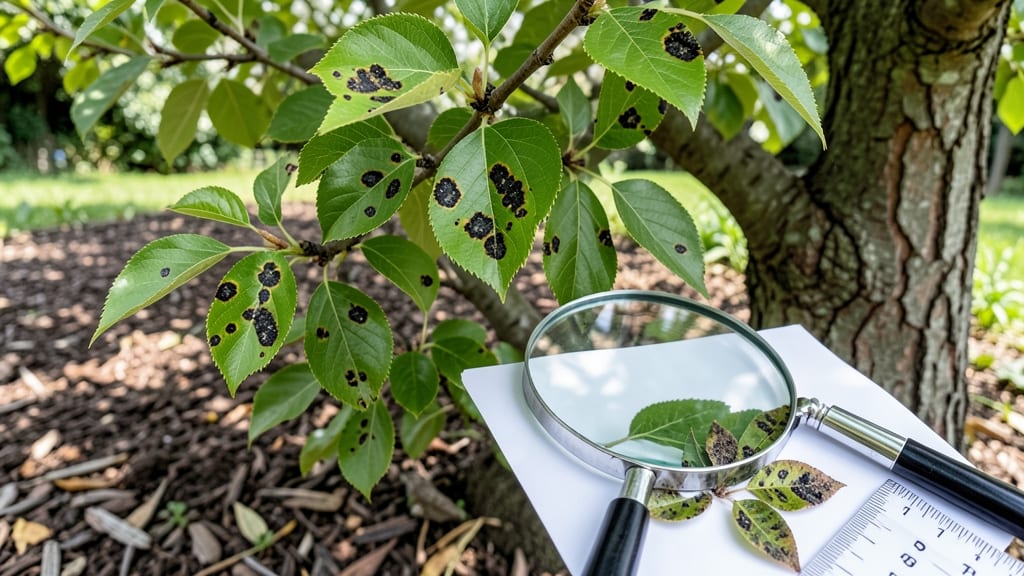
Your cherry tree’s leaves shouldn’t look like they’ve been rained on with ink. 🌿 Those black spots? Almost always fungal leaf spot or scab, and the good news is you can stop it before it spreads.
I’ve battled this exact problem on my mature Bing cherry tree, and what worked for me—plus how to tell for sure if it’s fungus—is what I’m sharing here.
The first step is confirming it’s not just environmental stress (like too much water or poor airflow). Fungal spots usually start as tiny dark specks that grow into ragged brown patches with yellow halos, while scab shows up as velvety black bumps on the upper leaves.
Grab a magnifying glass if you’re unsure—spotting the difference early is half the battle.
Once you’ve identified it, the fix is simple but requires consistency: prune out infected branches (sterilize your tools!), apply a copper fungicide or baking soda spray every 7-10 days, and thin the canopy to improve airflow. I’ve seen trees recover completely within a season with this approach—no harsh chemicals needed.
This works for both sweet and tart cherries, and the same principles apply whether your tree is young or mature. The key is acting fast—once the spots take over, the tree’s energy shifts from fruit to fighting disease. Let’s get your tree back to producing those perfect summer snacks.
Root Causes Of Leaf Spots
If your cherry tree’s leaves are developing unsightly black spots, the culprit is almost always a fungal infection or environmental stress. Unlike pests that chew leaves, fungal diseases thrive in damp conditions and spread rapidly—often turning a single leaf into a battleground.
Below, we break down the most common reasons behind these dark blemishes, so you can diagnose the issue and take targeted action.
Fungal diseases are the #1 reason for black spots on cherry tree leaves. These microscopic organisms release spores that land on leaves, germinate in moisture, and eventually create dark, often concentric-ringed lesions. Here’s how they strike:
🌡️ Leaf Spot Diseases (Cercospora & Alternaria)
- What’s happening? Fungi like Cercospora and Alternaria infect leaves through stomata (tiny leaf pores) or wounds. They thrive in warm, humid weather (60–80°F) and spread via wind or splashing water.
- Visual clues:
- Small, circular black or brown spots with gray centers (Cercospora).
- Spots that enlarge with yellow halos (Alternaria).
- Premature leaf drop if severe.
- Why it spreads: Poor air circulation (dense foliage), overhead watering, or wet leaves for prolonged periods create the perfect breeding ground.
🍂 Anthracnose: The Aggressive Spotter
- What’s happening? Colletotrichum fungi cause sunken, velvety black spots that enlarge and merge. They attack young leaves, buds, and even fruit, weakening the tree over time.
- Visual clues:
- Dark, sunken lesions with a raised border.
- Wilting or curling leaves near infected areas.
- Blackened fruit (if the disease spreads).
- Why it spreads: Cool, wet springs (50–75°F) with frequent rain or overhead irrigation. Infected debris (like fallen leaves) overwinters and reinfects the tree.
🍅 Powdery Mildew (Yes, It Causes Spots Too!)
- What’s happening? While powdery mildew usually appears as a white, powdery coating, severe infections can cause blackened, crinkled leaves due to extreme stress.
- Visual clues:
- White fungal growth on leaf undersides.
- Blackened, distorted leaves in late-stage infections.
- Stunted growth or reduced flowering.
- Why it spreads: Low humidity + high temperatures (75–90°F) with poor airflow. It’s common on young, tender leaves.
Not all black spots are fungal—sometimes, they’re a symptom of environmental damage. These issues don’t kill the tree overnight but weaken it, making it more susceptible to diseases.
☀️ Sun Scorch & Heat Stress
- What’s happening? Intense sunlight (especially after frost or drought) causes brown, crispy spots that resemble fungal damage. Cells rupture from too much UV exposure.
- Visual clues:
- Dry, papery edges on leaves.
- Spots only on sun-exposed sides (not random).
- Wilting in extreme heat.
- Why it happens:
- Sudden temperature swings (e.g., frost followed by hot sun).
- Insufficient water (roots can’t cool the tree).
- Thin canopy (young trees or pruned branches).
💧 Overwatering & Poor Drainage
- What’s happening? Waterlogged soil drowns roots, starving leaves of oxygen. This causes black, mushy spots (necrosis) as cells die from lack of nutrients.
- Visual clues:
- Yellowing leaves (chlorosis) before spots appear.
- Mushy, dark patches (especially on lower leaves).
- Root rot (if checked—smells foul, looks slimy).
- Why it happens:
- Compacted or clay soil that doesn’t drain.
- Frequent heavy watering without checking soil moisture.
- No mulch to regulate soil temperature.
🌬️ Pollution & Chemical Burn
- What’s happening? Exposure to airborne pollutants (like ozone, sulfur dioxide, or even harsh fertilizers) can cause blackened, speckled leaves.
- Visual clues:
- Spots appear randomly, not in patterns.
- No fungal growth (just discoloration).
- Stunted new growth or leaf drop.
- Why it happens:
- Urban areas with high smog.
- Over-fertilizing (especially with synthetic salts).
- Pesticide/herbicide drift from nearby applications.
While pests don’t directly cause black spots, their feeding can weaken leaves, making them prime targets for fungal infections. Common culprits include:
- 🐜 Spider mites (tiny webs + stippled leaves).
- 🐛 Scale insects (sticky residue, yellowing).
- 🍄 Sawfly larvae (chewed leaves with black frass).
Pro tip: If you see holes, webbing, or tiny bugs, treat pests first—then address fungal spots to prevent a compounded problem. 🎯
Fixing Leaf Spots Naturally
Once you’ve identified the cause of those pesky black spots on your cherry tree leaves, it’s time to take action—without harsh chemicals! Below are targeted, organic solutions tailored to the most common culprits, plus prevention tips to keep your tree thriving.
Think of this as your step-by-step guide to a healthier, spot-free canopy.
Fungal infections thrive in damp, humid conditions, so the fix starts with improving airflow and reducing moisture.
🔥 Step 1: Prune for Better Airflow - Remove infected leaves (gloves recommended!) and trim branches to open up the canopy.
Aim for 10–20% reduction in dense foliage. - Sterilize pruners with rubbing alcohol (70% or higher) between cuts to avoid spreading spores. - 💡 Pro Tip: Prune in early morning when humidity is lower, and avoid overhead watering afterward to let leaves dry faster.
🍳 Step 2: Apply Organic Fungicides
Mix one of these DIY sprays and apply every 7–10 days until new growth appears (3–4 treatments typically work):
- Baking Soda Spray:
- 1 tbsp baking soda
- 1 tsp dish soap (mild, like Castile)
- 1 gallon water
- Why it works: Raises leaf pH, making it inhospitable for fungi.
- Neem Oil Solution:
- 2 tbsp neem oil
- 1 tsp horticultural oil
- 1 tsp dish soap
- 1 quart water
- Why it works: Disrupts fungal cell membranes and deters future spores.
- Copper Fungicide (organic-certified):
- Follow label rates (e.g., Cheshunt Compound).
- Why it works: Copper ions inhibit fungal growth without harming beneficial insects.
🌡️ Step 3: Adjust Watering Practices
- Water at the base (not overhead) to keep leaves dry.
- Water early morning (before 10 AM) so foliage has 4+ hours to dry.
- Improve drainage by amending soil with compost or perlite if your tree sits in soggy soil.
🎯 Prevention for Next Season
- Mulch properly: Use 2–3 inches of organic mulch (wood chips, straw) but keep it 6 inches away from the trunk to prevent rot.
- Clean up fallen leaves in autumn—bag and compost them (or burn) to eliminate fungal overwintering sites.
- Plant companion crops like marigolds or garlic nearby—they repel fungi naturally.
Pests like aphids or spider mites can indirectly cause leaf discoloration by weakening the tree or spreading sooty mold.
👨🍳 Step 1: Blast Off Pests with Water
- Spray leaves vigorously with a hose (20–30 PSI) to dislodge aphids/mites. Do this early morning or late evening to avoid shocking the tree.
- Repeat every 3–5 days for severe infestations.
🔪 Step 2: Introduce Beneficial Insects
- Ladybugs, lacewings, or parasitic wasps (available at garden centers) devour aphids and mites.
- 💡 Pro Tip: Release them at dusk when they’re most active and provide shade to keep them around.
⏰ Step 3: Use Soap or Oil Sprays
- Insecticidal Soap:
- 1 tbsp mild liquid soap (like Dr. Bronner’s)
- 1 quart water
- Spray directly on pests (avoid blooms if spraying fruit trees).
- Horticultural Oil:
- Apply dormant oil in late winter or summer oil spray to smother eggs/larvae.
- Caution: Avoid spraying when temps are above 90°F or below 50°F.
✨ Prevention Tips
- Encourage natural predators by planting dill, fennel, or yarrow nearby.
- Avoid broad-spectrum pesticides—they kill beneficial insects too!
- Inspect leaves weekly (especially undersides) for early signs of pests.
If tests confirm a micronutrient deficiency, address it with targeted amendments.
📊 Step 1: Soil Test First - Send a soil sample to your local Cooperative Extension Service (costs ~$20–$50).
They’ll tell you if your tree needs: - Iron (Fe): Yellowing between veins → chelated iron spray or iron sulfate granules. - Zinc (Zn): Stunted growth → zinc sulfate applied to soil or foliage. - Magnesium (Mg): Yellowing edges → Epsom salt spray (1 tbsp/gallon water).
🍎 Step 2: Apply Amendments
- For iron/zinc: Mix 1 tsp chelated iron or zinc sulfate into 1 gallon water and spray leaves weekly for 3 weeks.
- For magnesium: Dissolve 1 tbsp Epsom salt in 1 gallon water and spray every 2 weeks.
- 💡 Pro Tip: Avoid over-fertilizing—too much nitrogen worsens fungal issues!
🌿 Prevention
- Mulch with compost annually to slowly release nutrients.
- Use slow-release fertilizers (like osmocote) to prevent deficiencies.
Final Reminder: Consistency is key! Most organic fixes take 2–4 weeks to show results. Monitor your tree’s progress and adjust treatments as needed. With patience and the right approach, your cherry tree will be back to its lush, spot-free glory in no time! 🌳💚
Frequently asked questions
Why do black spots appear on cherry tree leaves in wet weather?
Fungal diseases like leaf spot or anthracnose thrive in damp conditions. When humidity stays high (above 70%) or leaves remain wet for more than 4 hours, fungal spores germinate and create those dark, often concentric-ringed spots. The key is improving airflow and watering practices to prevent future outbreaks.
Can I use household items like vinegar to treat black spots?
While vinegar can help in small doses (1 tbsp per gallon of water), it's not as effective as baking soda or neem oil for fungal treatment. Vinegar's acidity may burn leaves if overused. Stick to proven organic fungicides like copper spray or baking soda mixtures for better results.
How do I tell if black spots are fungal vs. environmental stress?
Fungal spots usually have ragged edges with yellow halos, while environmental stress (like sun scorch) creates dry, crispy patches only on sun-exposed sides. Check for fungal growth on leaf undersides or nearby infected debris - if you see these signs, it's likely a fungal disease.
Will pruning infected branches spread the disease further?
Only if you don't sterilize your tools first! Always clean pruners with rubbing alcohol (70% or higher) between cuts. Remove infected leaves and branches during dry weather and dispose of them in the trash (not compost) to prevent reinfection.
How often should I apply organic fungicides for best results?
Apply every 7-10 days during active growth (spring through summer) until new healthy leaves appear. Consistency is key - most fungal infections require 3-4 applications to fully control. Always spray in early morning for maximum effectiveness.