
Pruning
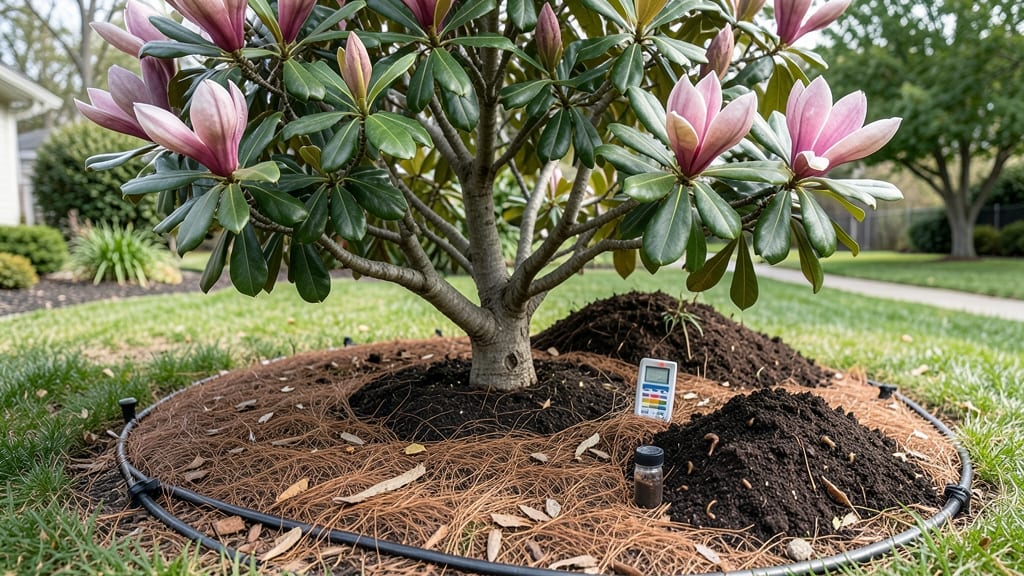
Your magnolia tree soil must be acidic, well-draining, and rich in organic matter to unlock those showstopping blooms 🌸—skimp on the right mix, and even a healthy-looking tree will struggle to thrive.
Picture this: you’ve planted your magnolia with all the care in the world, only to watch it wilt or fail to flower. The culprit? Soil that’s either too alkaline or compacted, robbing roots of the nutrients they crave.
These trees aren’t just picky—they’re demanding, and getting their soil right is the difference between a lush, fragrant giant and a sad, stunted shadow.
In this guide, I’ll break down the exact soil conditions your magnolia craves—from pH levels to drainage hacks—and how to fix common mistakes that kill growth. Whether you’re planting a sapling or nurturing a mature tree, these fast, science-backed tips will keep your soil (and your tree) happy for decades.
From testing your soil’s acidity to amending heavy clay or sandy ground, you’ll learn how to mimic the forest floor where magnolias naturally flourish. Let’s get your tree the perfect foundation—because the right soil isn’t just about survival, it’s about explosive blooms and a tree that outlives you.
Optimal soil pH levels for magnolia trees: why 5.0-6.5 is non-negotiable
If your magnolia tree isn’t thriving, the culprit might be your soil’s pH balance. These trees are acid-loving plants that refuse to grow well outside the 5.0-6.5 pH range.
When soil pH strays too high or low, nutrient uptake fails, leading to yellowing leaves, stunted growth, and poor flowering. Understanding why this range is critical—and how to maintain it—can transform your tree’s health overnight.
Magnolias evolved in acidic forest soils, where organic matter naturally keeps pH levels in their ideal range. In alkaline soils (pH 7.0+), essential nutrients like iron, manganese, and phosphorus become locked away, causing chlorosis (yellowing between leaf veins) even if the soil appears fertile.
Meanwhile, overly acidic soils (pH <4.5) can damage roots and disrupt microbial activity, weakening the tree’s defense against pests and diseases.
Testing your soil’s pH is simpler than you think. Grab a digital pH meter (available for $15-$25) or use a home soil test kit (like LaMotte’s). For precise results, send a sample to your local Cooperative Extension Service.
Dig a 6-inch-deep hole near your tree’s dripline (the outer edge of its canopy), collect soil from 3-4 spots, and mix them.
The ideal pH for magnolias falls between 5.0 and 6.5, but slight variations exist by species—Southern Magnolias tolerate the lower end, while Star Magnolias prefer the upper range.
If your soil tests too alkaline (pH >6.5), amend it with elemental sulfur or peat moss. Work 2-3 pounds of sulfur per 100 square feet into the top 6 inches of soil in early spring or fall, then water thoroughly.
For acidic soil (pH <5.0), add ground limestone or wood ash (sparingly—too much raises pH). Always re-test after 3-4 months to monitor changes.
Yellowing leaves are the first sign your magnolia’s pH is off. If new growth shows interveinal chlorosis (yellow between veins), your soil is likely alkaline. Poor flowering or bud drop?
That’s often a sign of nutrient starvation from improper pH. Even overwatering can acidify soil over time, so ensure proper drainage by amending with compost or pine bark fines to improve structure.
Mulching plays a dual role in pH management. Apply a 3-inch layer of pine straw or oak leaves around your tree’s base (keep mulch 6 inches away from the trunk to prevent rot).
As these organic materials decompose, they slowly acidify the soil. Avoid cedar mulch, which releases phenols that can harm roots. Replenish mulch annually to maintain the acidic soil environment magnolias crave.
Regional soils vary wildly—sandy soils drain quickly and may need organic matter to retain moisture and acidity, while clay soils can become waterlogged and overly acidic. If you’re in a high-rainfall zone, like the Pacific Northwest, your soil may naturally stay acidic.
In drought-prone areas, like the Southwest, irrigation water can raise pH, so monitor closely. Adjust amendments based on your local climate and soil type.
For container-grown magnolias, pH management is even more critical. Use a pre-mixed acidic pH soil blend (like Miracle-Gro Azalea, Camellia & Rhododendron Mix) and repot every 2-3 years with fresh soil.
Flush the pot annually with water to remove salt buildup, which can raise pH. If your tree’s leaves turn yellow despite proper care, the container may be root-bound, restricting nutrient uptake—consider upgrading to a larger pot.
Remember, magnolias are long-lived investments. A single pH adjustment now can mean decades of vibrant blooms and lush foliage. Start with a soil test, amend as needed, and keep an eye on your tree’s response.
With the right soil pH balance, your magnolia will reward you with show-stopping flowers year after year.
🌸
Best soil mix for magnolia trees: loamy, well-draining blends that mimic natural forest conditions
Magnolia trees thrive in soil that mimics their natural forest habitat—rich, loamy, and well-draining with plenty of organic matter. The key is replicating the acidic, humus-rich conditions they prefer in the wild.
If your soil is heavy clay or sandy, don’t worry—I’ll show you how to amend it for success.
For in-ground planting, aim for a mix that’s 60% native soil, 30% compost, and 10% coarse sand or perlite. This blend ensures proper drainage while retaining moisture, which is critical for young roots.
If your soil is already sandy, reduce the sand to 5% and add 15% peat moss to improve water retention.
| Soil Type | Best Mix Ratio | Ideal For | Drainage |
|---|---|---|---|
| In-Ground | 60% native soil + 30% compost + 10% sand | Established trees | Moderate |
| Container | 50% peat moss + 30% pine bark + 20% perlite | Dwarf varieties | Fast |
| Clay Soil | 50% native soil + 30% compost + 20% coarse sand | Heavy clay regions | Improved |
| Sandy Soil | 40% native soil + 40% peat moss + 20% compost | Arid climates | Slow |
When planting in containers, use a mix of 50% peat moss, 30% pine bark, and 20% perlite to ensure fast drainage and aeration.
Container-grown magnolias dry out quicker, so this blend prevents root rot while keeping moisture levels ideal. Avoid garden soil in pots—it compacts and suffocates roots.
For peat moss vs. pine bark, here’s the rule: Use peat moss in sandy soils to retain moisture, and pine bark in clay soils to improve aeration. Both are acidic, but pine bark breaks down slower, making it better for long-term container mixes.
If your soil is already acidic (pH 5.0-6.5), skip peat moss and opt for composted leaves instead.
To amend existing soil, start by double-digging a hole twice as wide as the root ball. Mix in 3 inches of compost and 1 inch of sand at the bottom, then backfill with your native soil blend.
Water deeply to settle the mix and encourage root penetration. Mulch with 3-4 inches of pine needles or wood chips to mimic forest floor conditions and retain moisture.
Remember, magnolias hate soggy roots. If your soil drains poorly, add coarse sand or perlite to prevent waterlogging. Test your mix by filling a container with water—if it drains within 30 minutes, you’ve nailed the balance.
With the right soil, your magnolia will reward you with vibrant blooms and lush foliage for decades.