
Pruning
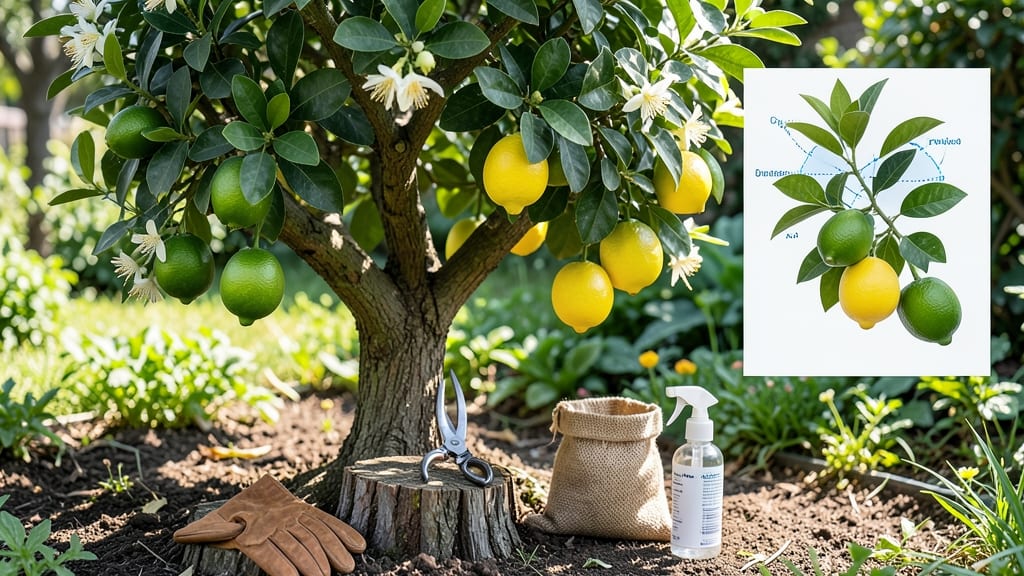
A lemon tree pruning guide isn’t just about shaping—it’s the secret to doubling your harvest next summer. 🌿 I've seen firsthand how aggressive pruning in late winter can turn a sparse tree into a fruit-bearing powerhouse by mid-year, but timing and technique make all the difference.
The key is working with the tree's natural growth cycle: dormant season (winter) for structural cuts and active season (spring) for shaping. You'll need sharp pruners, rubbing alcohol for sterilizing cuts, and a clear plan to open up the canopy—because sunlight on fruit means sweeter lemons.
Container-grown trees need slightly more frequent attention, but the principles stay the same.
What you'll end up with is a tree that produces larger, sweeter fruit while staying healthy and pest-resistant. The branches will spread evenly, allowing air to circulate and preventing fungal issues. And yes, those "ugly" cuts you make now? They're what create the perfect framework for next year's blossoms.
Whether you're dealing with a backyard citrus tree or a patio container, this approach works for both. The biggest mistake? Waiting until summer to prune—by then, you've missed the prime window for shaping growth. Let's get those branches trimmed the right way.
📚 In This Guide
- What you need
- Instructions
- Tips and common mistakes
- Wrapping up and next steps
What you need
- ● Pruning shears: Bypass pruners (for clean cuts on small branches, 1/4" to 1" in diameter). Choose sharp, stainless steel blades to prevent crushing. (1 pair)
- ● Loppers: For thicker branches (1" to 2" in diameter). Opt for bypass loppers with long handles for leverage. (1 pair)
- ● Pruning saw: For branches larger than 2". A curved-tooth saw minimizes tear-out. (1)
- ● Disinfectant: 70% isopropyl alcohol or a 10% bleach solution to sterilize tools between cuts and prevent disease spread.
- ● Gloves: Heavy-duty gardening gloves (cut-resistant) to protect hands from thorns and sap.
- ● Rubbing alcohol or hand sanitizer: For quick hand cleaning after pruning.
- ○ Pruning sealant: Optional but helpful for large cuts (over 1/2") to prevent sap bleeding and pests. (e.g., tree wound paint)
- ● Ladder or step stool: If your tree is taller than 6 feet. Ensure it’s stable and non-slip.
- ● Trash bags or bucket: For collecting pruned branches and debris.
- ● Notebook & pencil: To jot down notes on cuts made (helpful for tracking growth patterns).
- ● Extension pole pruners: For high branches without a ladder.
- ● Sharpie or permanent marker: To label branches if you’re experimenting with pruning techniques.
- ● Compost bin: For repurposing small pruned branches as mulch.
- ● Safety glasses: To shield eyes from debris.
- ● Knee pads: For comfort if you’re working on the ground.
Step-by-Step instructions for pruning a lemon tree
Here's the precise method I use to keep my lemon trees healthy and bursting with fruit.
✂️ Step 1: Identify and Remove Dead or Diseased Branches
Start by examining your tree for any branches that are brown, brittle, or showing signs of disease like black spots or oozing sap. These are the first to go—they sap energy from your tree and attract pests. Use sharp, sterilized pruning shears to make clean cuts just outside the branch collar, where the branch meets the trunk or larger branch. This prevents unsightly stubs and promotes faster healing.
I always prune these first, regardless of season. Dead wood won't regrow, so removing it early ensures your tree focuses its energy on healthy growth. If a branch is larger than ½ inch in diameter, use a pruning saw instead. Make the cut at a slight angle to prevent water from pooling on the wound, which can lead to rot.
✂️ Step 2: Thin the Canopy for Better Airflow and Light Penetration
Next, focus on thinning the canopy to improve airflow and sunlight exposure. Aim to remove about 20-30% of the total foliage—this might sound aggressive, but it's essential for fruit production. Start at the center of the tree and work outward, cutting back branches that cross or rub against each other. These "water sprouts" (fast-growing vertical shoots) should also be removed, as they divert energy away from fruit-bearing branches.
Look for branches growing inward toward the center of the tree. These create shaded areas where fruit won't develop properly. You'll see the difference immediately after pruning: sunlight will reach the inner branches, and new growth will be more vigorous. Avoid cutting back more than ⅓ of the tree's canopy in one session—this can stress the plant and reduce fruit yield.
✂️ Step 3: Shape the Tree for Optimal Fruit Production
Now it's time to shape the tree to encourage fruit-bearing branches. Lemon trees naturally grow in an open, vase-like shape, so avoid creating a dense, rounded canopy. Focus on maintaining an open center with branches spaced 8-12 inches apart. This spacing allows sunlight to reach the fruit and reduces the risk of fungal diseases like powdery mildew.
Prune to encourage lateral branches—these are the ones that bear fruit. If you notice a branch growing straight up without any side shoots, cut it back to a point where it has a lateral branch at least 6 inches long. This redirecting of growth ensures your tree produces more fruit rather than just foliage. Always make cuts just above a leaf node or outward-facing bud to promote healthy regrowth.
⏰ Step 4: Time Your Pruning for Maximum Yield
For best results, prune your lemon tree late winter or early spring, just before new growth begins. This timing ensures the tree has plenty of time to recover and produce fruit before the next dormant season. Avoid heavy pruning in fall, as the tree needs to harden off for winter. Light maintenance pruning can be done throughout the growing season to remove dead wood or shape the tree, but save the bulk of the work for late winter.
If you live in a warm climate where your lemon tree stays green year-round, you can prune lightly twice a year: once in late winter and again in early summer after the first flush of fruit has set. This keeps the tree manageable and encourages continuous flowering and fruiting. Always sterilize your pruning tools with rubbing alcohol between cuts to prevent the spread of disease.
Tips & tricks for perfect lemon tree pruning
These pro-level strategies will help you master seasonal trimming and keep your lemon tree thriving year-round.
Tool Prep is Critical: Always sterilize your pruning tools with rubbing alcohol between cuts—this prevents spreading disease between branches. I keep a small bottle of 70% isopropyl alcohol in my gardening toolkit specifically for this purpose. For larger cuts, use a clean, sharp saw to avoid tearing the bark, which creates larger wounds that heal more slowly. Remember, clean cuts heal faster and look more professional.
Visual Pruning Cues: In Step 2, when thinning the canopy, look for branches that grow inward at angles greater than 45 degrees—these are your targets. The goal is to create an open vase shape where sunlight can reach all branches. After pruning, you should be able to see through the center of the tree to the trunk. This open structure also makes it easier to spot pests or early signs of disease during your regular inspections.
Seasonal Timing Matters: The late winter/early spring timing in Step 4 is crucial because it allows your tree to recover before the growing season begins. In warm climates where trees stay green year-round, that second summer pruning after fruit set helps maintain continuous production. Pro tip: Mark your calendar now—most lemon trees in temperate zones need pruning between late January and early March for optimal results.
Post-Pruning Care: After completing all cuts, give your tree a light fertilizer application (like a balanced 10-10-10 formula) to support new growth. Water deeply but not excessively—lemons prefer slightly drier conditions. I've found that mulching around the base helps retain moisture while preventing weeds from competing with your tree's nutrients. This post-pruning care is what transforms good pruning into exceptional fruit production.
Pro Tips for Lemon Tree Pruning Guide
- These pro-level strategies will help you master seasonal trimming and keep your lemon tree thriving year-round.
- Tool Prep is Critical: Always sterilize your pruning tools with rubbing alcohol between cuts—this prevents spreading ...
- Visual Pruning Cues: In Step 2, when thinning the canopy, look for branches that grow inward at angles greater than 4...
Frequently asked questions
Got questions about lemon tree pruning?
You’re not alone! Whether you’re a first-time gardener or a seasoned citrus grower, these common concerns can make all the difference. Below, we’ve tackled the most burning questions to help you prune like a pro.
When is the best time to prune a lemon tree?
The ideal window is late winter or early spring (just before new growth spurs). Avoid pruning in fall or winter—this can stress the tree and leave it vulnerable to cold damage. If you must prune in summer, do it early in the season to minimize heat stress. Pro tip: Prune after harvest (late winter) for a fresh start!
How much should I cut back my lemon tree?
Remove no more than 25-30% of the tree’s foliage in one session to avoid shocking it. Focus on:
- Dead/diseased branches (cut to the base).
- Crossing or rubbing branches (prune to the nearest outward-facing bud).
- Overly dense growth (thin out to improve airflow).
What if I prune at the wrong time? Can I fix it?
Mistakes happen! If you prune in late fall or winter, the tree may struggle to recover. Act fast:
- Apply a balanced fertilizer (like 6-6-6) to boost recovery.
- Water deeply and mulch around the base to retain moisture.
- Avoid heavy pruning for 6–8 weeks to let the tree heal.
Will pruning reduce my lemon harvest?
Not if done correctly! Pruning increases fruit yield by:
- Improving air circulation (reduces fungal diseases like citrus greening).
- Encouraging more sunlight penetration (better flowering/fruiting).
- Redirecting energy to healthier branches (fewer small, weak lemons).
Can I prune a lemon tree in a pot the same way?
Yes, but with extra caution! Potted lemon trees have limited root space, so:
- Prune lightly (10–15% max) to avoid stressing the tree.
- Use sterilized tools to prevent soil-borne diseases.
- Repot or fertilize heavily after pruning to compensate for root confinement.
- Avoid heavy structural pruning—potted trees recover slower.
What should I do with the pruned branches?
Don’t toss them! Here’s how to repurpose:
- Compost small branches (adds nutrients to your garden).
- Propagate healthy cuttings in water or soil (rooting hormone helps!).
- Use as mulch around other plants (breaks down slowly).
- Burn or dispose of diseased branches (don’t compost these!).
Wrapping up and next steps
Pruning your lemon tree isn’t just about keeping it tidy—it’s the secret to a bountiful harvest! 🌿 By following this seasonal guide, you’ll encourage healthier growth, better airflow, and those juicy lemons you’ve been dreaming of.
Whether you’re a pruning pro or just starting, every snip brings you closer to a thriving tree.
Ready to take the next step? Grab your shears, mark your calendar, and start pruning—your future lemons will thank you! For extra inspiration, check out our lemon tree care checklist to keep your tree happy year-round.