
How To
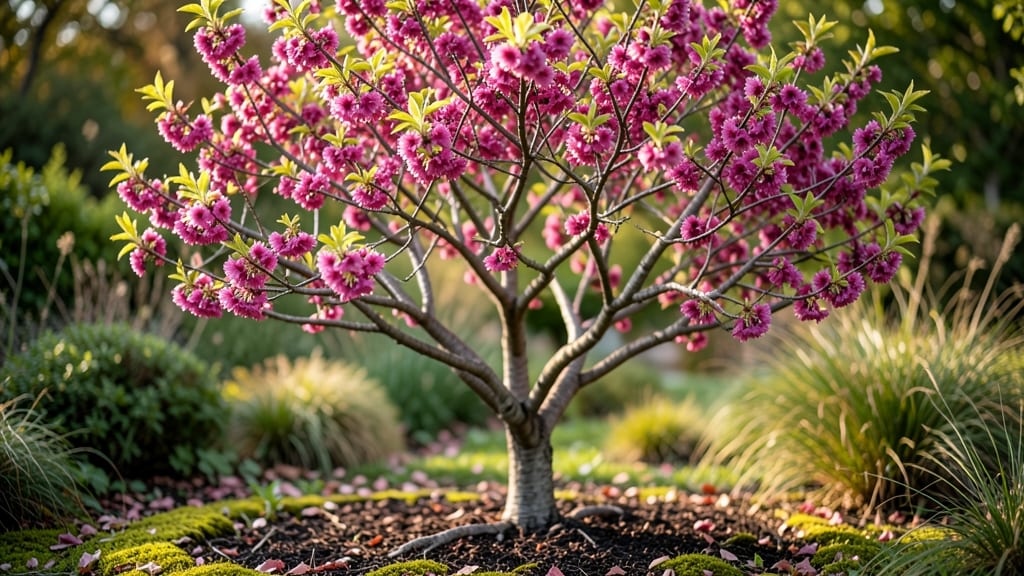
A redbud tree grows how tall does a redbud tree grow between 10 and 30 feet at maturity, but the exact height depends on the variety and growing conditions. 🌳 If you're planning your garden layout, knowing this range is key—some cultivars stay compact, while others reach towering heights.
For example, the classic eastern redbud (Cercis canadensis) typically hits 20 to 30 feet, while dwarf varieties like 'Forest Pansy' max out around 8 to 12 feet.
That means a single tree could fit snugly in a small yard or stretch toward the sky in a spacious landscape.
Growth rate also plays a role: redbuds add 1 to 2 feet per year in ideal conditions, but pruning, sunlight, and soil quality can speed that up—or slow it down.
Below, I’ll break down how to control height, choose the right variety for your space, and avoid common mistakes that stunt growth.
Ready to pick the perfect redbud for your yard? You’ll also find spacing tips to keep your garden looking polished, whether you’re planting a single specimen or a row of these stunning spring bloomers.


Redbud tree height by variety: exact growth expectations
Redbud trees (Cercis canadensis) are beloved for their stunning spring blooms and graceful shape, but their mature height varies dramatically by variety. Knowing the exact growth expectations helps you plan spacing, pruning, and landscape design—whether you want a compact accent tree or a towering shade provider.
The eastern redbud, the most common type, typically reaches 20-30 feet tall, but dwarf varieties stay under 10 feet. Let’s break down the specifics so you can choose the perfect fit for your space.
Your redbud’s height depends on two key factors: its cultivar type and your growing conditions. For example, the Forest Pansy variety stays shorter than the Rubra cultivar, while the western redbud (Cercis occidentalis) grows wider but shorter overall.
Below, I’ve compiled a detailed height comparison table to help you visualize each variety’s mature size and growth rate. This ensures you plant with proper spacing—typically 15-25 feet apart for standard types—to avoid overcrowding.
Here’s the critical data you need before planting: the exact mature height, growth rate per year, and ideal spacing for each variety.
For instance, the dwarf ‘Lavender Twist’ grows just 8-10 feet tall, making it perfect for small yards, while the standard ‘Rubra’ can soar to 25 feet or more. Use this table to compare and plan your landscape layout with confidence.
| Variety | Mature Height | Growth Rate (Yearly) | Spacing Needs | Best For |
|---|---|---|---|---|
| Eastern Redbud (Cercis canadensis) | 20–30 ft | 1–2 ft/year | 20–25 ft from structures | Large landscapes, shade trees |
| Forest Pansy (Cercis canadensis ‘Forest Pansy’) | 15–20 ft | 1 ft/year | 15–20 ft from structures | Medium yards, focal points |
| Rubra (Cercis canadensis ‘Rubra’) | 20–25 ft | 1.5–2 ft/year | 20–25 ft from structures | Shade trees, larger properties |
| Lavender Twist (Cercis canadensis ‘Lavender Twist’) | 8–10 ft | 6–12 in/year | 10–12 ft from structures | Small yards, containers |
| Western Redbud (Cercis occidentalis) | 10–15 ft | 8–12 in/year | 10–15 ft from structures | Dry climates, small spaces |
| Weeping Redbud (Cercis canadensis ‘Weeping’) | 12–15 ft | 1 ft/year | 12–15 ft from structures | Ornamental features, patios |
If you’re planting a standard eastern redbud, expect it to reach 20-30 feet tall in 10-15 years, with a spread of 25-35 feet. This makes it ideal for large properties where you need both shade and spring color.
For smaller spaces, the dwarf varieties like ‘Lavender Twist’ are game-changers—they stay under 10 feet tall and grow at a slower pace, perfect for containers or tight gardens. Their slower growth rate also means less pruning over time.
Growth rates vary by variety, but most redbuds gain 1-2 feet per year in their early years. For example, a ‘Forest Pansy’ might hit 10 feet in 5 years, while a ‘Rubra’ could reach 15 feet in the same time.
This variance is why spacing is critical—planting too close can lead to root competition and stunted growth. Always check the mature spread (often 1.5x the height) when planning your layout.
Pruning plays a role in height control, especially for taller varieties. If you want to keep a redbud shorter, prune in late winter or early spring before new growth begins. Remove up to 25% of the canopy to encourage bushier growth and limit vertical expansion
Factors that influence redbud tree height: soil, sun, and pruning
Your redbud tree's final height isn't set in stone—it responds dramatically to its growing conditions. The right soil, sunlight exposure, and pruning approach can transform a 10-foot dwarf into a 30-foot shade giant. Understanding these factors lets you shape your tree's growth to match your landscape vision.
Let's start with the foundation: soil quality directly impacts root development. Redbuds thrive in well-draining, slightly acidic soil (pH 6.0-7.0). Heavy clay soils stunt growth by limiting oxygen to roots, while sandy soils may require extra watering.
Amending your soil with compost can boost growth rates by up to 30% in the first three years.
Sunlight plays an equally critical role. Redbuds need 6+ hours of direct sun daily to reach their full height potential. In partial shade (3-6 hours of sun), growth slows by 20-30%, often resulting in wider, bushier trees rather than taller ones.
The Forest Pansy variety, for example, may only reach 12 feet in shade compared to 20 feet in full sun.
Pruning is where you take control. Structural pruning in early spring (before buds swell) encourages upward growth, while crown thinning promotes a fuller shape. Avoid heavy pruning after June 1st—this can stimulate late-season growth that won't harden off before winter, potentially damaging the tree.
For height control, prune the central leader (main upward stem) by no more than 25% annually.
Timing matters too. Young redbuds (under 3 years) grow 2-4 feet per year with ideal conditions, while mature trees add just 6-12 inches annually.
If you're working with limited space, focus on root pruning during transplanting—this restricts root spread and can limit mature height by 30-40% compared to unpruned trees.
Remember: these factors work together. A redbud in rich soil with full sun and minimal pruning will reach its maximum height potential. But if you're aiming for a compact accent tree, combine well-amended soil with regular pruning and a partial shade location to keep it under 10 feet.
The choice is yours!