
How To
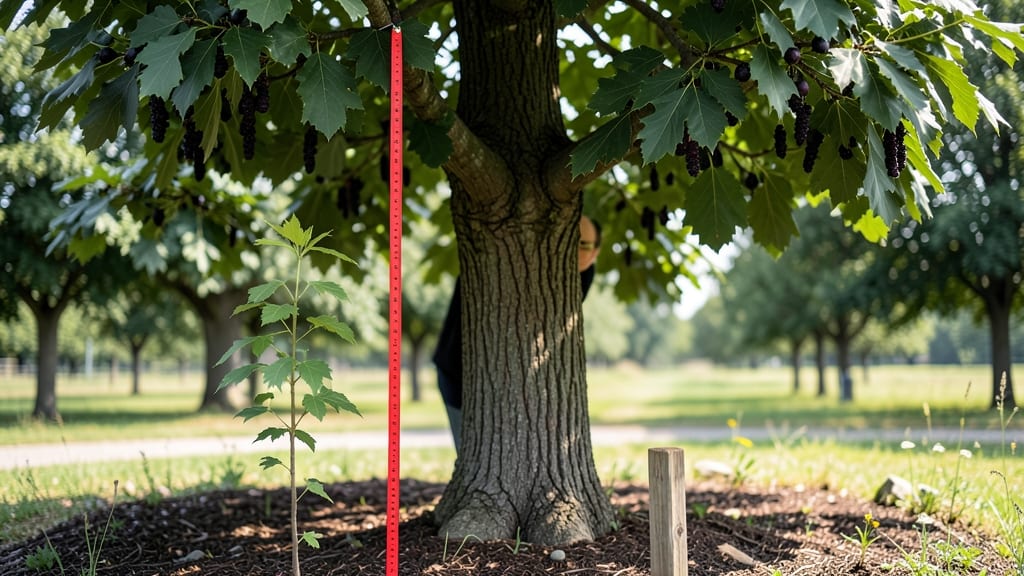
A mulberry tree can grow up to 60 feet tall—taller than most two-story homes—though some dwarf varieties stay under 15 feet 🌳. If you’re picturing a backyard giant, you might be surprised by how much your choice of variety and growing conditions can shape its height.
Picture this: a white mulberry reaching for the sky in your backyard, its branches heavy with fruit, while a dwarf mulberry sits neatly in a small garden, just a few feet tall. The difference? Variety, pruning, and even your local climate.
Whether you’re planning a fruit-bearing giant or a compact shade tree, understanding how tall a mulberry tree can grow—and how to control it—is key. Below, we’ll break down the tallest (and shortest) varieties, the factors that push them skyward, and how to keep them in check.
You’ll also discover pruning tricks to manage height, ideal spacing for your yard, and whether a mulberry tree is the right fit for your space—whether that’s a sprawling landscape or a cozy urban garden.


Mulberry tree height by variety: from dwarf to giant species
When planning your garden, understanding mulberry tree height by variety is crucial. These trees can range from compact shrubs to towering giants, with some varieties reaching heights that dwarf even the tallest humans.
The Morus nigra (black mulberry) and Morus alba (white mulberry) are classic examples of species that can grow into impressive, sky-reaching trees—if left unchecked. But don't worry, there are also dwarf mulberry varieties perfect for small yards or containers!
Your choice of variety will determine not only the tree's mature height but also its growth rate, fruit production, and even its suitability for your local climate.
For instance, the 'Illinois Everbearing' mulberry stays manageable at 10-15 feet, while the wild-type Morus alba can soar to 50-60 feet in ideal conditions. Let’s explore the spectrum of mulberry tree heights so you can pick the perfect fit for your space and goals.
📌 Key Takeaway: Mulberry trees can grow anywhere from 10 feet (dwarf varieties) to 60 feet (giant species), with most standard varieties landing between 20-40 feet at maturity. The right variety can transform your backyard into a fruit-bearing paradise—whether you want a shade tree or a compact ornamental.
| Variety | Mature Height | Growth Rate | Fruit Type | Best For |
|---|---|---|---|---|
| Morus nigra (Black Mulberry) | 50-60 ft | Fast | Black | Large landscapes, shade |
| Morus alba (White Mulberry) | 40-50 ft | Moderate | White/Purple | Urban areas, pollarding |
| 'Illinois Everbearing' | 10-15 ft | Slow-Moderate | Red | Small yards, containers |
| 'Dwarf Mulberry' | 8-12 ft | Slow | Purple | Patio gardens, bonsai |
| 'Red Ruby' | 15-20 ft | Moderate | Red |
Factors that control mulberry tree height: pruning, soil, and climateA mulberry tree's height isn't set in stone—it's shaped by your care and environment. The Morus alba (white mulberry) can soar to 60 feet if left unchecked, while dwarf varieties like 'Illinois Everbearing' max out at 10-15 feet. Understanding these key factors lets you steer its growth toward your vision, whether that's a towering shade provider or a compact backyard fruit source. Sunlight is the primary growth driver—mulberries thrive in full sun (6+ hours daily), which fuels rapid vertical expansion. In partial shade, growth slows, and branches become sparse. I once saw a neglected mulberry in a shady corner grow just 3 feet in 5 years—a fraction of its potential. Soil quality plays a surprising role too. Rich, well-draining soil packed with organic matter accelerates growth, while compacted or poor soil stunts it. I recommend amending with compost or aged manure before planting to give roots the boost they need for skyward ambitions. Watering habits also influence height. Deep, infrequent watering encourages strong root systems that support taller growth, while shallow, frequent watering can lead to weaker stems and leggy branches. Mulberries are drought-tolerant once established, but young trees need 1-2 inches of water weekly during their first two years. Climate zones matter too—mulberries grow fastest in USDA Zones 5-9, where warm summers and mild winters create ideal conditions. In colder zones (Zone 4), growth slows, and trees may stay shorter. I've noticed my Zone 6 mulberry grows 2 feet taller per year than one in Zone 5, even with identical care. Growth Factors: Pros & Cons
Full Sun (6+ hrs)
✅ Maximizes height growth (60+ ft possible) ❌ Requires regular pruning to manage size
Rich Soil
✅ Faster growth (2-3 ft/year possible) ❌ Needs regular amendments (compost, fertilizer)
Pruning
✅ Controls height (can limit to 10-15 ft) ❌ Requires skill to avoid damage
Climate Zone 5-9
✅ Optimal growth conditions ❌ Slower growth in colder zones Pruning is your most powerful tool for height control. Structural pruning in late winter removes weak or crossing branches, while topping (cutting the main stem) limits vertical growth. I recommend pruning young trees annually to establish a strong central leader—this prevents the messy, multi-trunk growth that's hard to manage later. Want a taller mulberry? Combine full sun, rich soil, and minimal pruning. Aiming for compact growth? Prune aggressively in late winter, remove 1/3 of the canopy, and plant in partial shade. With the right approach, even a 60-foot giant can become a 10-foot backyard staple—it's all in how you guide it. |