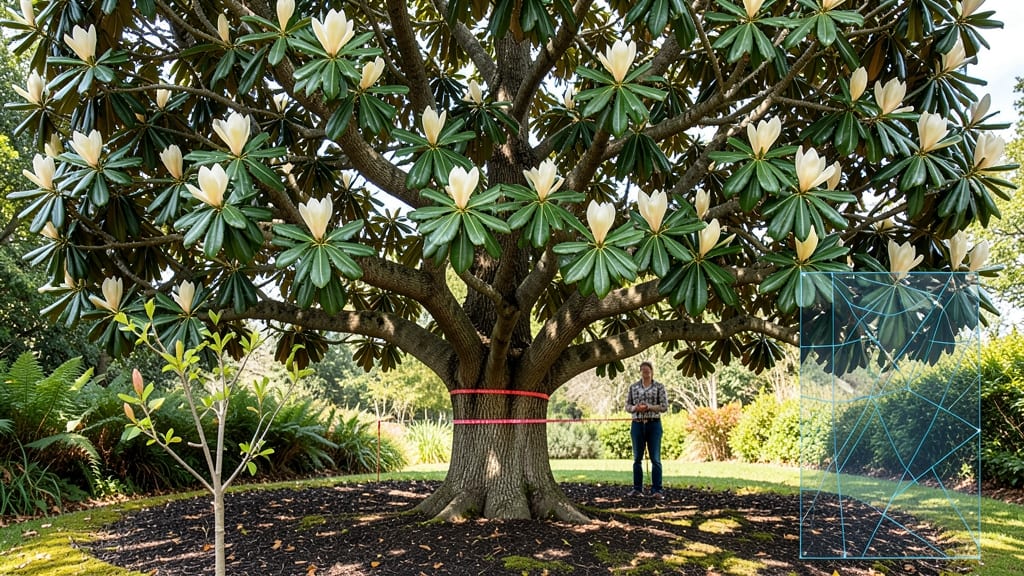
How tall can a magnolia tree grow? It can range anywhere from 8 feet to a staggering 120 feet, depending on the species and growing conditions.
Magnolia trees are nature’s living masterpieces, but their towering potential often surprises even seasoned gardeners. Before planting one in your yard, knowing how tall different magnolia species can grow will help you choose the perfect variety for your space—whether you want a grand statement tree or a compact ornamental centerpiece.
The Southern Magnolia (Magnolia grandiflora), for example, can reach heights of 80 to 100 feet with a spread of 30 to 40 feet, making it a towering giant that needs plenty of room.
On the other hand, dwarf varieties like the 'Little Gem' stay a modest 15 to 25 feet tall, perfect for smaller gardens.
In this guide, you’ll discover how species, climate, and pruning habits influence height, plus practical tips for selecting the right magnolia for your landscape—whether you’re dreaming of a shady canopy or a compact focal point.
Dwarf
8-12 ft (e.g., 'Little Gem', 'Black Tulip')
Container friendly
Semi-Dwarf
15-25 ft (e.g., 'Ann', 'Elizabeth')
Most popular
Standard
40-120 ft (e.g., 'Southern Magnolia', 'Sweetbay Magnolia')
Full orchard size
Magnolia tree height by species: from dwarfs to giants
Choosing a magnolia tree often comes down to one key question: how tall can a magnolia tree grow? The answer varies dramatically—from dwarf varieties perfect for small gardens to towering giants that dominate landscapes.
Understanding these species-specific height ranges helps you select the perfect magnolia for your space while planning for its long-term growth potential.
The Southern Magnolia (Magnolia grandiflora) is one of the most iconic varieties, but its mature height of 60-80 feet makes it unsuitable for urban yards. On the opposite end, dwarf magnolias like 'Little Gem' stay under 15 feet, offering fragrant blooms without the space requirements.
Let’s explore the full spectrum of magnolia heights to help you make an informed choice.
| Species |
Mature Height |
Growth Rate |
Type |
Best For |
| Magnolia grandiflora |
60-80 ft |
1-2 ft/year |
Evergreen |
Large yards, privacy screens |
| Magnolia stellata |
15-25 ft |
1-1.5 ft/year |
Deciduous |
Small gardens, containers |
| Magnolia × soulangeana |
15-20 ft |
1-1.5 ft/year |
Deciduous |
Urban landscapes, patios |
| Magnolia virginiana |
40-60 ft |
2-3 ft/year |
Evergreen |
Swamps, wet soils |
| Magnolia 'Little Gem' |
12-15 ft |
6-12 in/year |
Evergreen |
Small spaces, hedges |
| Magnolia 'Black Tulip' |
8-10 ft |
6-12 in/year |
Deciduous |
Containers, bonsai-style |
| Magnolia kobus |
30-40 ft |
1-2 ft/year |
Deciduous |
Medium yards, focal points |
| Magnolia 'Jane' |
15-20 ft |
1-1.5 ft/year |
Deciduous |
Small yards, city gardens |
| Magnolia acuminata |
40-50 ft |
2 ft/year |
Deciduous |
Woodland gardens |
| Magnolia 'Elizabeth' |
12-15 ft |
6-12 in/year |
Deciduous |
Patios, small lawns |
| Magnolia 'St. Mary' |
How to choose the right magnolia for your yard size
Choosing the right magnolia for your space starts with understanding your yard's dimensions and sunlight conditions. A Southern magnolia (Magnolia grandiflora) can soar to 80-100 feet, while a star magnolia (Magnolia stellata) stays a modest 10-15 feet.
For urban gardens with limited space, smaller varieties like 'Black Tulip' or 'Jane' magnolias are perfect, reaching just 8-12 feet at maturity.
If you live in a small urban yard, prioritize dwarf or semi-dwarf varieties that won’t overwhelm your landscape. These compact magnolias still offer stunning blooms without requiring the same maintenance as towering giants.
For rural properties, larger species like sweetbay magnolia (Magnolia virginiana) or cucumbertree magnolia (Magnolia acuminata) thrive, reaching 40-60 feet and providing year-round interest.
Sunlight needs also play a critical role in selecting the right magnolia. Most varieties prefer full sun to partial shade, but some, like saucer magnolia (Magnolia × soulangeana), tolerate morning sun with afternoon shade. Always check the specific light requirements for your chosen variety to ensure it thrives in your yard’s microclimate.
- 🌳 Urban Yards (Small Spaces): Choose 'Little Gem' (10-15 ft) or 'Black Tulip' (8-12 ft). Ideal for patios or small gardens.
- 🏡 Suburban Yards (Medium Spaces): Opt for 'Ann' (15-20 ft) or 'Elizabeth' (20-25 ft). Perfect for yard edges or as focal points.
- 🌿 Rural Yards (Large Spaces): Plant Southern magnolia (80-100 ft) or cucumbertree magnolia (40-60 ft). Best for spacious landscapes or as shade trees.
- ✂️ Pruning for Height Control: Prune young magnolias in late winter or early spring to shape growth. Avoid heavy pruning on mature trees, as it can stress the plant.
- 💧 Watering Needs: Newly planted magnolias need deep watering weekly for the first year. Established trees tolerate drought once rooted but still benefit from occasional deep soaks.
For small gardens, consider container-growing dwarf magnolias like 'Nigra' or 'Royal Star'. These varieties stay under 10 feet and can be moved seasonally to optimize sunlight exposure. Just ensure your container has drainage holes and use a well-draining potting mix to prevent root rot.
Long-term maintenance is another key factor. Larger magnolias require regular pruning to remove dead branches and maintain shape, while smaller varieties need minimal upkeep. Always use sterilized pruning tools and prune just above a bud or branch collar to encourage healthy regrowth.
If you’re unsure which magnolia fits your space, start with a semi-dwarf variety like 'Jane' or 'Rustica Rubra'. These offer a balance of manageable size and stunning blooms, making them ideal for gardeners new to magnolias.
With the right choice, your yard will bloom with beauty for decades to come! 🌸
★★★★★4.5(10 reviews)