
Leaf Blower
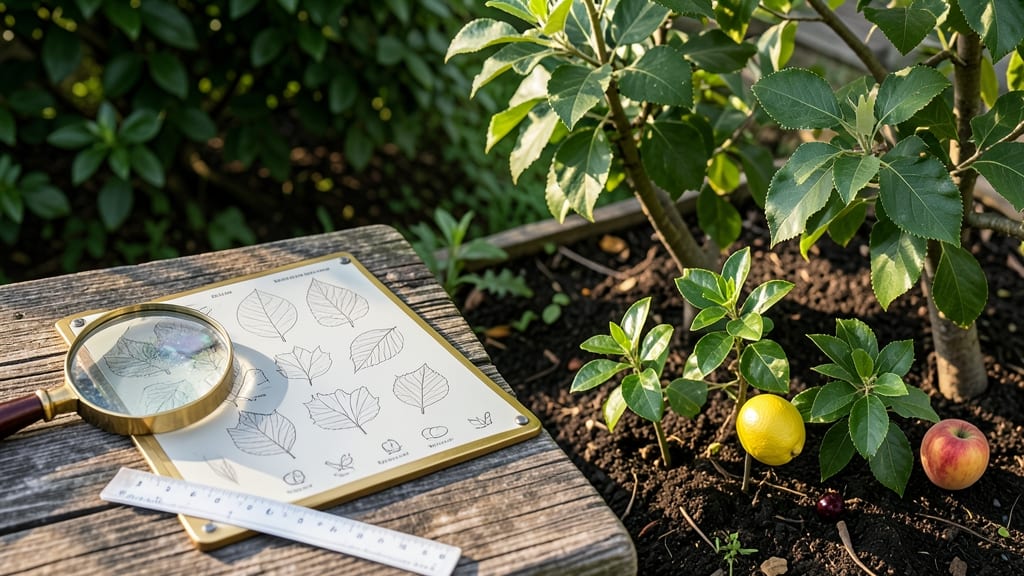
Mastering fruit tree identification by leaf saves you from guessing—and my first attempt at distinguishing a peach from a plum tree ended with me staring at a leaf for 20 minutes. 🌿 The secret lies in just five key traits: shape, edges, veins, arrangement, and size.
Once you learn these, you’ll recognize apple, cherry, and citrus trees in seconds, even without fruit.
Start with shape—round like a maple or elongated like a willow? Then check the edges: smooth, serrated, or lobed? Apple leaves have jagged edges, while peach leaves are smooth with fine teeth.
Veins tell another story: citrus leaves have three main veins, while fig leaves are deeply lobed and almost palm-like. Seasonal variations matter too—spring leaves are often softer than summer’s.
You’ll quickly spot the differences: a cherry tree’s oval leaves with pointed tips vs. a pear’s broader, slightly asymmetrical ones. Even tricky look-alikes like mulberry and fig have distinct vein patterns.
Once you’ve narrowed it down, check the fruit or flowers for final confirmation—though the leaves alone often do the job.
This method works for backyard trees, neighborhood walks, or even identifying wild fruit trees. Grab a notebook, a magnifying glass, and a sunny day—you’ll be an expert in no time.
Nature’s Hidden Leaf Clues
Identifying fruit trees by their leaves is a skill rooted in evolutionary adaptations and environmental survival strategies. Every leaf’s shape, texture, and arrangement tells a story—one shaped by millions of years of natural selection.
But why do these traits vary so drastically between species? Let’s break down the science behind why leaves become such reliable identifiers.
Leaves aren’t just passive appendages—they’re highly specialized tools designed to maximize a tree’s chances of survival. Their unique features (like serrated edges, waxy coatings, or compound structures) evolved to:
- Optimize sunlight capture: Broad leaves (e.g., Citrus or Mango) maximize photosynthesis in sunny climates, while narrow leaves (e.g., Apple or Pear) reduce water loss in drier regions. - Deter herbivores: Spines, rough textures, or toxic compounds (like in Black Walnut leaves) make some trees unappetizing to pests. Even the arrangement of leaves—alternate vs. opposite—can influence how easily insects navigate the tree. - Conserve water: Drought-resistant trees (e.g., Pomegranate or Fig) often have thick, leathery leaves with fewer stomata (pores) to minimize evaporation.Pro Tip: 🌡️ If a leaf feels succulent (thick and fleshy), it’s likely from a tree adapted to arid conditions—think Olive or Loquat.
Every fruit tree species carries a unique genetic code that dictates leaf morphology. Key genetic factors include:
- Phyllotaxis (leaf arrangement): Some trees (like Peach or Cherry) have alternate leaves (one per node), while others (like Buckeye) grow in opposite pairs. This pattern is hardwired into their DNA and rarely changes. - Venation patterns: The network of veins (palmate vs. pinnate) is determined by vascular bundle development during growth. For example, Avocado leaves have pinnate venation with smooth edges, while Persimmon leaves are lobed with palmate veins. - Compound vs. simple leaves: Some trees (like Hazelnut) produce compound leaves (multiple leaflets per stem) due to meristem differentiation, while others (like Plum) grow simple leaves for efficiency.Fun Fact: 🔬 Some leaf traits, like serrations, are controlled by a single gene (_SAWTOOTH_ in plants), making them consistent across generations.
Leaves aren’t static—they adapt in real-time to their environment. Here’s how:
| Factor | Leaf Adaptation | Example Trees |
|---|---|---|
| High humidity | Large, thin leaves with high stomatal density to absorb moisture. | Banana, Papaya |
| Dry climates | Small, waxy, or rolled leaves to reduce water loss. | Pomegranate, Fig |
| Cold winters | Deciduous leaves (drop early) to avoid frost damage. | Apple, Pear |
| Shade tolerance | Thinner, lighter-green leaves to capture minimal light. | Avocado, Mulberry |
Key Insight: 🌍 If you spot a tree with leathery, evergreen leaves in a temperate zone, it’s likely a subtropical escapee (e.g., Loquat or Medlar), thriving outside its native range.
Over centuries, humans have selectively bred fruit trees for traits that make them easier to identify—or harder to mistake! For example:
- Hybridization: Crossbreeding (like Pluot = Plum + Apricot) can create hybrid leaves with intermediate traits, making ID tricky. - Grafting: A single tree might display multiple leaf types if grafted with different varieties (e.g., an Apple tree grafted with Crabapple). - Pesticide resistance: Some modern cultivars develop thicker cuticles or darkened veins as a side effect of chemical treatments.Watch Out: ⚠️ If a tree’s leaves look unnaturally uniform (e.g., no serrations, perfect symmetry), it might be a cloned or heavily managed specimen.
Quick Fixes for Leaf ID Confusion
Mastering fruit tree identification by leaf doesn’t have to be overwhelming—even if you’re staring at a dense canopy and wondering, "Is this a peach or a plum?" Here’s how to troubleshoot common challenges and turn leafy mysteries into confident IDs in seconds.
---
Problem: Two trees’ leaves seem identical at first glance—same shape, color, even veins—but you’re not sure which is which.
Solutions: - 🍃 Compare Leaf Arrangement - Alternate vs. Opposite: Hold a branch at eye level. If leaves grow in pairs at each node (like a ladder), it’s opposite (e.g., dogwood). If they spiral solo, it’s alternate (e.g., apple). - Whorled: Rare but striking—three or more leaves radiate from a single point (e.g., horse chestnut).
- 🌿 Check the Stem & Bark - Peach/nectarine leaves often have a fuzzy underside and reddish stems. - Cherry leaves have smooth edges and bitter almond scent when crushed (if you dare!). - Citrus leaves are leathery, highly aromatic, and grow on thorny stems.
- 📏 Measure & Count - Use a leaf ID chart (like the one in this guide) to compare length, width, and serration type.
Example: | Tree | Leaf Shape | Edge Type | Unique Traits | |------------|------------------|-----------------|------------------------| | Apple | Oval, broad | Serrated | Red fall color | | Pear | Lobed, uneven | Double-serrated| Sticky buds in spring | | Fig | Lobed, rough | Wavy | Milky sap when cut |
> 💡 Pro Tip: Snap a close-up photo of the leaf’s underside, stem, and bud—details like hairiness or gland dots (tiny bumps) can be game-changers.
---
Problem: The tree is too tall, or leaves are hidden under branches—you’re only getting partial views.
Solutions: - 🍂 Look for Falling Leaves - Shake a branch gently (or wait for wind) to spot fallen leaves on the ground. Compare fresh and dried samples—they often retain key traits (e.g., maple leaves keep their lobed shape even when crispy).
- 👀 Scan for Fruit or Flowers - Fruit presence is a dead giveaway: - Round red fruit? → Apple or crabapple. - Yellow, fuzzy fruit? → Peach or nectarine. - Small, purple clusters? → Plum or cherry. - Flowers can also help: White, five-petaled? Likely apple or hawthorn. Pink pom-poms? Cherry.
- 🔦 Use a Flashlight (Seriously!) - On overcast days or early mornings, shine a flashlight under the leaf to spot: - Silvery undersides (e.g., birch). - Red or purple veins (e.g., redbud).
---
Problem: Your tree doesn’t match any common species in your area—what gives?
Solutions: - 🗺️ Narrow by Climate Zone - Tropical? Look for leathery, evergreen leaves (e.g., mango, avocado). - Temperate? Focus on deciduous (shedding) leaves with distinct veins (e.g., persimmon, pawpaw). - Desert? Hunt for small, waxy leaves (e.g., pomegranate, jujube).
- 📱 Use a Leaf ID App - Apps like LeafSnap or PictureThis let you upload a photo and get instant matches. Bonus: They often include fruit and flower clues too.
- 📖 Consult Local Experts - Post a photo in gardening forums (e.g., Reddit’s r/whatsthisplant) or ask at a nursery. Include: - Your zip code (for climate context). - Leaf size, shape, and any unusual features (e.g., "sticky when touched").
---
- 📅 Track Seasonal Changes - Take monthly photos of the same branch. Note when leaves emerge, change color, or drop—this narrows it down to early bloomers (cherry) vs. late bloomers (apple).
- 🌱 Label Your Trees - Use flagging tape or paint sticks to mark young trees with a guess + date. Revisit in a year to confirm.
- 🔎 Build a Leaf Library - Press a few leaves from known trees (e.g., neighbor’s apple tree) in a herbarium (between heavy books). Compare future finds to your collection.
--- 🎯 Final Reminder: Most mistakes come from overlooking small details—so slow down, flip the leaf, and ask yourself: "What’s weird about this one?" That’s where the clues hide!
Frequently asked questions
What are the 3 most reliable leaf traits to identify fruit trees?
Focus on leaf shape, edge type, and vein pattern. For example, apple leaves are oval with jagged edges and prominent veins, while peach leaves are smooth-edged with fuzzy undersides. These traits rarely change seasonally and are species-specific.
Can I identify a fruit tree by its leaves in winter?
You can still make an educated guess! Look for bud shape and bark texture. Apple trees have oval buds with horizontal lines, while cherry trees have smaller, pointed buds. For tropical trees (like citrus), check for evergreen branches or persistent leaf scars.
Why do some leaves look different on the same tree?
This often happens with grafted trees (like apple trees) or hybrids. The top part may produce fruit-specific leaves while the rootstock leaves differ. Also, young leaves often look different from mature ones—compare multiple branches for accuracy.
How do I tell the difference between a plum and cherry tree by leaves?
Cherry leaves are smooth-edged with pointed tips and often have a bitter almond scent when crushed. Plum leaves are broader with fine serrations and lack the scent. Check the leaf arrangement too—plums often have alternate leaves with sticky buds in spring.
What should I do if I can't find my tree in any identification guide?
Start by noting unusual traits like hairy stems, milky sap, or compound leaves. Take close-up photos of both sides, the stem, and any fruit/buds. Use a leaf ID app or post in gardening forums with your location—experts often spot rare species!