
Trees
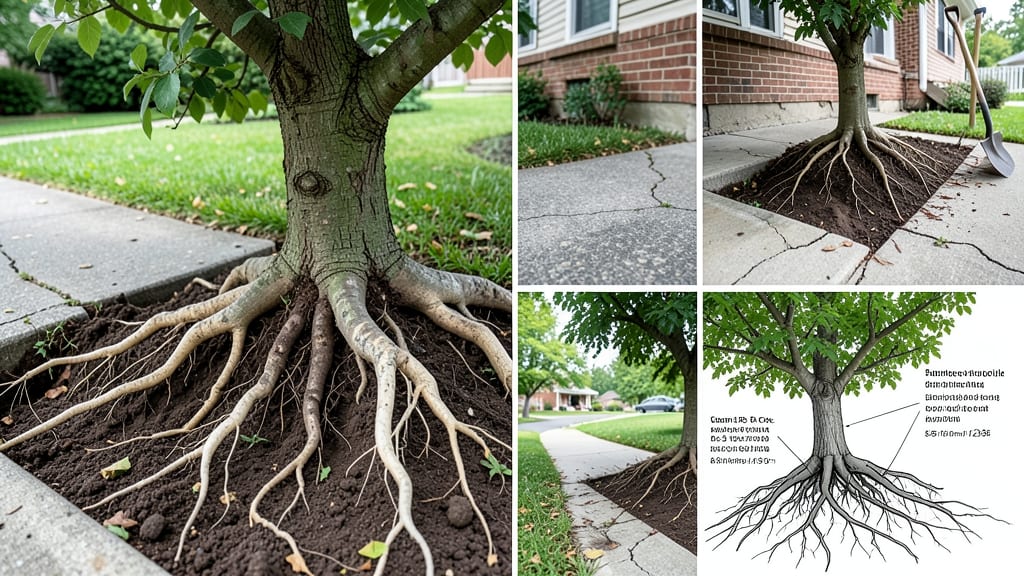
Apple tree roots do cause damage when planted too close to homes, as they can lift foundations, crack driveways, or block sewer lines—especially as trees mature. Soil type and variety influence the risk, with dwarf trees posing less threat than full-sized ones. Strategic spacing and root barriers reduce potential harm.
Apple tree roots spread aggressively, often reaching 2–3 times the tree's canopy width—meaning a mature tree's roots can extend 50+ feet in all directions. 🌳 The real danger comes from their depth: roots can penetrate 4–6 feet down, directly threatening underground utilities and shallow foundations.
Clay-heavy soils slow spread but increase pressure on structures, while sandy soils allow roots to expand faster. Even young trees should be planted with caution, as their roots start growing immediately after planting.
Most damage occurs when roots encounter obstructions like concrete or pipes. They'll either grow around them (creating pressure) or seek alternative paths—sometimes through cracks in sidewalks or foundation gaps. Dwarf varieties (like 'Columnar' or 'Sentinel') stay compact, making them safer for urban yards, but even these need proper spacing.
A general rule: plant standard apple trees at least 15–20 feet from homes and 8–10 feet from sidewalks to minimize risks.
💡 In This Article
- How Apple Tree Roots Grow and Spread
- Safe Planting Distances for Apple Trees Near Structures
How apple tree roots grow and spread
Apple tree roots grow in two main phases: the first year focuses on shallow, horizontal expansion to establish stability, while later years send deep, vertical roots searching for water and nutrients. 🌱 The lateral roots spread aggressively, often reaching 2–3 times the tree's canopy width—meaning a mature tree's roots can extend 50+ feet in all directions.
This aggressive spread is driven by the tree's need to access moisture and nutrients beyond the surface layer, especially in well-drained soils.
The depth of root penetration varies by soil type: in clay-heavy soils, roots may only reach 3–4 feet deep but exert immense pressure on nearby structures, while sandy soils allow roots to extend 6+ feet down, increasing the risk of foundation damage.
Root growth accelerates with high moisture levels, which is why trees planted near irrigation systems or leaky pipes can become particularly problematic over time.
Young apple trees may seem harmless because their root systems are still developing, but they start growing immediately after planting. What begins as a small network can become a structural threat within 5–10 years, especially for full-sized varieties.
The danger escalates when roots encounter obstructions like concrete foundations or sewer lines—they'll either grow around them (creating upward pressure) or seek alternative paths through cracks, which is how sidewalks and driveways get damaged.
Soil compaction plays a critical role: compacted soils restrict root growth horizontally, forcing roots to grow deeper and increasing the risk of foundation damage. Conversely, loose soils allow roots to spread widely, which can lead to sidewalk cracks but may reduce vertical pressure.
Understanding these growth patterns helps homeowners make informed decisions about planting locations and preventive measures like root barriers.
For example, a 20-foot-tall apple tree might have roots extending 40–60 feet outward, which is why planting near property lines or shared driveways requires careful planning.
The tree's age also matters: a 10-year-old tree will have a more established root system than a 2-year-old sapling, meaning the risk of damage increases significantly over time.