
Pruning
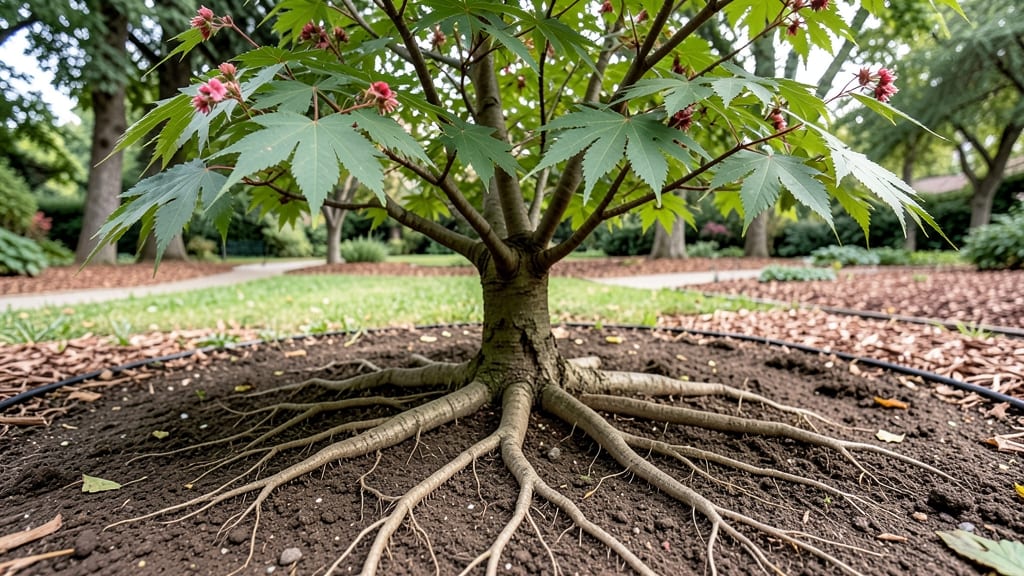
The Japanese maple tree root system is far more delicate than most gardeners realize, with a shallow spread that can make or break its long-term health.
If you’ve ever wondered why your Japanese maple struggles to thrive despite perfect sunlight and watering, the answer might lie beneath the soil—its intricate, shallow root system demands careful attention.
Unlike deep-rooted oaks or pines, these roots spread wide but stay close to the surface, competing fiercely with nearby plants for nutrients and moisture. A single misstep in planting or mulching can suffocate them, leading to stunted growth or even death.
In this guide, I’ll break down how their roots grow, how to protect them during transplanting, and the best soil conditions to keep your 🌳 happy for decades.
How Japanese maple tree roots spread: depth, width & growth patterns
Japanese maple trees (Acer palmatum) are prized for their stunning foliage and delicate branches, but their shallow root system is what truly defines their care needs. Unlike deep-rooted oaks or pines, these roots spread horizontally just 12-24 inches below soil, making them highly sensitive to soil compaction and drought.
Understanding this growth pattern helps you plant, water, and protect your tree effectively.
The root system of a Japanese maple develops in two distinct layers: the upper fibrous roots and the deeper structural roots. The fibrous roots dominate the top 6-12 inches, absorbing moisture and nutrients, while the deeper roots anchor the tree but remain relatively shallow.
This structure explains why Japanese maples struggle in heavy clay or waterlogged soils—their roots can’t penetrate deeply enough to escape saturation.
| Root Type | Depth Range | Lateral Spread | Primary Function |
|---|---|---|---|
| Fibrous Roots | 0-12 inches | 2-3x canopy width | Nutrient/water absorption |
| Structural Roots | 12-24 inches | 1-2x canopy width | Anchorage/stability |
| Taproot (Juvenile) | Up to 36 inches | Limited spread | Early growth support |
In their first 3-5 years, Japanese maples develop a taproot-like structure that can extend up to 36 inches deep, but this diminishes as the tree matures. By age 10, the root system becomes almost entirely shallow, with 90% of roots within 12 inches of the surface.
This explains why young trees are more resilient to transplanting—their deeper juvenile roots provide temporary stability.
Seasonal growth patterns also influence root development. During spring and early summer, roots grow most actively, extending laterally at rates of 6-12 inches per year. In fall and winter, growth slows dramatically, but roots remain metabolically active, absorbing stored nutrients.
This seasonal rhythm means your watering and fertilizing schedules should align with these cycles to support root health.
One common misconception is that Japanese maples don’t need deep soil. However, their shallow roots require loose, aerated soil to prevent suffocation. Compacted or poorly draining soil can lead to root rot or nutrient deficiencies, even if the tree appears healthy above ground.
Always amend planting areas with organic matter like compost to improve root zone conditions.
The lateral spread of Japanese maple roots is another critical factor. Mature trees can extend roots 2-3 times their canopy width, which means a 10-foot tree may have roots spreading 20-30 feet.
This explains why they compete aggressively with nearby plants and why you should maintain a 10-foot buffer from other trees or structures to avoid root damage.
Root growth also responds to environmental stressors. Drought conditions trigger roots to grow deeper in search of moisture, but this adaptation is temporary. Once water returns, roots revert to their shallow pattern.
Over-watering, however, is more dangerous—it causes roots to suffocate, leading to yellowing leaves and stunted growth. Always ensure your soil drains well while maintaining consistent moisture.
When transplanting a Japanese maple, preserving the root ball is essential. Because roots are shallow, digging too deeply can sever critical structural roots, leading to transplant shock. Use a wide but shallow hole (2-3 times wider than the root ball but only 12-18 inches deep) to minimize disturbance.
Amend the soil with organic compost to encourage rapid root establishment in the new location.
Mulching plays a vital role in protecting Japanese maple roots. A 3-inch layer of organic mulch (like wood chips) helps regulate soil temperature, retain moisture, and prevent weed competition. However, avoid piling mulch against the trunk—this can smother the calcium layer and promote rot.
Keep mulch 6 inches away from the trunk and refresh it annually to maintain effectiveness.
If you notice leaf scorch or wilting despite regular watering, it’s often a sign of root stress. Check for compacted soil, poor drainage, or root damage from nearby construction.
Japanese maples are resilient but signal distress early—acting quickly can save your tree. Always prioritize soil health and proper spacing to support their delicate root systems.
Soil competition risks: how Japanese maple roots affect nearby plants
The Japanese maple's shallow root system spreads aggressively within the top 12-18 inches of soil, creating fierce competition for nutrients and water. This lateral spread can extend up to 3-5 times the tree's canopy width, making it a bully in the garden.
When planted too close to other plants, your grasses, shrubs, or even young trees may show signs of stress long before you notice the problem above ground.
Your neighboring plants might start showing yellowing leaves, stunted growth, or sudden wilting during dry spells—classic signs of root competition. Even deep-rooted trees like oaks can suffer if their roots are forced to compete for moisture in the upper soil layers where Japanese maples dominate.
The key is understanding which plants are most vulnerable and how to create space for everyone to thrive.
| Plant Type | Root Depth | Competition Risk | Recommended Spacing |
|---|---|---|---|
| Ornamental Grasses | 6-12 inches | High (shallow roots) | 10+ feet away |
| Shrubs (Boxwood, Hydrangea) | 12-24 inches | Moderate (surface competition) | 8-10 feet away |
| Perennials (Hostas, Ferns) | 6-18 inches | High (nutrient competition) | 6-8 feet away |
| Other Trees (Oak, Maple) | 3-6 feet deep | Low-Moderate (depth difference) | 15-20 feet away |
| Ground Covers (Ivy, Creeping Jenny) | 2-6 inches | Very High (crowding) | 12+ feet away |
To minimize conflicts, plant Japanese maples at least 8-10 feet from other trees and 6-8 feet from shrubs. For grasses and ground covers, increase spacing to 10-12 feet to prevent smothering.
If you're working with limited space, consider container growing for smaller varieties like 'Crimson Queen' or 'Bloodgood', which have more controlled root systems.
Mulching plays a crucial role in managing competition. Apply a 3-4 inch layer of organic mulch (like wood chips or shredded bark) around the base, but keep it 6 inches away from the trunk to prevent rot.
This creates a moisture barrier while allowing your Japanese maple's roots to access water without competing with weeds or shallow-rooted plants.
Watch for early warning signs like leaf scorch or premature leaf drop in neighboring plants during summer droughts. These are clear indicators that your Japanese maple is outcompeting its neighbors for water.
In such cases, deep watering the affected plants separately (away from the maple's root zone) can help alleviate stress until you can adjust spacing or mulching practices.
If you're planting multiple Japanese maples, space them 15-20 feet apart to prevent their roots from merging. Remember, these trees are long-lived investments—proper spacing now saves you from costly removals or replacements later.
With the right planning, your Japanese maple can coexist beautifully with other plants while maintaining its stunning foliage and form.