
Trees
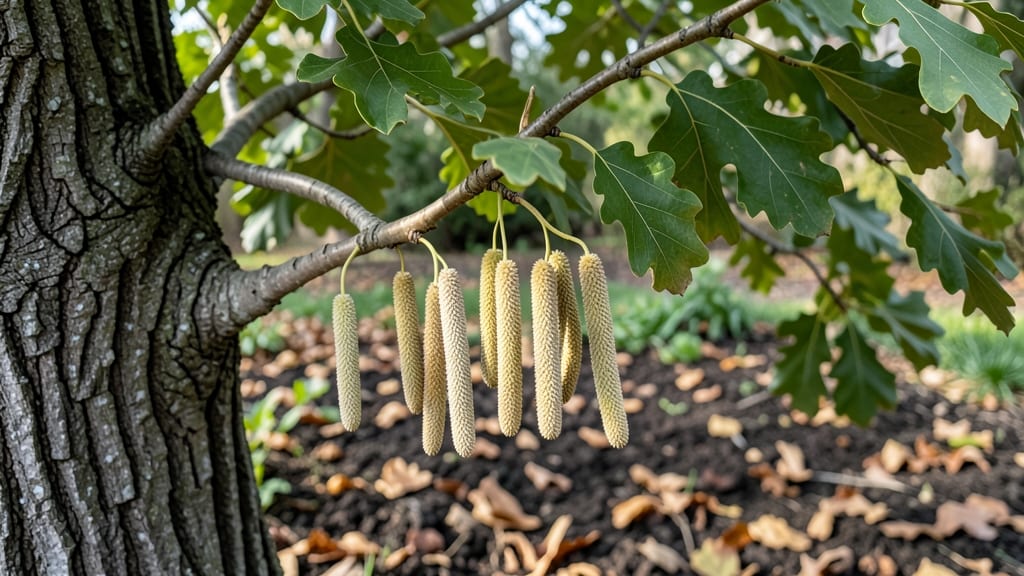
Oak tree pollen tassels—those fuzzy, yellowish catkins—emerge in early spring to kickstart fertilization before leaves appear. These male flowers play a vital role in oak reproduction, signaling new growth while also serving as a seasonal health indicator for the tree.
These oak tree pollen tassels aren't just a springtime spectacle—they're nature's way of ensuring oak trees reproduce efficiently. 🌿 The catkins release pollen that must reach female flowers (often on the same tree) for fertilization, a process that can take weeks.
What's fascinating is how environmental factors like temperature and moisture can delay or accelerate their appearance, sometimes making them appear earlier in warmer climates. For homeowners, their presence is usually a sign of good health, though excessive pollen might trigger seasonal allergies or coat lawns with a yellowish dust.
If you're monitoring your oak trees, pay attention to the tassels' color and size—healthy ones should be vibrant yellow without dark spots or mold. This is your chance to spot early signs of stress or disease before they become major issues.
Pruning isn't typically needed unless the tassels are interfering with walkways or views, but timing matters: always wait until after they've released pollen to avoid harming the tree's reproductive cycle.
💡 In This Article
- The Science Behind Oak Tree Pollen Tassel Development
- Managing Oak Tree Pollen Tassels in Landscapes
The science behind oak tree pollen tassel development
Oak trees are monoecious, meaning they produce both male and female flowers on the same tree. The fuzzy, yellowish pollen tassels you see are actually male catkins, which develop from buds formed the previous fall.
These buds contain flower primordia that require chilling temperatures (32-45°F) for 60-90 days to break dormancy—a process called vernalization. Without adequate cold exposure, the buds may fail to develop properly, delaying or preventing tassel formation entirely.
The timing of tassel emergence varies by oak species. For example, white oak (Quercus alba) typically produces catkins in late March to April, while red oak (Quercus rubra) may bloom 2-3 weeks earlier. This variation occurs because different species have evolved slightly different hormonal responses to temperature cues.
Once temperatures consistently rise above 50°F, the buds swell rapidly, and within 7-10 days, the tassels unfurl to release pollen. The pollen itself is carried by wind, with each catkin capable of producing millions of grains over 2-3 weeks.
Moisture levels play a critical role too. Drought conditions can stunt tassel growth or cause pollen to become sticky and clumped, reducing fertilization success. Conversely, excessive rain can wash away pollen before it reaches female flowers (which appear as tiny, reddish structures on new shoots).
This is why oak trees in temperate climates with moderate rainfall often have the healthiest reproductive cycles. The tassels' bright yellow color comes from carotenoid pigments, which help attract pollinators indirectly by making the tree more visible to insects that may aid in pollen dispersal.
What most people don't realize is that these tassels are ephemeral—they wither and drop within 4-6 weeks after releasing pollen, making way for leaf buds. This rapid lifecycle ensures the tree doesn't waste energy maintaining structures it no longer needs.
The entire process is finely tuned to spring's unpredictable weather, with oak trees prioritizing reproduction over leaf growth in early spring. 🌱 This adaptation explains why you'll often see tassels long before the tree's iconic lobed leaves appear.
For those tracking tree health, observe the tassels' uniformity. Healthy catkins should be vibrant yellow without brown or blackened tips, which could indicate fungal infections (like anthracnose) or nutrient deficiencies.
The size also matters: white oaks typically produce longer, drooping tassels (3-6 inches), while red oaks have shorter, upright ones (1-3 inches). These differences aren't just cosmetic—they reflect evolutionary adaptations to local wind patterns and pollinator behaviors.
Here's a quick comparison of key factors influencing tassel development:
- Temperature: Requires 60-90 days of chilling below 45°F for bud activation
- Moisture: 30-50% soil moisture optimal; drought causes stunted growth
- Species: White oaks bloom later than red oaks by 2-3 weeks
- Pollen Production: Each catkin releases 1-5 million grains over 2-3 weeks
The entire process is a masterclass in seasonal synchronization, where oak trees time their reproduction to maximize success despite environmental variability. This biological precision is why these tassels aren't just a springtime curiosity—they're a visible health report from your oak trees. 🌳