
Size
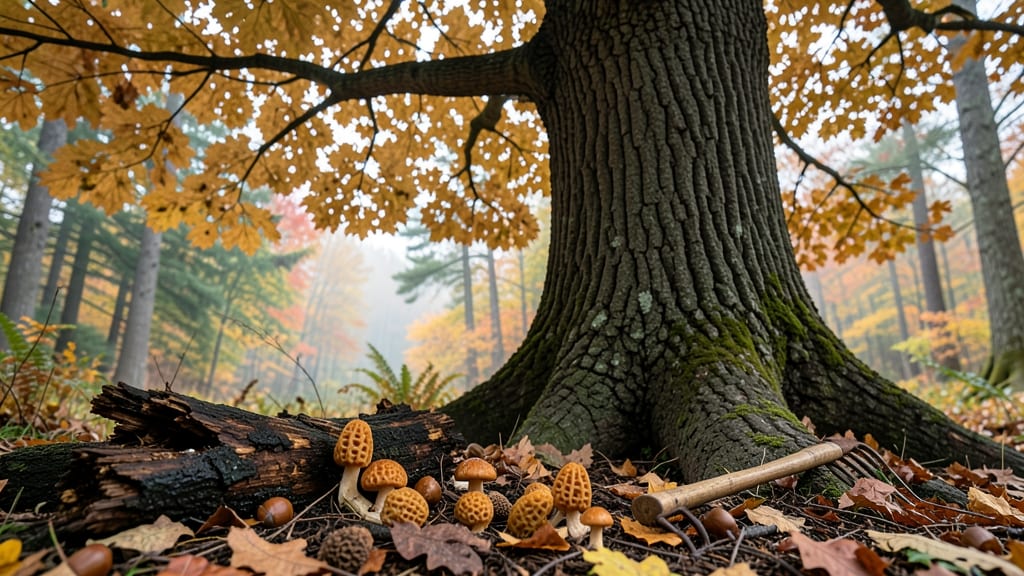
Morel mushrooms grow near specific trees like ash, apple, elm, and sycamore, thriving alongside dying or dead wood in damp, fertile forest soil during spring. These hardwood forests with decaying roots create ideal conditions for their growth.
Morels have a fascinating relationship with these trees, often forming mycorrhizal connections with their roots. 🌳 The mushrooms prefer trees that are either dead or in decline, as the decaying wood provides essential nutrients while the living roots maintain the right moisture levels.
I've found that ash trees, in particular, are a prime indicator—when you see clusters of dead ash in a forest, it's often a morel hotspot. The key is looking for areas with rich, loamy soil and consistent moisture, especially after spring rains.
What sets these trees apart is their ability to create microclimates perfect for morels. Apple and elm trees, for example, often produce morels in their root zones because their decaying wood retains moisture while providing organic matter.
These conditions are rare in urban areas, which is why wild forests remain the best places to hunt for them.
💡 In This Article
- Morel Mushroom Tree Hosts: Science Behind Symbiotic Relationships
- Best Trees for Morel Hunting: Identification and Forest Conditions
Morel mushroom tree hosts: science behind symbiotic relationships
Morels form a unique partnership with certain hardwood trees through mycorrhizal fungi networks, where their mycelium connects with tree roots to exchange nutrients.
Ash trees, particularly white ash, are a favorite because their decaying wood creates the perfect microclimate—moisture levels stay consistently high while the decomposing wood releases nutrients like nitrogen and phosphorus that morels crave.
This relationship only thrives when the tree is stressed or dead, as healthy trees actively compete with mushrooms for resources. 🌱 The pH of the soil around these trees typically ranges between 6.0 and 7.5, which morels prefer over acidic conditions.
The tree's root system plays a crucial role in spore germination. When morel spores land near suitable host trees, the tree's roots exude sugars and organic compounds that stimulate fungal growth.
Elm trees, for example, produce morels in their root zones because their shallow root systems create pockets of rich, moist soil. Apple trees follow a similar pattern, especially when they're older and their roots begin to decay.
The key factor is the tree's ability to maintain moisture while providing organic matter—this dual benefit explains why morels rarely appear under conifers, which have different soil chemistry and moisture dynamics.
Tree health directly impacts morel production. Dying trees release more nutrients as their cells break down, creating a temporary boom in fungal activity. I've noticed that ash trees showing signs of decline—like yellowing leaves or hollow trunks—often produce morels within 1-2 years of their death.
This window is critical because once the wood fully decomposes, the conditions become too acidic for morels to thrive. The mushrooms essentially "race" against complete decay to establish themselves. This explains why you'll rarely find morels growing directly on healthy, living trees.
Soil composition matters just as much as the tree species. Morels prefer well-drained but moisture-retentive soils with high organic content, often found in bottomland forests where water tables remain close to the surface.
The decaying wood from these trees acts like a natural water reservoir, maintaining the ideal 60-80% soil moisture that morels need. In contrast, sandy soils or areas with poor organic matter rarely support morel growth, regardless of the tree species present.
This is why forest edges and transition zones between upland and wetland areas become prime hunting grounds.
One fascinating detail is how morels "choose" their hosts. Research shows that morel spores are attracted to trees with specific bacterial communities in their root zones. These bacteria help break down complex organic matter, creating the nutrient-rich environment morels need.
For example, apple orchards that have been abandoned for 10-15 years often become morel hotspots because the decomposing roots create perfect conditions. This bacterial-tree-fungus interaction explains why you might find morels growing near multiple tree species in the same area—they're all contributing to the same ecosystem.
Understanding this symbiotic relationship helps explain why morel hunting requires patience and observation. The best spots aren't random—they're areas where specific trees have been dying for just the right amount of time.
For instance, after a forest fire or storm that creates deadfall, morels often appear in the following spring as the wood begins to decompose.
This ecological timing is what makes morel hunting both a science and an art—you're essentially reading the forest's history to predict where these mushrooms will appear next. 🌿