
Flowers
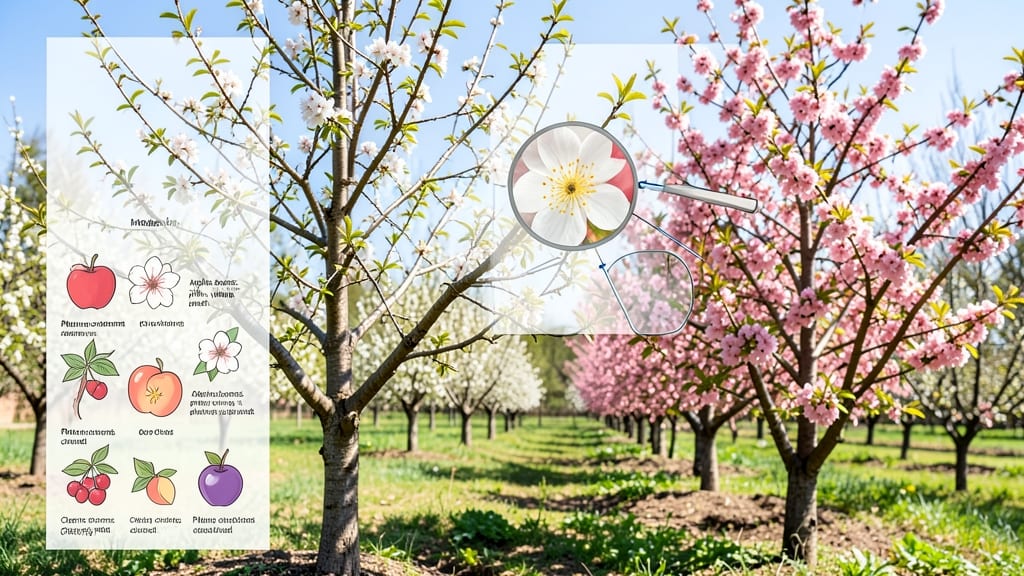
The identification of fruit tree flowers saves you from pruning at the wrong time—or missing the best pollination window. 🌸 I’ve spent years watching blossoms transform into fruit, and the difference between knowing your tree’s flowers and guessing is like night and day. A single mistake in timing can mean no harvest, so let’s decode those petals before they fade.
The first clue is color: apple blossoms are pure white, peach flowers blush pink, while cherry trees burst with soft pink clusters. Shape matters too—some flowers dangle like chandeliers (think pears), while others stand proudly upright (like plums).
Even the scent gives hints: citrus blooms perfume the air, while stone fruits often smell faintly sweet. These visual cues tell you everything you need to prune, fertilize, or invite pollinators.
Once you recognize the flowers, cultivation gets easier. Prune after blooming to avoid cutting off next year’s fruit, and time your pollination helpers—bees or even a spray bottle of water—to visit when petals are fresh.
Misidentifying a flower could mean missing the harvest entirely, but master this skill, and you’ll predict fruit set like a pro. The payoff? A tree heavy with fruit by summer.
This works for backyard orchards, urban patios, or even container-grown citrus. Whether you’re dealing with a single tree or a dozen, the same rules apply—just match the bloom to the care it needs. Let’s get those flowers identified so you can grow what you love.
What Triggers Flower Misidentification
Flowers on fruit trees can be a gardener’s delight—but also a source of frustration when you can’t quite put your finger on what you’re seeing. Misidentification often happens due to a mix of natural biology, environmental factors, and even human perception.
Let’s break down the key reasons why your fruit tree blooms might be harder to recognize than you’d expect.
Fruit trees come in countless cultivars, each bred for specific traits like fruit size, disease resistance, or flavor. While a tree’s genus (e.g., Malus for apples, Prunus for cherries) may be consistent, the species or cultivar can drastically alter flower shape, color, and even scent.
- Why it happens: Selective breeding prioritizes fruit quality over floral aesthetics.
For example, a ‘Honeycrisp’ apple tree’s blooms may look subtly different from a wild crabapple’s—smaller petals, paler hues, or fewer stamens. - Actionable tip: Cross-reference your tree’s known cultivar with a database like the USDA Plant Database or consult local nursery records.
If unsure, note unique traits (e.g., double flowers, asymmetrical petals) and compare them to reference images.
Extreme weather, poor soil, or water fluctuations can stunt flower development or alter their appearance, making identification trickier.
- Cold damage: A late frost can blacken petals or cause buds to open prematurely, creating distorted shapes.
Think of a peach blossom with singed edges instead of its usual perfect ruffle. - Drought or overwatering: Stress from water issues can lead to smaller, fewer flowers or even hermaphroditic blooms (flowers with both male and female parts, which is rare in many fruit trees). - Nutrient deficiencies: Lack of nitrogen may produce pale, sparse flowers, while phosphorus deficiency can delay blooming entirely.
Pro tip: 💡 If your tree’s flowers look “off,” check the soil pH (ideal: 6.0–7.0 for most fruit trees) and amend with compost or a balanced fertilizer (10-10-10) before the next blooming season.
Some fruit tree flowers rely on specific pollinators—like bees for apples or butterflies for plums—and their absence can lead to abnormal development.
- Why it happens: If pollinators are scarce (due to pesticides, climate change, or urbanization), flowers may fail to mature properly, resulting in petals that stay curled or fail to drop, or stamens that don’t develop fully. - Actionable tip: 🐝 Plant companion flowers like lavender or clover near your fruit trees to attract pollinators.
Avoid broad-spectrum insecticides during bloom time.
Flowers don’t stay in one form forever—they transition from bud to full bloom to senescence (aging). Catching them mid-stage can make identification harder.
- Early blooms: Buds may resemble tiny green cones (e.g., cherry tree buds) or fuzzy clusters (e.g., fig tree flowers).
A magnifying glass can reveal key details like hairy stamens or tiny sepals. - Late blooms: Petals may brown or drop prematurely, leaving behind a tangle of stamens and pistils.
Compare these remnants to dried herbarium specimens online. - Seasonal overlap: Some trees (like persimmons) have male and female flowers on separate plants. If you’re seeing both types, you might be dealing with a mixed orchard!
Pro tip: ✨ Track your tree’s blooming cycle with a journal. Note the date, weather, and flower stage—this creates a timeline for future reference.
Even the most experienced gardeners can misidentify flowers due to lighting conditions or viewing angles.
- Morning vs. evening light: Flowers photographed in harsh midday sun may look darker or more saturated than they are in reality. Early morning light often reveals true colors. - Up close vs. from afar: A tree’s canopy can obscure details.
Get on a ladder or use a phone with macro mode to inspect stamens, pistils, or leaf arrangement (a critical ID clue). - Color blindness: Some gardeners confuse pink and red blooms (common in roses and cherries). Use a color wheel app to compare hues objectively.
Actionable tip: 🎯 Take photos in natural light, then zoom in on key features (e.g., the number of petals, stamen length). Compare these to high-res reference images from sources like iNaturalist.
Pathogens and pests can physically alter flowers, making them look nothing like their healthy counterparts.
- Powdery mildew: Creates a white, powdery coating on petals (common in grapes and apples), obscuring natural colors.
- Fire blight (Erwinia amylovora): Causes dark, oozing lesions on blossoms, turning them black or mushy.
- Japanese beetles: Skewer petals with their feeding, leaving irregular holes or chewed edges.
Pro tip: 🔥 If you suspect disease, collect a sample in a paper bag (not plastic) and take it to a local cooperative extension office for diagnosis. Early treatment (e.g., copper fungicide for fire blight) can save your tree’s next bloom cycle.
Quick Fixes for Flower Misidentification
Now that you’ve spotted the issue—whether it’s confusing blooms, unexpected colors, or blooms that just don’t look right—here’s how to solve it with practical, step-by-step fixes. Each problem has a tailored solution, plus prevention tips to keep your fruit tree flowers thriving and easy to ID.
Cause: Overlapping bloom shapes, colors, or seasons (e.g., apple vs. cherry blossoms, or peach vs. plum flowers). Fix:
- 📸 Snap & Compare: Take close-up photos of key features (petal shape, stamens, leaf arrangement) and cross-reference with a visual guide (like our article!). Apps like PictureThis or PlantNet can help narrow it down.
- 🌱 Check the Leaves: Fruit tree flowers often share traits with their leaves. Compare the bloom to the tree’s foliage—e.g., peach flowers grow on spurs like their leaves, while apple blossoms have serrated edges.
- 📅 Track Bloom Timing: Note when flowers appear. For example:
- Early spring: Pear, cherry, or plum.
- Late spring: Apple, peach, or nectarine.
- Summer (if reblooming): Citrus or some fig varieties.
💡 Prevention Tip: Label your trees with wooden stakes or plant tags at planting time. Include the variety name and a photo of mature blooms for future reference.
Cause: Genetic mutations, viral infections (like apple mosaic virus), or chemical stress (e.g., over-fertilizing with nitrogen). Fix:
- 🌿 Rule Out Pests/Disease: Inspect leaves and stems for spots, curling, or sap oozing. If you see these, treat with neem oil or contact a local extension service for testing.
- 🔬 Test Soil pH: Some trees (like blueberries) need acidic soil (pH 4.5–5.5). Use a DIY soil test kit ($10) to adjust with sulfur or peat moss if needed.
- 🛡️ Isolate Affected Trees: If colors are due to a virus, prune infected branches 6 inches below the damage and disinfect tools with 70% rubbing alcohol.
💡 Prevention Tip: Buy certified disease-free trees from nurseries. Avoid over-fertilizing—stick to balanced 10-10-10 in early spring and switch to low-nitrogen (5-10-10) in summer to encourage flowers over foliage.
Cause: Frost damage, pollination issues, or over-pruning (removing flower buds). Fix:
- ❄️ Protect from Late Frost: Cover young blooms with frost cloth if temperatures dip below 28°F. Most fruit trees bloom in late April–May—check your local frost dates.
- 🐝 Boost Pollinators: Plant bee-friendly flowers (like lavender or borage) nearby. If bees are scarce, hand-pollinate with a small paintbrush to transfer pollen between flowers.
- ✂️ Prune at the Right Time: Cut back after blooming (late spring/early summer) to avoid removing next year’s flower buds. Use sharp bypass pruners for clean cuts.
💡 Prevention Tip: Thin out overcrowded branches in winter to improve airflow. This reduces fungal diseases (like powdery mildew) that can stress trees and cause blooms to drop.
Cause: Age of the tree, improper pruning, or nutrient imbalances. Fix:
- 🌱 Age Check: Young trees (under 3 years) may not bloom. Be patient—apple and pear trees often take 4–5 years.
- 🍄 Fertilize Correctly: Use a low-nitrogen, high-phosphorus fertilizer (like 5-10-10) in early spring to encourage flowering. Avoid high-nitrogen (like lawn fertilizer), which promotes leaves over blooms.
- ☀️ Sunlight Audit: Fruit trees need 6+ hours of sun daily. If yours is shaded, prune nearby trees or transplant to a sunnier spot.
💡 Prevention Tip: Plant companion flowers (like dwarf fruit trees) near your main tree to attract pollinators and signal the tree to focus on blooming.
Stuck? Use this side-by-side guide to compare key traits:
| Trait | Apple | Peach | Cherry | Plum |
|---|---|---|---|---|
| Petal Shape | 5 rounded petals | 5 slightly pointed | 5 white/pink, drooping | 5 pale pink/white |
| Stamens | Long, prominent | Short, stubby | Very long, pinkish | Medium-length |
| Leaf Arrangement | Alternate, serrated | Alternate, fuzzy edges | Opposite, smooth | Alternate, oval |
| Bloom Time | Late spring | Late spring | Early spring | Early to mid spring |
Final Pro Tip: 🌟 Keep a garden journal! Jot down bloom colors, shapes, and any oddities. Over time, you’ll recognize patterns and spot issues before they become problems. Happy identifying!
Frequently asked questions
How can I tell the difference between apple and pear blossoms?
Apple blossoms have 5 rounded white petals with long, prominent stamens, while pear flowers are similar but often have slightly smaller petals and grow in clusters. Look at the leaves too—apple leaves have serrated edges, while pear leaves are smoother. Timing helps too: pears bloom slightly earlier than apples in most regions.
Why do my fruit tree flowers look different from photos?
Cultivar variations, lighting conditions, or environmental stress can alter flower appearance. For example, a 'Honeycrisp' apple might have paler petals than a wild crabapple. Check your tree's known variety, compare with reference images, and note unique traits like petal shape or leaf arrangement to narrow it down.
Can I identify fruit trees by their flowers alone?
While flowers provide strong clues, combining them with leaf shape, branch structure, and bloom timing gives more accurate results. For instance, cherry blossoms are pink and drooping, but their smooth-edged leaves help confirm the ID. Always cross-reference with multiple characteristics for best results.
What should I do if my fruit tree flowers are deformed?
Deformed flowers often signal disease (like fire blight), pest damage (Japanese beetles), or environmental stress (late frost). Inspect for blackened petals, chewed edges, or unusual growth patterns. Treat with neem oil for pests or copper fungicide for disease, and protect future blooms with frost cloth if needed.