
Pruning
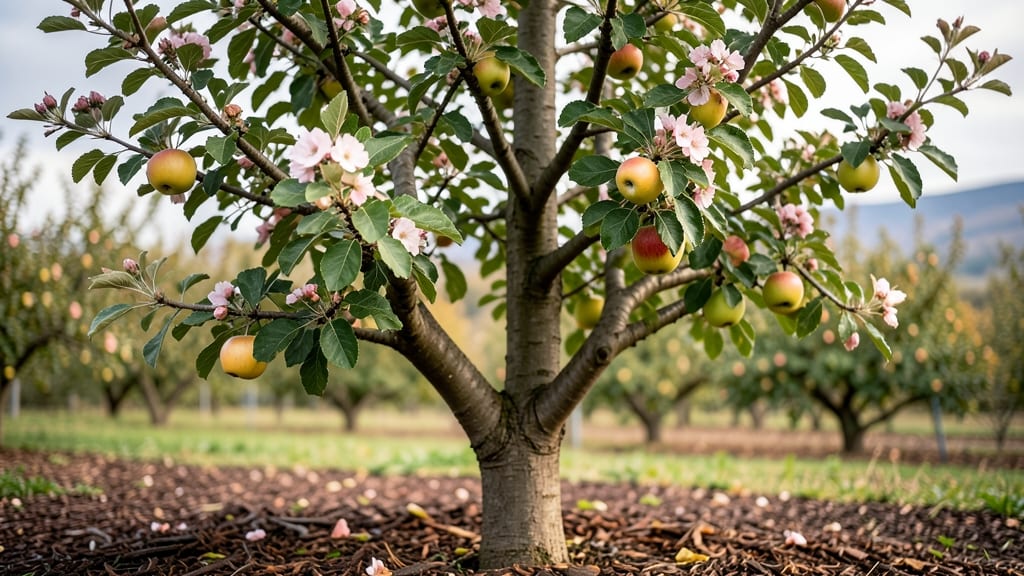
To bear fruit, apple trees typically need 3 to 5 years after planting, though dwarf varieties may produce in as little as 1 to 2 years, while standard-sized trees can take up to 7 years depending on variety, climate, and care. Early bloomers like 'Honeycrisp' or 'Gala' often fruit sooner than later varieties like 'Granny Smith'.
Patience is key when growing apple trees, as their fruiting timeline depends heavily on root development and environmental conditions. 🍏 In my experience, younger trees focus on establishing strong roots before producing fruit, which is why dwarf varieties—like 'Patriot' or 'Enterprise'—can start bearing fruit faster due to their compact size and accelerated growth.
Climate plays a crucial role too; colder regions (USDA zones 4-6) may see delayed fruiting compared to warmer zones (7-10), where varieties like 'Anna' or 'Haralson' thrive and produce earlier.
Another factor is pruning and pollination. Proper pruning in the first few years encourages a stronger structure, while cross-pollination (if needed) can speed up fruit production. For instance, 'Gala' trees often fruit within 3-4 years when planted alongside a compatible pollinator like 'Golden Delicious'.
💡 In This Article
- Factors Affecting Apple Tree Fruit Production Timeline
- Fastest-Fruiting Apple Tree Varieties for Home Gardeners
Factors affecting apple tree fruit production timeline
Apple trees enter a biological phase called juvenility, where they prioritize root and trunk development over fruit production. During this stage, trees focus on building a strong vascular system to transport water and nutrients—critical for future fruiting.
For standard-sized trees, this can take 4 to 7 years, while dwarf varieties like 'Columnar' or 'Semi-Dwarf' varieties (e.g., 'Liberty') often skip this extended juvenile phase due to their genetically compact growth habit. 🌱 The transition to maturity is triggered by a combination of factors, including root zone expansion and exposure to proper chilling hours (typically 200-1,000 hours below 45°F), which break dormancy and signal the tree to flower.
Climate plays a pivotal role in this timeline.
Trees in USDA zones 5-7 (e.g., Midwest or Northeast U.S.) often require 6-8 years to fruit because colder winters extend the juvenile phase, while subtropical varieties (like 'Anna' or 'Haralson') in zones 8-10 may produce fruit in as few as 2-3 years due to milder winters and year-round growth potential.
Soil health also accelerates fruiting—well-draining, nutrient-rich soil (with pH 6.0-7.0) ensures optimal nutrient uptake, reducing the time trees spend in the juvenile stage.
For example, 'Golden Delicious' trees in fertile loam soil may fruit in 3-4 years, whereas the same variety in poor, rocky soil could take 7+ years.
Pruning techniques directly influence fruiting timelines. Aggressive pruning in the first 2-3 years (removing 20-30% of branches) encourages a stronger scaffold structure, which can shorten the time to first fruit by up to 1 year. However, over-pruning stresses the tree, delaying fruiting.
The key is to balance structural pruning with open-center shaping, which allows sunlight to penetrate the canopy—critical for flower bud formation. For instance, 'Honeycrisp' trees pruned to an open vase shape often fruit in 4 years, compared to 6 years for unpruned trees. 🌿
Pollination requirements also impact fruiting speed. Self-pollinating varieties like 'Gala' or 'Fuji' can produce fruit faster (3-4 years) because they don’t rely on cross-pollination. In contrast, varieties like 'Granny Smith' (which need a pollinator) may take 5-7 years unless planted near a compatible tree.
Even then, poor pollinator activity (due to weather or lack of bees) can delay fruiting by 1-2 years. For example, in California’s Central Valley, 'Anna' apples (self-pollinating) often fruit in 2 years**, while 'Braeburn' (pollinator-dependent) may take 6 years without a nearby 'Granny Smith'.
Seasonal cues are equally critical. Trees need consistent exposure to winter chilling hours (below 45°F) to break dormancy and initiate flowering.
In warmer climates (zones 8-10), varieties like 'Tropicana' or 'Dorsett Golden' adapt by producing fruit year-round, often within 1-2 years, while temperate-zone varieties (e.g., 'McIntosh') may take 5-6 years in regions with insufficient chilling.
The interplay of these factors—root development, climate, pruning, and pollination—explains why two identical 'Gala' trees in neighboring yards might fruit 1-2 years apart.
One often-overlooked factor is tree stress. Drought, pests (like codling moths), or disease (e.g., apple scab) can prolong the juvenile phase by diverting energy toward defense rather than fruiting.
For example, a 'Red Delicious' tree under water stress might take 8 years to fruit, while a well-irrigated counterpart produces in 5 years. Regular monitoring for pests and diseases—such as applying neem oil for aphids or copper fungicide for scab—can shave off critical months in the fruiting timeline. 🍎