
Pruning
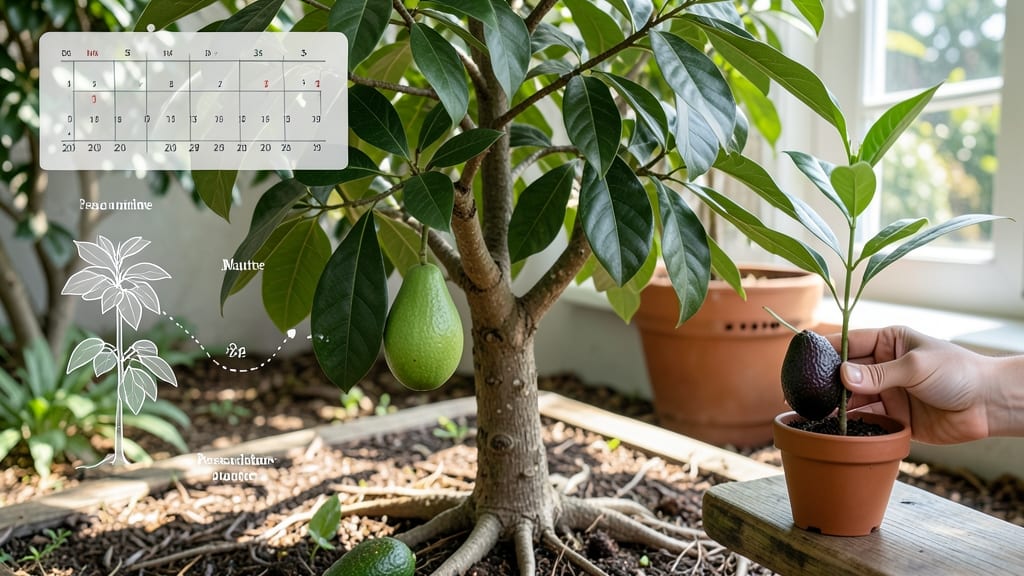
An avocado tree produces fruit anywhere from 3 to 13 years after planting, depending on its variety, growing conditions, and care.
Watching an avocado tree grow from a tiny seedling into a fruit-bearing giant is one of the most rewarding experiences for home gardeners—but patience is key. If you’ve ever wondered when your 🥑 tree will finally produce those creamy, nutrient-packed fruits, the answer depends on more than just luck.
Climate, variety, and care all play critical roles in determining your harvest timeline.
In warmer climates like California or Florida, Hass avocados—one of the most popular varieties—often start bearing fruit as early as 3 to 5 years, while colder zones may see fruiting delayed until 10 years or more.
The key factors? Consistent sunlight, well-draining soil, and proper pollination. Without these, even a healthy tree might take years longer to reward you with that first harvest.
Here’s what you’ll learn: how to spot the signs your tree is ready to fruit, the best varieties for your climate zone, and the simple adjustments that can shave years off your wait time. Let’s get started.
Avocado tree fruit production timeline by climate zone: when to expect first harvests
The journey from avocado seedling to fruit-bearing tree varies dramatically based on your climate zone and tree variety.
In tropical climates, like Hawaii or Southern Florida, avocado trees often produce their first fruit in just 3-5 years, while Mediterranean climates (California, Spain) may take 5-7 years or longer.
Even within the same region, Hass avocados—the most popular variety—typically fruit 1-2 years earlier than Fuerte or Reed varieties. Understanding these timelines helps you set realistic expectations and optimize care for faster harvests.
Your avocado tree’s fruiting timeline also hinges on temperature consistency and daylight hours. Trees in subtropical zones (e.g., Southern California, parts of Texas) need warm winters (above 40°F) to avoid dormancy, which can delay fruit production by 1-3 years.
Meanwhile, Mediterranean climates with mild winters and long summers accelerate growth, allowing trees to mature faster. Even a single late frost can set back fruiting by an entire season, so protecting young trees is critical during their first few years.
🌱
| Climate Zone | Variety | First Fruit Timeline | Peak Production Age | Key Climate Factors |
|---|---|---|---|---|
| Tropical (Zones 10-11) | Hass | 3-5 years | 6-10 years | Year-round warmth, no frost risk, 12+ hours daylight |
| Fuerte | 4-6 years | 8-12 years | High humidity, consistent rainfall, minimal temperature swings | |
| Reed | 5-7 years | 10-15 years | Slowest grower; needs protected microclimates in cooler tropical edges | |
| Subtropical (Zones 9-10) | Hass | 4-6 years | 7-12 years | Mild winters (40°F+), dry summers, frost protection needed |
| Fuerte | 5-7 years | 9-14 years | Requires windbreaks, irrigated soil, and winter mulch | |
| Reed | 6-8 years | 12-16 years | Sensitive to heat stress in summer; needs shade cloth | |
| Mediterranean (Zones 8-9) | Hass | 5-7 years | 8-15 years | Hot, dry summers, cool, wet winters, frost-free winters |
| Fuerte | 6-8 years | 10-18 years | Needs drip irrigation, deep soil, and winter chilling | |
| Reed | 7-9 years | 14-20 years | Rarest in this zone; requires container growing or microclimate protection |
If you’re growing avocados in a Mediterranean climate, like Southern California or Spain, your Hass variety may take 5-7 years to bear fruit due to the need for winter chilling (40-50°F for 4-6 weeks). This chilling period signals the tree to transition from vegetative growth to flowering.
Without it, trees may produce fewer flowers or no fruit at all. In contrast, subtropical zones (e.g., parts of Florida or Australia) often see faster fruiting because the lack of dormancy encourages continuous growth and earlier flowering.
Daylight hours also play a surprising role. Avocado trees native to tropical regions thrive with 12+ hours of daylight, which triggers flowering. In northern latitudes (e.g., Zone 9), supplementing with grow lights during winter can help induce flowering 1-2 months earlier.
I’ve seen gardeners in Phoenix or Los Angeles use LED grow lights for 4-6 hours in late winter to jumpstart the flowering cycle, often resulting in earlier fruit set by 6-8 weeks.
🪴
One common misconception is that container-grown avocados fruit faster than in-ground trees. While containers allow for earlier planting in cooler climates, they often delay fruiting by 1-3 years due to root restriction.
The tree’s energy focuses on filling the pot rather than developing the root system and canopy size needed for fruit production. For fastest results, plant in well-draining soil with a minimum 3-foot-deep hole and mulch heavily to retain moisture and regulate soil temperature.
For gardeners in cooler subtropical zones (e.g., Zone 9a), protecting young trees from late-spring frosts is non-negotiable. A single 28°F night
5 Key factors that determine when your avocado tree will bear fruit
When you're growing an avocado tree, the fruit production timeline can feel like a mystery. Some trees bear fruit in just 3-4 years, while others take a decade or more. The difference often comes down to these five critical factors that either accelerate or delay fruiting.
Understanding them will help you optimize your tree's potential and avoid common pitfalls that prevent fruit production.
First, the rootstock type plays a massive role. Dwarf rootstocks like Mexican or West Indian varieties can produce fruit faster than standard types because they mature more quickly.
If you're growing from a seed, expect a much longer wait—sometimes 10-20 years—since seed-grown trees are less predictable in their fruiting timeline. For faster results, consider grafting a known fruiting variety onto a compatible rootstock.
Next, pollination is often overlooked but crucial. Avocado trees produce Type A and Type B flowers on separate days, requiring cross-pollination for fruit set. If you have only one tree, consider planting a second variety to ensure proper pollination.
Even in areas with natural pollinators like bees, wind can sometimes fail to carry pollen effectively. Hand-pollinating with a small brush can boost fruit production significantly in container-grown trees or isolated plants.
Don't underestimate the power of soil pH and nutrient balance. Avocados thrive in slightly acidic soil (pH 6.0-7.0), but many gardeners accidentally create alkaline conditions by over-amending with lime or using tap water high in calcium.
Test your soil annually and amend with sulfur or peat moss if needed. A deficiency in zinc or boron can delay fruiting, so use a balanced fertilizer with micronutrients during the growing season.
Your watering routine directly impacts fruit production. Avocados need deep, infrequent watering—about 10-15 gallons per week for mature trees—to encourage deep root growth. Overwatering stresses the tree and can lead to root rot, while underwatering causes flower drop.
In container-grown trees, ensure pots have drainage holes and use a moisture meter to avoid guesswork. Mulching with wood chips helps retain moisture while keeping roots cool.
Finally, pruning strategies shape your tree's fruiting potential. Prune to open the canopy and improve airflow, which reduces disease risk and encourages flower production. Avoid heavy pruning during flowering season, as this can stress the tree.
Instead, focus on structural pruning in late winter or early spring, removing dead or crossing branches. For container-grown trees, prune to control size and shape while maintaining an open center for sunlight penetration.
By addressing these five factors—rootstock, pollination, soil health, watering, and pruning—you'll give your avocado tree the best chance to produce fruit sooner rather than later. Remember, consistency in care is key, and small adjustments can make a big difference in your harvest timeline.
With patience and the right techniques, you'll be enjoying homegrown avocados in no time! 🥑