
Trees
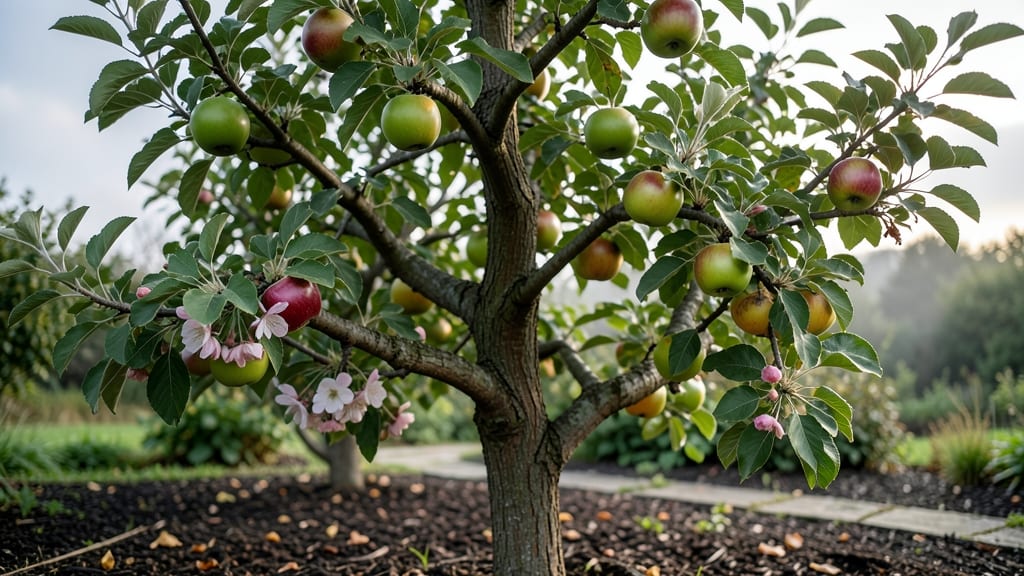
Yes, one apple tree can produce fruit, yielding anywhere from 10 to 100 apples annually depending on variety, age, and growing conditions. Most trees bear fruit 3–5 years after planting and require cross-pollination for optimal yields.
A single apple tree absolutely can produce fruit, but its output depends heavily on the specific cultivar you choose.
For example, some dwarf varieties like 'Gala' or 'Fuji' reliably produce 50-100 apples per year once mature, while larger standard trees may yield 200+ apples under ideal conditions. 🍏 The key factor is whether your tree is self-pollinating or needs another apple tree nearby—many popular varieties require cross-pollination to set fruit properly.
Even self-pollinating trees often produce more abundant harvests when planted with compatible partners.
What many gardeners overlook is that fruit production typically ramps up after the tree's first 3-5 years, with peak yields occurring between ages 10-20. Young trees focus energy on root and branch development rather than fruit production, which explains why early years often yield disappointingly few apples.
Proper pruning and fertilization during these formative years can significantly boost future harvests.
💡 In This Article
- Factors Determining Apple Tree Fruit Production
- Maximizing Fruit Yield from a Single Apple Tree
Factors determining apple tree fruit production
The primary factor influencing how many apples your single tree produces is its pollination requirements. Trees like 'Honeycrisp' or 'Granny Smith' are cross-pollinating, meaning they need bees to transfer pollen from another compatible variety within 50-100 feet.
Self-pollinating varieties such as 'Golden Delicious' or 'Liberty' can set fruit alone, but yields typically double when a second tree is nearby. 🌸 For example, a 'Fuji' tree alone might produce 30-50 apples, but with a 'Gala' pollinator just 20 feet away, that number jumps to 80-120 apples.
Tree age plays a critical role in production timing. Young trees (under 5 years) allocate most energy to root and branch growth, producing only 5-20 apples annually. The first significant harvest usually occurs at age 5-7, with yields climbing to 100+ apples by age 10.
This growth pattern explains why many gardeners see minimal fruit in early years—a natural biological priority shift. 🍎 The tree's maturity stage also affects fruit quality, with older trees developing denser wood that better supports heavy crops.
Climate and sunlight exposure create dramatic yield variations. Apple trees need 6-8 hours of direct sunlight daily for optimal photosynthesis, which fuels fruit development. In cooler climates (USDA zones 4-6), varieties like 'McIntosh' thrive, producing 150-200 apples annually, while heat-sensitive varieties may struggle.
Soil pH between 6.0-7.0 ensures proper nutrient uptake—acidic soils (below 5.5) can stunt growth and reduce fruit set by 30-40%.
Nutrient availability directly impacts fruit quantity and size. A balanced NPK ratio (10-10-10) supports both vegetative growth and fruit production, while nitrogen deficiency (yellowing leaves) reduces yields by up to 50%.
Micronutrients like boron and zinc are equally critical—boron deficiency causes blossom end rot, where developing apples rot internally. Regular soil testing every 2-3 years helps maintain optimal nutrient levels for consistent production.
Tree size correlates with yield potential. Dwarf varieties like 'Columnar' produce 50-80 apples annually on 6-8 foot trees, while standard trees can yield 200+ apples on 20-25 foot canopies. This size difference isn't just about height—dwarf trees have more efficient energy allocation due to their compact root systems.
However, their smaller branches require support structures to prevent breakage under heavy fruit loads.
Seasonal weather patterns create year-to-year variability. A late spring frost (28°F or lower) can kill blossoms, reducing yields by 70-90%, while consistent rainfall during fruit development prevents sunburn and cracking.
Inconsistent moisture leads to uneven growth, with some apples developing 2-3 times larger than their neighbors—a condition called "double-sized fruit" that occurs when the tree prioritizes fewer, larger apples during drought stress.