
Companion Plants
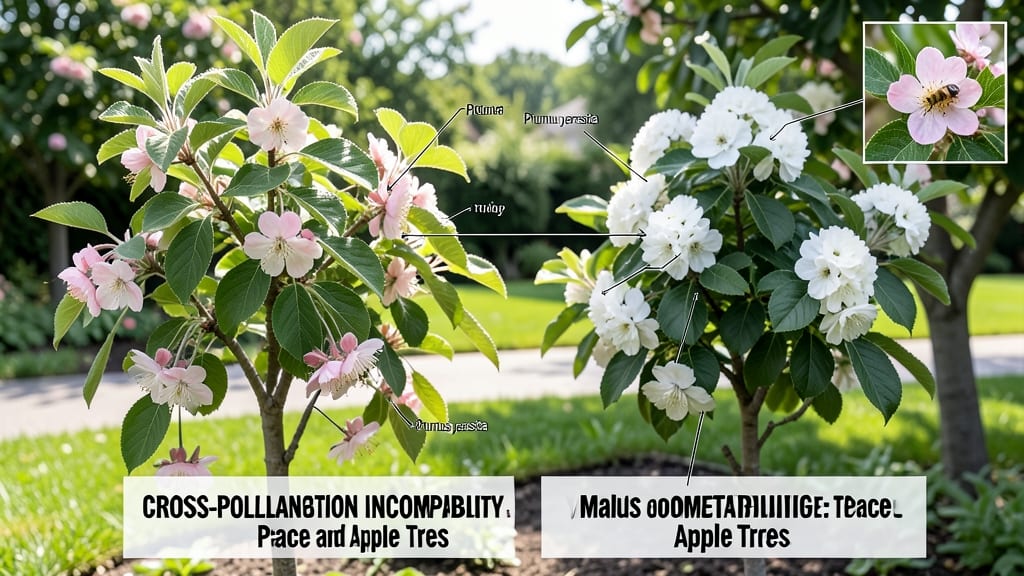
Peach trees cannot pollinate apple trees because they belong to different botanical families—Prunus for peaches and Malus for apples—meaning their flowers are incompatible for cross-pollination. Each fruit tree requires its own pollinator or compatible variety for successful fruit set.
Peach and apple trees are like two different languages in the plant world—their flower structures and reproductive systems simply don't align. 🌸 While peaches (Prunus genus) and apples (Malus genus) both rely on pollinators, their pollen grains are specialized for their own species.
This biological mismatch means even if bees visit both trees, they won't transfer viable pollen between them. The good news? Planting compatible varieties within the same genus ensures your fruit trees will still produce abundant harvests.
For gardeners, this means selecting pollinator-friendly varieties—like 'Honeycrisp' apples or 'Elberta' peaches—that either self-pollinate or have matching bloom times with companion trees. 🐝 The key is creating an ecosystem where pollinators can efficiently move between compatible flowers.
Many commercial orchards even plant entire blocks of the same species to maximize fruit set.
Understanding these botanical rules saves time and frustration. Instead of hoping for accidental cross-pollination, focus on pairing trees within their own families and providing optimal growing conditions. This approach guarantees you'll enjoy that sweet, homegrown harvest every season.
💡 In This Article
- Botanical Differences Between Peach and Apple Trees
- Best Pollination Practices for Peach and Apple Trees
Botanical differences between peach and apple trees
The fundamental reason peach and apple trees can't cross-pollinate lies in their flower anatomy and reproductive biology. Peach flowers (Prunus genus) have six stamens with pollen grains specifically designed to adhere to the stigma of other peach blossoms.
Apple flowers (Malus genus), meanwhile, possess 10-20 stamens with pollen that's structurally incompatible with peach stigmas.
These differences extend to their cellular level—peach pollen tubes grow at a rate of 1.5-2 mm/hour in peach styles, while apple pollen tubes grow at 0.8-1.2 mm/hour in apple styles, making cross-species fertilization impossible. 🌸
The timing of bloom also plays a critical role. While both trees typically flower in spring, peach blossoms often open 7-10 days earlier than apples in most climates. This temporal mismatch means even if pollen were compatible, the flowers wouldn't be receptive simultaneously.
The scent profiles differ too—peach flowers emit a sweet, honey-like aroma to attract pollinators, while apple blossoms have a milder, more floral scent. These sensory differences help explain why bees and other pollinators show clear preferences for one species over another.
At the genetic level, these genera have been evolving separately for millions of years. While both belong to the Rosaceae family, their chromosomes differ significantly—peaches have 16 chromosomes while apples have 34 chromosomes. This chromosomal incompatibility means even if pollen were transferred, fertilization couldn't occur.
The closest relatives that can cross-pollinate are within the same genus: for example, 'Honeycrisp' apples can pollinate 'Gala' apples, but never a peach tree. 🌿
Another key difference lies in their pollination requirements. Most apple varieties are partially self-fertile but require cross-pollination for optimal fruit set, while many peach varieties are self-fertile.
This means peach trees can produce fruit without any pollinators, while apple trees often need both their own pollen and pollen from compatible varieties.
The physical structure of their flowers also differs—peach flowers have hairy stigmas that catch pollen more effectively from their own species, while apple stigmas are smoother and adapted to their own pollen types.
Understanding these botanical distinctions helps explain why gardeners often see peach trees with abundant fruit while nearby apple trees struggle. The reproductive systems are simply too different to bridge the gap. Even attempts at manual cross-pollination would fail because the pollen wouldn't germinate on the wrong stigma type.
This biological barrier is what makes orchard planning such a precise science—each tree needs its own compatible partners. 🌱
For visual learners, imagine trying to fit a square peg (peach pollen) into a round hole (apple stigma)—it simply won't work. The molecular recognition systems in these flowers are specialized at the protein level, with specific receptors that only bind to their own species' pollen.
This level of specificity is what makes cross-pollination between these genera biologically impossible, regardless of how hard pollinators try. 🔬