
Flowers
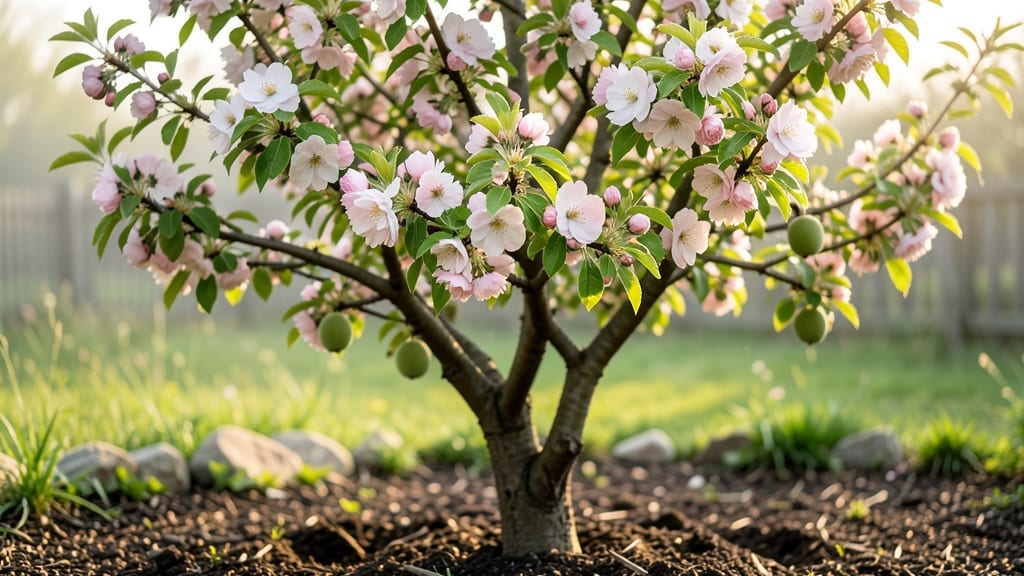
Peach tree flowers do turn into fruit when successfully pollinated, but only about 5-15% of blooms typically develop into mature peaches due to natural drop-off and environmental factors like weather or pest damage.
Peach tree flowers begin their journey toward fruit formation when pollinators like bees or wind transfer pollen from the male parts (stamens) to the female parts (pistils). 🌸 This fertilization process triggers the ovary to swell and develop into a peach, but nature's efficiency means most flowers simply drop off as the tree conserves energy.
The remaining 5-15% that survive will grow into fruit, with environmental conditions playing a crucial role in determining how many make it to maturity.
What many gardeners don't realize is that peach trees often produce more flowers than they can support. This overabundance leads to competition for resources, which is why thinning young fruit in early summer becomes essential. By removing some developing peaches, you allow the remaining ones to grow larger and healthier.
The timing of blooms—typically in spring—also affects fruit set, as late frosts or extreme weather can damage flowers before pollination occurs.
💡 In This Article
- How Peach Tree Pollination Works for Fruit Development
- Maximizing Peach Fruit Set: Gardening Tips for Better Yields
How peach tree pollination works for fruit development
Peach tree flowers contain both male (stamens) and female (pistil) reproductive parts, making them capable of self-pollination—but nature favors cross-pollination for stronger fruit development. When bees or wind transfer pollen from one flower's stamens to another's pistil, fertilization occurs within 24-48 hours.
This triggers the ovary to expand rapidly, forming the peach's core structure while the petals drop away. 🌸 The process relies on precise timing, as peach blossoms typically open in 3-5 days, with peak pollination happening during warm, sunny days when bees are most active.
The flower's anatomy plays a critical role: each pistil contains multiple ovules that develop into seeds, while the surrounding tissue swells to form the fleshy fruit. What's fascinating is how the tree "decides" which fertilized flowers will become fruit—it's not random.
Peach trees prioritize flowers with the strongest genetic potential, often dropping weaker blooms within 7-14 days post-pollination to conserve energy for the remaining fruit. This natural thinning occurs even before gardeners might intervene.
Environmental factors create a perfect storm for successful pollination. Ideal conditions include temperatures between 55-85°F during bloom season, with consistent sunlight and minimal wind—too much wind can scatter pollen inefficiently. Rain during bloom can wash away pollen, while frost can kill flowers entirely.
The timing between bloom and harvest varies by variety but typically spans 90-150 days, with early-season peaches maturing faster than late varieties.
Here's where it gets interesting: peach trees often produce two types of flowers—"perfect flowers" with both male and female parts, and "male flowers" that lack pistils. While perfect flowers can self-pollinate, cross-pollination from male flowers (or nearby trees) produces fruit with better quality and size.
This is why planting multiple peach varieties nearby can dramatically improve yields by increasing genetic diversity in the fruit set.
The fertilization process itself is a biochemical marvel. Once pollen lands on the stigma (the pistil's receptive tip), it germinates and grows a pollen tube down through the style to reach the ovule.
This journey takes about 24 hours, during which the tree's hormones shift from flower maintenance to fruit development. The resulting peach's size and quality depend heavily on how efficiently this process occurs and how well the tree can support the developing fruit.
What most gardeners overlook is the post-pollination "decision" period. After fertilization, the tree evaluates each potential fruit's viability, often dropping 60-80% of fertilized flowers within 2-3 weeks. This dramatic reduction ensures the remaining peaches receive optimal nutrients, water, and sunlight.
The tree's resource allocation becomes especially critical during drought or high heat, when it may prioritize survival over fruit production.