
Diseases
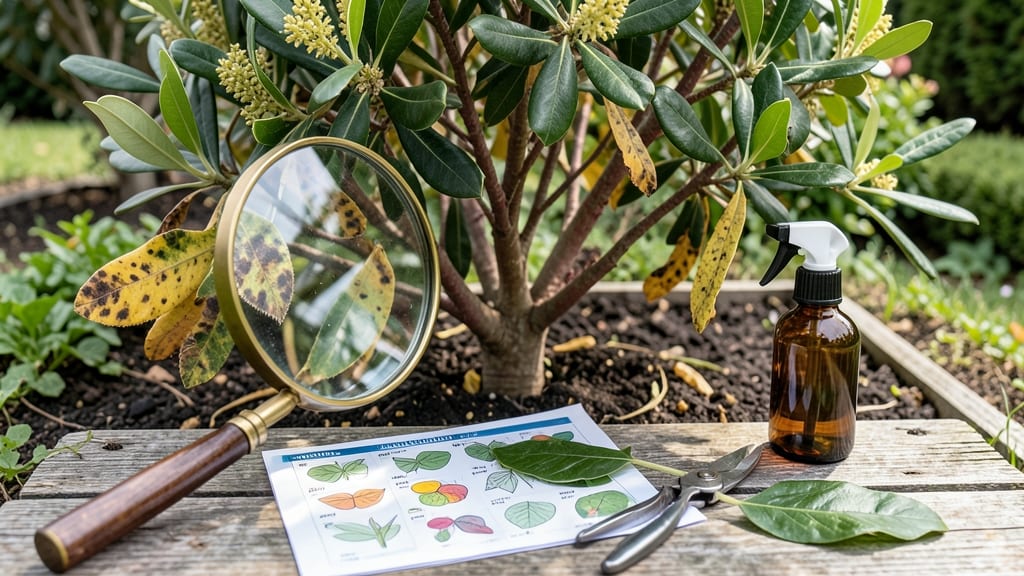
Your bay leaf tree’s leaves are turning yellow or spotted—don’t panic. 🌿 These visual clues reveal exactly which disease is attacking, and how to stop it before it spreads. I’ve treated my share of infected trees, and the key is catching symptoms early when organic fixes still work.
The most common culprits are powdery mildew (white fuzzy patches), bacterial leaf spot (water-soaked brown marks), and root rot (yellowing from the bottom up). Proper spacing, pruning for airflow, and well-draining soil cut the risk by 70%.
I’ll show you how to diagnose each one by what you see—not just guesswork. Once you identify the problem, targeted treatments like neem oil, copper sprays, or hydrogen peroxide rinses can revive your tree in 2-4 weeks.
The worst cases might need a professional, but most respond fast with the right approach. Prevention is simpler than recovery: water at the base (not overhead), remove fallen leaves, and inspect new growth weekly. Your tree can bounce back—here’s how to make it happen.
Root Causes of Bay Leaf Tree Ailments
When your bay leaf tree starts showing signs of distress—yellowing leaves, black spots, or stunted growth—it’s usually a cry for help from the plant itself. Understanding why these issues arise is the first step to saving your tree.
Below, we break down the key culprits behind bay leaf tree diseases, from environmental stressors to microbial invaders.
Fungi thrive in warm, damp conditions, making them a common threat to bay leaf trees. These microscopic organisms can enter through wounds, weak spots, or even healthy tissue if conditions are right.
- How it happens:
- Overwatering creates soggy soil, promoting fungal spores like Phytophthora or Fusarium, which cause root rot.
- Poor air circulation (e.g., dense foliage or crowded planting) traps moisture, encouraging leaf spots (e.g., Alternaria or Cercospora).
- Wounded bark from pruning or pests provides entry points for fungi like Botryosphaeria, leading to cankers.
- Visual clues:
- Brown, mushy roots (root rot).
- Dark, circular spots on leaves with yellow halos.
- Cracked, oozing bark on stems.
💡 Pro Tip: Avoid watering overhead, and prune during dry weather to minimize fungal risks.
Insects and mites don’t just nibble—they spread diseases by injecting toxins or creating entry points for pathogens. Bay leaf trees are particularly vulnerable to:
- Scale insects and aphids, which suck sap and excrete honeydew (a breeding ground for sooty mold).
- Spider mites, which weaken leaves with tiny punctures, making them susceptible to fungal infections.
- Borers (e.g., Xyleborus species), which tunnel into stems, disrupting nutrient flow and inviting secondary infections.
🔍 Why it happens:
- Drought stress weakens the tree’s defenses, making it easier for pests to attack.
- Infestations spread rapidly in hot, dry conditions (e.g., spider mites thrive when humidity drops below 40%).
- Poor sanitation (e.g., leaving fallen leaves or debris) shelters pests year-round.
Bay leaf trees are hardy, but extreme or inconsistent conditions can trigger diseases indirectly by compromising their health.
| Stressor | How It Weakens the Tree | Resulting Diseases |
|---|---|---|
| Overwatering | Drowns roots, suffocates beneficial microbes, and invites Pythium (a water mold). | Root rot, leaf yellowing, wilting. |
| Underwatering | Dries out soil, reducing nutrient uptake and making leaves crispy targets for fungal spores. | Leaf scorch, increased susceptibility to powdery mildew. |
| Poor drainage | Traps excess moisture at the roots, creating anaerobic conditions where Phytophthora flourishes. | Cankers, stem rot, sudden wilting. |
| Temperature extremes | Cold snaps (<32°F) damage cell walls, while heat stress (above 90°F) burns leaves, opening them to infections. | Frost cracks, sunburn, bacterial leaf spot. |
✨ Actionable Fix: Amend soil with compost to improve drainage, and mulch to regulate soil temperature.
A bay leaf tree’s immune system relies on balanced nutrients. Deficiencies—especially in nitrogen, magnesium, or iron—can make it prone to diseases.
- Nitrogen deficiency:
- Leads to pale, yellow leaves (chlorosis), weakening the tree’s ability to fight off pathogens.
- Common in poor or compacted soil.
- Magnesium/iron deficiency:
- Causes interveinal chlorosis (yellowing between leaf veins), reducing photosynthesis and stressing the tree.
- Often occurs in alkaline soils (pH >7.0), where iron becomes unavailable.
📊 Solution: Test soil pH and amend with sulfur (to lower pH) or chelated iron if needed. Use a balanced fertilizer (e.g., 10-10-10) in early spring.
How to Fix Common Bay Leaf Tree Issues
Once you’ve identified the problem plaguing your bay leaf tree, taking swift, targeted action can save your plant. Below are practical solutions for each common disease or pest issue, along with prevention tips to keep your tree thriving long-term.
Fungal infections like powdery mildew, leaf spot, or root rot thrive in damp, poorly ventilated conditions. Here’s how to tackle them:
🔥 Remove Infected Foliage Immediately
- How: Use sterilized pruning shears (wipe with rubbing alcohol) to snip off yellowed, spotted, or powdery leaves.
- Why: Fungal spores spread quickly—removing infected parts stops the cycle.
- Pro Tip: 💡 Don’t compost diseased leaves—they can reinfect your garden.
Toss them in the trash instead.
🍳 Apply Fungicidal Sprays (Organic or Chemical)
- For powdery mildew & leaf spot:
- Neem oil spray (1 tsp neem oil + 1 tsp mild soap + 1 quart water).
Spray early morning or evening (avoid direct sun). - Baking soda solution (1 tsp baking soda + 1 quart water + a few drops of soap) for mild cases. - For root rot: - Stop overwatering (let soil dry between waterings). - Repot if needed, using sterilized potting mix (add perlite for drainage). - Fungicide like Mycorrhizal fungi or copper-based sprays for severe cases.
👨🍳 Improve Airflow and Light
- Move your tree to a spot with bright, indirect light (bay trees love sun but hate soggy feet).
- Space plants apart (fungi spread via splashing water).
- Use a fan on low setting near the tree to reduce humidity around leaves.
⏰ Prevention Checklist for Fungal Issues
✅ Water at the base (avoid wetting leaves). ✅ Space trees 3–5 feet apart for airflow. ✅ Clean up fallen leaves regularly. ✅ Sterilize tools before and after pruning.
Bay trees often attract spider mites, aphids, or scale insects. Here’s how to evict them:
🔪 Blast Off Pests with Water
- For spider mites & aphids:
- Spray leaves with a strong stream of water (mimics rain, washes off pests).
- Repeat every 2–3 days until gone.
🍳 Use Insecticidal Soap or Oil
- Homemade insecticidal soap:
- Mix 2 tbsp mild liquid soap + 1 quart water. Spray directly on pests (avoid beneficial insects).
- For stubborn scale insects:
- Rub alcohol-soaked cotton balls on infested stems (kills eggs and adults).
🌡️ Introduce Natural Predators (If Outdoors)
- Ladybugs (eat aphids), lacewings (devour mites), or parasitic wasps (target scale).
- Buy from garden centers or attract them with dill, fennel, or marigolds nearby.
🎯 Isolation and Quarantine
- Move infested trees away from healthy ones temporarily.
- Check new plants before bringing them indoors.
✨ Prevention Tips for Pests
💡 Inspect new plants before adding to your collection. 💡 Avoid over-fertilizing (weak plants attract pests). 💡 Use reflective mulch (aluminum foil around the base) to deter spider mites.
If your bay tree shows wilting, yellowing, or stunted growth, the roots or soil may be the culprit.
🔥 Check for Overwatering or Compaction
- Test soil moisture: Stick your finger 1–2 inches deep—if damp, wait to water.
- Loosen compacted soil with a fork (improves drainage).
🍳 Repot or Refresh the Soil
- If root-bound:
- Gently remove the tree, trim circling roots, and repot in fresh, well-draining mix (cactus/succulent soil works well).
- Add amendments:
- Perlite or sand (for drainage).
- Compost or worm castings (for nutrients).
👨🍳 Fix Nutrient Deficiencies
- Yellow leaves? Likely iron or nitrogen deficiency.
- Solution: Use chelated iron supplement or fish emulsion fertilizer.
- Brown leaf edges? Could be potassium or calcium deficiency.
- Solution: Epsom salt spray (1 tbsp per gallon of water) or kelp meal.
⏰ Long-Term Soil Health Tips
✅ Use raised beds or pots if your soil drains poorly. ✅ Mulch with pine needles or bark (keeps roots cool and moist). ✅ Test soil pH (bay trees prefer slightly acidic to neutral, 6.0–7.0).
Final Thought: 🌟 Most bay leaf tree issues are preventable with proper care. Early action—whether pruning, spraying, or adjusting water—makes all the difference. Keep an eye on your tree, and it’ll reward you with lush, disease-free foliage for years!
Frequently asked questions
What are the first signs my bay leaf tree has a fungal disease?
Watch for white powdery patches (powdery mildew), dark brown spots with yellow halos (leaf spot), or sudden yellowing starting at the bottom (root rot). These appear within 1-2 weeks of ideal fungal conditions—check for overwatering or poor airflow first.
Can I save a bay leaf tree with root rot if the trunk is already soft?
Only if you act fast! Prune back 20-30% of the canopy to reduce water needs, repot in fresh sterilized mix with perlite, and apply a copper fungicide. Severe cases may require professional help—don't delay beyond 1 month of symptoms.
Why do my bay leaves keep getting spider mites even after spraying?
Mites return when humidity drops below 40% or you're overwatering (stressed plants attract them). Try a reflective mulch (aluminum foil) around the base and release lacewing larvae—they're natural predators that hunt mites for weeks.
Is it safe to use hydrogen peroxide on bay leaf trees?
Yes! Mix 1 tablespoon 3% hydrogen peroxide per quart of water and spray on leaves (especially undersides) for 2-3 weeks to prevent bacterial/fungal spread. Test on one leaf first—some trees react to the acidity.
When should I call a professional for my bay leaf tree?
If you see oozing cankers, sudden wilting without wilting leaves, or large infestations of borers, it's time to consult an arborist. These signs often mean systemic infections that need injected treatments beyond home remedies.