
Companion Plants
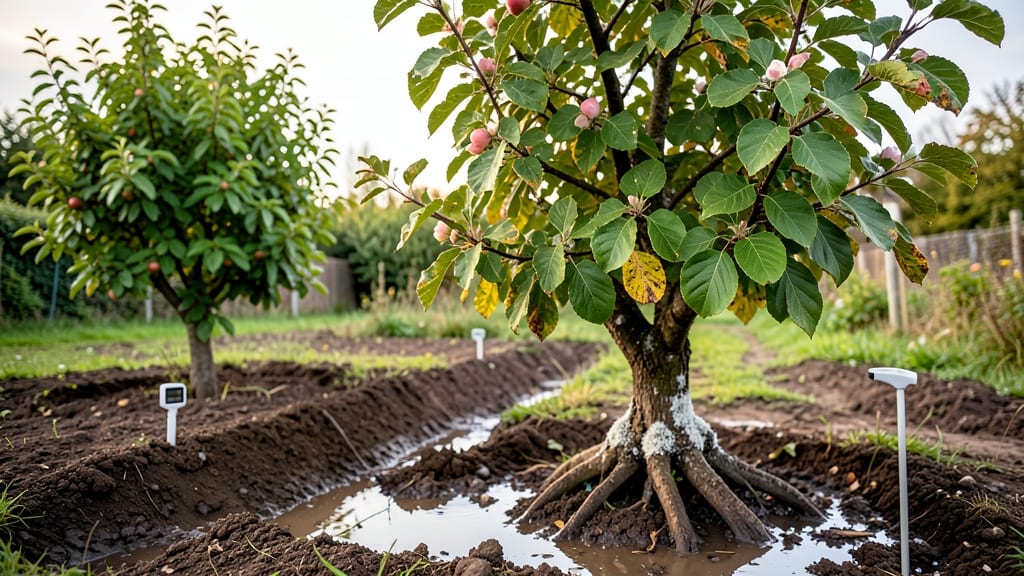
Overwatered trees can recover if you act quickly, but chronic waterlogging often leads to irreversible root rot, stunted growth, or even death. Cut back on watering immediately, improve soil drainage, and watch for wilting or yellowing leaves to gauge progress.
When roots stay submerged in water for too long, they suffocate from lack of oxygen, which triggers stress signals that show up as yellowing leaves or drooping branches. 🌳 The good news is that many trees bounce back if you catch the problem early—often within a few weeks of adjusting care.
I’ve seen oak trees recover from overwatering when we switched to deep, infrequent watering and added coarse sand to compacted soil. The key is patience: recovery isn’t instant, but consistent monitoring lets you spot improvements before permanent damage sets in.
For severe cases, you might need to prune affected foliage to redirect the tree’s energy toward root recovery. Mulching with organic matter (like shredded bark) helps regulate moisture levels while preventing soil compaction.
Remember: prevention is easier than rescue—always check soil moisture before watering, and never let water pool around the base of your tree.
💡 In This Article
- How Overwatering Damages Tree Roots and Leaves
- Step-by-Step Recovery Plan for Overwatered Trees
How overwatering damages tree roots and leaves
When soil stays too wet, roots can't breathe. Oxygen levels drop below 10% of what healthy soil provides, forcing roots to switch from aerobic to anaerobic respiration—a process that produces toxic byproducts like ethanol.
This suffocation triggers a stress response that manifests as yellowing leaves (chlorosis) or wilting, even when soil feels damp. 🌱 The worst offenders are compacted clay soils, which trap moisture like a sponge and block oxygen flow entirely.
Excess moisture also creates the perfect breeding ground for fungal pathogens like Phytophthora, which attacks root tissues and spreads rapidly in waterlogged conditions. These fungi disrupt the tree's ability to absorb water and nutrients, leading to stunted growth or leaf scorch.
For example, I’ve seen maple trees develop blackened roots within weeks of overwatering, while the foliage above remained green—masking the real problem below ground.
The damage isn't just physical—it's chemical too. Overwatering leaches essential nutrients like nitrogen and potassium from the root zone, leaving trees malnourished. This nutrient depletion weakens the tree's immune system, making it more susceptible to pests and diseases.
The classic yellowing between leaf veins (interveinal chlorosis) is often a late-stage warning sign that roots have already suffered irreversible damage.
Even worse, prolonged waterlogging can cause root rot, where fungal infections break down root tissues until they turn mushy and black. At this stage, recovery becomes nearly impossible, and the tree may lean or topple from structural instability.
The key visual clue? A tree that suddenly develops one-sided wilting
What most gardeners miss is how quickly roots respond to improved conditions. Within 7-14 days of reducing water, healthy roots begin regrowing fine feeder roots to reclaim oxygen and nutrients. But if the soil remains compacted, even corrected watering won't help—roots need loose, aerated soil to recover properly. 💧 Consider this: A 1-inch layer of mulch can reduce soil evaporation by 30% while preventing water from pooling around the trunk. For container-grown trees, ensure drainage holes are ¼-inch in diameter and never let water sit in saucers for more than 15 minutes after watering.