
Plants
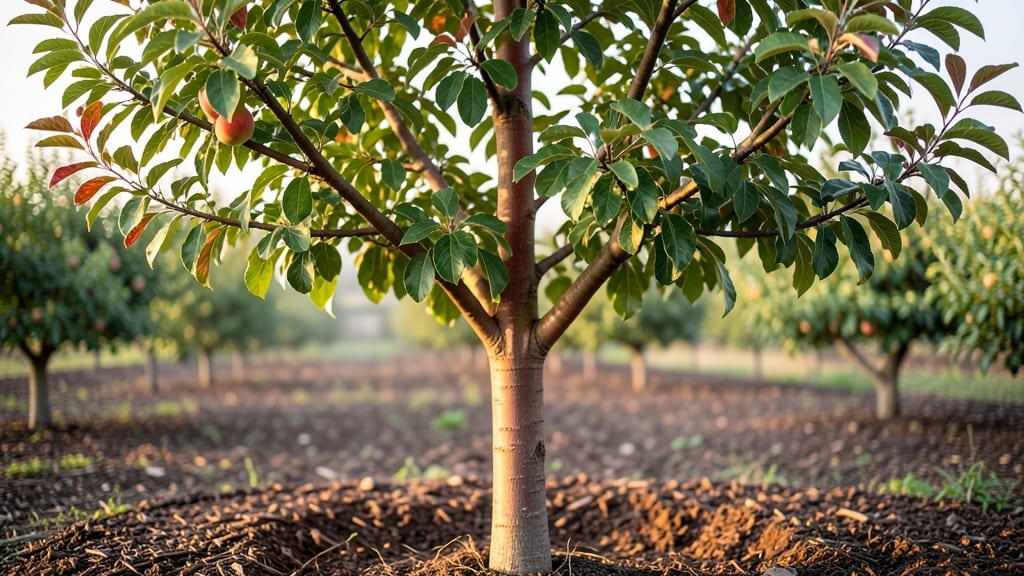
A nectarine tree looks like a peach tree but with one key difference: its fruit has smooth, fuzzy-free skin instead of the peach's characteristic downy coating. The leaves are elongated with jagged edges, the bark turns grayish-brown and rough over time, and young stems often show a reddish hue that peach trees lack.
A nectarine tree's most striking feature is its smooth-skinned fruit, which makes it instantly recognizable compared to peaches. 🌿 The leaves grow in a lance shape with serrated edges, similar to peach tree foliage but often slightly darker green.
What's interesting is how the bark develops—starting smooth but eventually forming deep furrows as the tree matures. These visual clues, combined with the tree's overall compact growth habit, help gardeners distinguish nectarines from their peach relatives even when no fruit is present.
If you're trying to identify one in your yard, focus on these three key areas: the fruit's texture, the leaf shape, and the branch structure.
The absence of fuzz on the fruit alone can be your biggest giveaway, especially when comparing side-by-side with peach trees. 🌳 The reddish young branches also provide a helpful seasonal clue during spring and summer months when the tree is actively growing.
💡 In This Article
- Key Differences Between Nectarine and Peach Tree Leaves, Fruit, and Bark
- Identifying Nectarine Trees by Season: Flowering, Fruiting, and Winter Dormancy
Key differences between nectarine and peach tree leaves, fruit, and bark
The most immediate way to distinguish a nectarine tree from a peach tree is through its fruit's surface. While peaches develop a fine, velvety fuzz called "peach skin" due to microscopic trichomes (hair-like structures), nectarines are genetically smooth-skinned varieties of the same species (Prunus persica var. nectarina).
This smoothness isn't just cosmetic—it affects ripening patterns too. Nectarines often ripen slightly faster because their skin allows better gas exchange with the environment, though both types share the same yellow-orange coloration at maturity.
When examining the leaves, you'll notice nectarine foliage typically measures 3-5 inches long with a lanceolate (lance-shaped) form and serrated edges that create a saw-toothed appearance.
The undersides often show a lighter green hue compared to peach tree leaves, which can appear slightly waxier. 🌿 What's fascinating is how the leaf arrangement differs: nectarine trees tend to have a more alternate branching pattern where leaves spiral around the stem, while peaches sometimes display a more clustered growth habit.
The bark also tells a story—nectarine bark starts smooth but develops deep, diamond-shaped lenticels (pores) that create a textured pattern as the tree ages.
Branch structure provides another critical clue. Nectarine trees generally have slenderer, more flexible branches that grow at narrower angles compared to peach trees. Young branches often exhibit a reddish-brown tint during spring growth, which fades to grayish-brown by summer.
This coloration comes from anthocyanin pigments that protect new growth from intense sunlight—a trait shared with many stone fruit trees. The overall growth habit tends to be more upright and compact, which makes nectarine trees ideal for smaller orchards or urban gardens where space is limited.
Here's what happens under the microscope: the smooth skin of nectarines lacks the 100-200 trichomes per square millimeter found on peaches.
These tiny hairs serve as a protective barrier against pests and water loss, which is why peaches often have a slightly thicker skin. 🌳 The absence of these hairs makes nectarine skin more prone to bruising, which is why commercial growers handle them with extra care during harvest.
This structural difference also explains why nectarines sometimes develop a slightly glossier appearance when ripe compared to their fuzzy counterparts.
Consider these key visual comparison points when identifying trees:
- Fruit surface: Nectarines = smooth; peaches = fuzzy
- Leaf length: Both 3-5 inches, but nectarine leaves often appear slightly darker
- Bark texture: Nectarines develop deeper furrows over time
- Branch color: Nectarines show reddish new growth in spring
The genetic difference between these trees is actually quite subtle—both are Prunus persica, but nectarines carry a recessive gene that suppresses trichome development. This single genetic trait creates all the visible differences we use to distinguish them in the field. 💫