
Trees
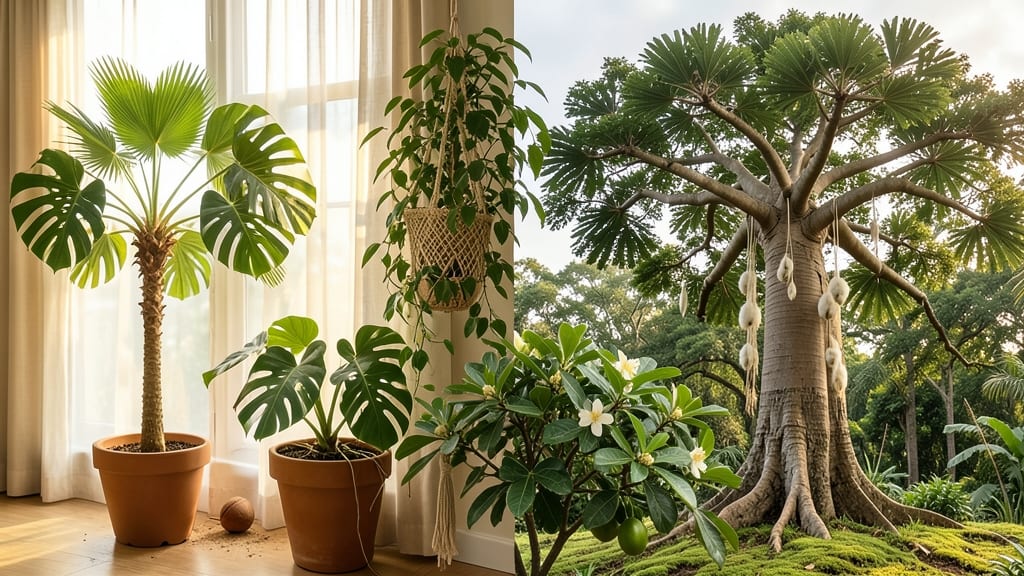
These tropical tree types bring lush, sun-drenched vibes to patios and small gardens without the towering commitment. 🌿 I’ve learned the hard way that not all tropicals thrive in containers—some need room to stretch their roots, while others stay compact for years.
The key is matching the right species to your space, whether you’re dreaming of a mini mango tree or a palm that fits on your balcony. These varieties pack all the tropical charm—fragrant blooms, glossy leaves, and even fruit—without taking over.
Think dwarf citrus that bears tiny oranges, miniature palms that sway in pots, or rubber trees with striking variegated leaves. They all share the same care basics: bright indirect light, well-draining soil, and occasional pruning to maintain their shape.
By summer’s end, you’ll have a thriving mini-garden that rivals any backyard. The best part? Most can be moved indoors when temperatures dip, so you’re not stuck choosing between tropical beauty and seasonal flexibility. Let’s pick the perfect fit for your space!
Start with dwarf citrus like ‘Calamondin’ or ‘Improved Meyer Lemon’—they’re the easiest to grow in containers and reward you with edible fruit. Or go for ornamental tropicals like the Schefflera ‘Amate’ (with its bold, finger-like leaves) or Ficus ‘Ginseng’, which develops gnarled, bonsai-like trunks over time.
These plants thrive in 60-80°F temperatures and need at least 4-6 hours of sunlight daily, though some tolerate partial shade. The secret to keeping them lush? Well-draining soil mixed with perlite or sand prevents root rot, and fertilizing every 2-3 months during growing season keeps them vigorous.
Most dwarf varieties stay under 6 feet tall, making them ideal for decks, courtyards, or even large windowsills. With the right care, they’ll outlive your last houseplant and become the star of your outdoor space.
Here’s the game-changer: container size matters. A 15-20 gallon pot works for most dwarf tropicals, but deeper pots (like 24 inches) suit palms or trees with taproots. Group plants with similar needs together—like moisture-loving palms near citrus—to simplify care.
And don’t forget to rotate pots occasionally so all sides get even light, preventing lopsided growth. Whether you’re a beginner or a seasoned gardener, these tropical dwarfs deliver big impact with minimal effort.
The right variety can even mask urban noise or soften harsh lines in modern landscapes. Ready to pick your perfect mini-tree? Let’s dive into the specifics!
📚 In This Guide
- What you need
- Instructions
- Tips and common mistakes
- Wrapping up and next steps
What you need
- ● Dwarf tropical tree seedlings or saplings: Choose from varieties like Dwarf Schefflera, Ficus microcarpa ‘Ginseng,’ or Dwarf Citrus (e.g., Calamondin). Quantity depends on your space—1-3 plants per container (6–12" pots) or 3-5 plants for small garden beds.
- ● Well-draining potting mix: 3–5 gallons per container (use a blend of peat moss, perlite, and coconut coir for tropical species). For garden beds, amend soil with compost (2–3 inches) and sand (10–20%) to improve drainage.
- ● Containers (if potted): 6–12" pots for single dwarf trees (ensure drainage holes!)
- ● 14–18" pots for small groupings (e.g., 2–3 plants).
- ● Slow-release fertilizer: 1–2 tbsp per plant (look for a balanced 10-10-10 or tropical-specific formula).
- ● Mulch: 1–2 inches of organic mulch (e.g., bark chips or pine straw) to retain moisture and regulate temperature.
- ● Gloves and knee pads (for comfort during planting).
- ● Trowel or small shovel (for transplanting seedlings).
- ● Watering can or hose with a gentle spray nozzle (avoid over-saturating roots!).
- ● Pruning shears (for shaping and maintaining size).
- ○ Optional but helpful: Container saucers or trays (to catch runoff and prevent mess).
- ● Support stakes or cages (for top-heavy varieties like dwarf citrus).
- ● Liquid fertilizer (e.g., fish emulsion) for a mid-season nutrient boost.
Step-by-Step guide to choosing and caring for dwarf tropical trees
Here’s how to select and nurture stunning tropical trees that thrive in containers and small spaces—without sacrificing their lush, exotic beauty.
🌿 Step 1: Select the Right Dwarf Tropical Varieties for Your Space
Start with four compact tropical trees that fit your climate and container size. My top picks for small gardens include dwarf schefflera (Schefflera arboricola), miniature olive (Olea europaea ‘Little Ollie’), dwarf citrus (Citrus ‘Calamondin’ or ‘Improved Meyer Lemon’), and dwarf palm (Chamaedorea elegans or ‘Parlor Palm’)—all under 6 feet tall at maturity. These varieties tolerate indoor conditions while delivering tropical drama.
Check the light requirements of each: schefflera and citrus need bright, indirect light (like an east or west window), while palms and dwarf olive can handle moderate to low light but will grow slower. If your space is dim, opt for the olive or palm—they’re far more forgiving. Avoid placing them in direct midday sun, which can scorch delicate leaves.
☀️ Step 2: Prepare Containers and Soil for Optimal Growth
Use well-draining containers with drainage holes—terracotta pots or fiberglass planters work best for tropical trees, as they prevent root rot. For 4 dwarf trees, you’ll need one 12-inch pot per plant (or a 24-inch container for a mixed tropical display). Fill each with a lightweight, airy potting mix designed for tropical or citrus plants—avoid garden soil, which compacts and suffocates roots.
Amend the mix with perlite or orchid bark (about 20% of the total volume) to improve drainage. Tropical trees hate soggy roots, so the soil should feel slightly damp but not wet when you squeeze it. If your mix feels heavy or clumps tightly, add more perlite. Place a 1-inch layer of gravel or broken pottery at the bottom of each pot to further enhance drainage.
🪴 Step 3: Plant and Acclimate Your Trees for Thriving Growth
Remove each tree from its nursery pot and loosen the roots gently if they’re circling tightly—a common issue with container-grown plants. Place the tree in its new pot and fill around the roots with the prepared potting mix, pressing lightly to eliminate air pockets. Leave 1 inch of space between the soil surface and the pot’s rim to prevent overflow during watering.
Water deeply immediately after planting to settle the soil and encourage root contact with the mix. Place the pots in a shaded area for 3-5 days to reduce transplant shock. Tropical trees are sensitive to sudden environmental changes, so avoid moving them to their final spot until new growth appears—usually within 2-4 weeks. If you’re bringing them indoors, do it gradually over 5-7 days to adjust to lower humidity.
💧 Step 4: Establish a Watering and Light Routine for Lush Foliage
Water your tropical trees once a week during the growing season (spring and summer), allowing the top 2 inches of soil to dry out between waterings. In winter, reduce watering to every 10-14 days, as growth slows. Overwatering is the #1 killer of container tropicals—always check moisture with your finger before watering. If the soil feels damp, wait another day.
Rotate the pots quarter-turn weekly to ensure even light exposure and prevent leggy growth. If leaves start yellowing or dropping, it’s often a sign of overwatering or insufficient light. Move the plant to a brighter spot (but avoid direct sun) and adjust your watering schedule. For extra humidity—critical for tropical trees—mist the leaves 2-3 times weekly or place the pots on a pebble tray filled with water to increase moisture in the air.
✂️ Step 5: Prune and Fertilize for Year-Round Health
Prune your tropical trees once a year in early spring to shape them and encourage bushier growth. Use clean, sharp pruners to trim back leggy stems or overcrowded branches, cutting just above a leaf node. Never remove more than one-third of the foliage at once, as this stresses the plant. Dispose of pruned material immediately to prevent disease spread.
Feed your trees with a balanced, water-soluble fertilizer (like 20-20-20) every 4-6 weeks during the growing season. Reduce fertilizing in winter to once every 8-10 weeks. If you notice yellowing leaves between the veins, it’s likely a sign of iron deficiency—switch to a chelated iron supplement for 2-3 applications. Tropical trees are heavy feeders but respond poorly to over-fertilizing, so always follow package instructions.
Tips & tricks for perfect dwarf tropical trees
A few game-changing strategies to help your tropical trees thrive in containers like they're in their natural tropical paradise.
Light Placement Strategy: In Step 1, when selecting your dwarf schefflera and citrus, position them near east-facing windows for optimal bright, indirect light. These varieties are particularly sensitive to light fluctuations—rotating them quarter-turn weekly (as mentioned in Step 4) ensures even exposure. For the dwarf olive and palm, which tolerate moderate light, place them slightly farther from windows or in north-facing spots. I've found that using a grow light for 4-6 hours daily during winter months can prevent leggy growth in all varieties, especially when natural light is scarce.
Soil Mix Science: The 20% perlite or orchid bark amendment in Step 2 isn't just about drainage—it's about creating an airy environment that mimics tropical forest floors. I recommend adding a handful of worm castings to your potting mix for each tree, which provides beneficial microbes and nutrients. This small addition has dramatically improved root health in my collection. When checking soil moisture, press your finger about 2 inches deep—this is where the roots actively seek moisture, not just the surface.
Transplanting Technique: During the 3-5 day shaded acclimation period in Step 3, I've discovered that lightly misting the leaves with room-temperature water every morning helps reduce transplant shock. This mimics the high humidity of tropical environments and prevents leaf scorch. For indoor transitions, place your trees near a bathroom with a hot shower running periodically—the steam creates a natural humidity boost that makes the adjustment easier.
Fertilizer Timing: While the instructions suggest 4-6 week intervals for fertilizing, I've found that splitting the dose into two applications—half at planting and half 3 weeks later—gives my tropical trees a more consistent nutrient supply. This prevents the "fertilizer burn" that can occur when nutrients become too concentrated in the soil. Always water thoroughly before and after fertilizing to help distribute nutrients evenly through the root zone.
Pro Tips for Tropical Tree Types
- A few game-changing strategies to help your tropical trees thrive in containers like they're in their natural tropical paradise.
- Light Placement Strategy: In Step 1, when selecting your dwarf schefflera and citrus, position them near east-facing windows for optimal bright, indirect light.
- Soil Mix Science: The 20% perlite or orchid bark amendment in Step 2 isn't just about drainage—it's about creating an airy environment that mimics tropical forest floors.
Frequently asked questions
Got questions about tropical dwarf trees? We’ve got answers! Here are some of the most common queries to help you pick the perfect variety for your space.
What are the easiest tropical dwarf trees to grow in containers?
Look for low-maintenance varieties like the Dwarf Schefflera or Dwarf Umbrella Tree. These thrive in partial shade, require minimal pruning, and tolerate occasional neglect—perfect for beginners! Just ensure well-draining soil and regular watering (but avoid soggy roots).
How often should I water my tropical dwarf tree in a container?
Water when the top 1-2 inches of soil feel dry, usually every 5-7 days in warm weather. Reduce frequency in cooler months. Pro tip: Use a moisture meter or stick your finger in the soil to check—overwatering is a common killer of container plants!
Can tropical dwarf trees survive indoors year-round?
Yes, but they need bright, indirect light (like near a south-facing window). If natural light is limited, supplement with a grow light. Avoid drafts (e.g., AC vents) and maintain humidity with a pebble tray or humidifier. Varieties like Dwarf Fiddle Leaf Fig adapt well indoors.
How do I prune a tropical dwarf tree to keep it small?
Prune in spring or early summer to encourage bushier growth. Use clean, sharp shears to trim back leggy stems or overgrown branches. Pro tip: Pinch back new growth tips to promote denser foliage—just avoid cutting into woody stems!
What pests should I watch for in tropical dwarf trees?
Common culprits include spider mites, mealybugs, and scale insects. Inspect leaves regularly (especially undersides) for webbing or sticky residue. Treat with neem oil or insecticidal soap for mild infestations. Prevention tip: Quarantine new plants for a week to spot hitchhiking pests early!
Wrapping up and next steps
From the towering Monstera deliciosa to the charming Dwarf Umbrella Tree, tropical trees bring lush beauty to even the smallest spaces! Whether you’re drawn to their vibrant foliage, low-maintenance care, or unique shapes, these dwarf varieties prove that big impact doesn’t require big yards. 🌿✨
Ready to transform your garden or patio? Start by selecting the perfect species for your climate and space, then gather your supplies—soil, pots, and a little patience. Plant one today and watch your green sanctuary grow!