
Planting
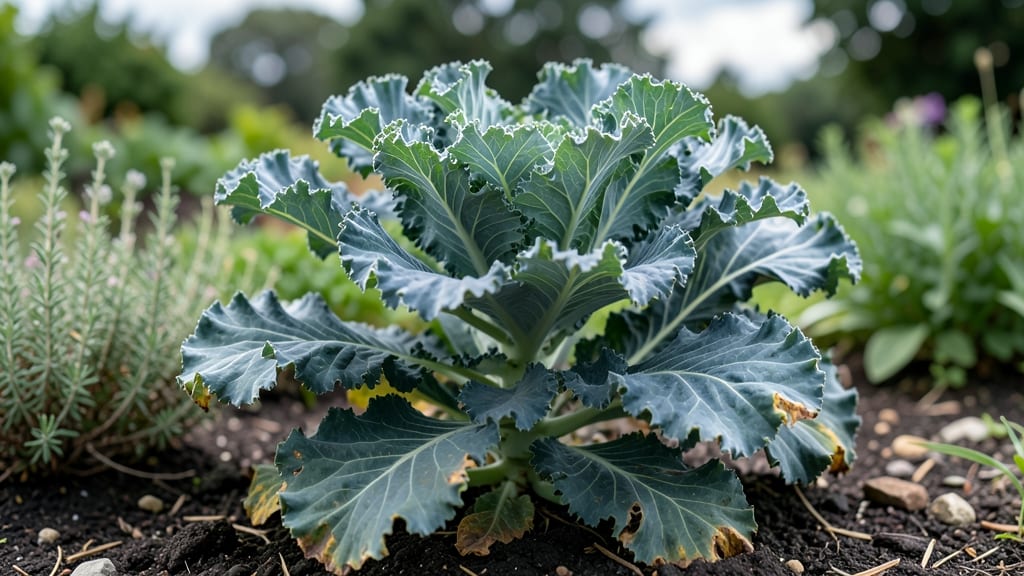
The kale tree plant grows faster than you'd expect from a leafy green. 🌱 I planted mine last spring, and by summer, it was already reaching 6 feet tall—with edible leaves at every height. This isn’t your typical kale; it’s a vertical powerhouse that turns small spaces into harvest zones.
Start with a perennial variety like 'Lacinato' or 'Red Russian' for year-round growth, or opt for annuals like 'Dwarf Blue Curled' if you prefer milder climates. The key is well-draining soil mixed with compost—think rich, crumbly, and slightly acidic—and a south-facing spot with 6+ hours of sunlight daily.
Trellis or cage support is critical; without it, the plant sprawls instead of growing upward.
Water deeply twice a week (more in heatwaves) and prune regularly to encourage bushier growth. The first harvest comes in 6-8 weeks, but with proper care, you’ll get continuous leaves for months.
Pests like aphids are rare when you keep the area clean, and diseases? Almost nonexistent if you avoid overhead watering.
Perfect for balconies, patios, or small yards—this isn’t just a plant, it’s a living salad bowl that grows faster than weeds. Ready to turn your space into a vertical harvest? Let’s get started.
📚 In This Guide
- What you need
- Instructions
- Tips and common mistakes
- Wrapping up and next steps
What you need
- ● Kale Tree Plant: 1 healthy Cavolo Nero or Lacinato kale tree (available as a bare-root plant or potted tree from nurseries or online).
- ● Well-Draining Soil: 3–5 gallons of high-quality potting mix (look for organic blends with compost).
- ● Container or Garden Bed: Container Option: A large pot (12–18 inches deep) with drainage holes.
- ● Garden Option: A sunny spot with loose, fertile soil (amend with compost if needed).
- ● Watering Can or Hose: With a gentle spray nozzle for hydration.
- ● Fertilizer: Balanced organic fertilizer (10-10-10 or fish emulsion) for initial feeding.
- ● Gloves: 1 pair to protect your hands from thorns (yes, kale trees have them!).
- ● Trowel or Spade: For planting and soil prep.
- ● Pruning Shears: Small, sharp pair for trimming leaves or shaping.
- ○ Mulch: 2–3 inches of straw or wood chips to retain moisture (optional but recommended).
- ○ Plant Support (Optional): A small stake for young trees if needed.
- ● Sunlight: 4–6 hours of direct sun daily (partial shade works in hot climates).
- ● Climate: USDA Zones 5–10 (or equivalent for your region).
- ● Patience: Kale trees grow slowly—expect harvestable leaves in 3–6 months!
Step-by-Step instructions for planting a fast-growing kale tree
Here’s my proven method for growing a compact, bushy kale tree that delivers harvests in record time.
🌱 Step 1: Select and Prepare the Planting Site
Choose a location with full sun to partial shade (6+ hours daily) and well-draining soil. Kale trees thrive in cooler climates but tolerate mild heat better than traditional kale—just avoid scorching afternoon sun in summer. Amend the soil with 2-3 inches of compost and work it into the top 6 inches to improve fertility and drainage.
Dig a hole twice as wide as the root ball but no deeper. The top of the root ball should sit 1 inch above ground level—this prevents waterlogging and encourages strong root growth. If your soil is heavy clay, mix in a handful of perlite to improve aeration. Here’s the thing—kale trees grow fast, so the better the soil prep, the quicker you’ll see those bushy, edible branches.
🌿 Step 2: Plant and Stake for Stability
Gently remove the kale tree from its container and loosen any circling roots with your fingers. Position it in the hole so the base of the trunk sits at the correct height, then backfill with native soil, pressing lightly to eliminate air pockets. Water deeply to settle the soil and encourage root contact.
Since kale trees can grow 4-5 feet tall in a season, stake it immediately with a 2-inch diameter bamboo stake tied loosely to the trunk with soft garden twine. Don’t cinch it tight—you want the plant to sway slightly in the wind, which strengthens the stem. Watch for the first true leaves to unfurl; that’s your signal the plant has rooted and is ready to focus on growth.
☀️ Step 3: Water and Fertilize for Rapid Growth
Water the newly planted kale tree 1-2 inches per week, keeping the soil consistently moist but never soggy. The first few weeks are critical—you’ll know it’s getting enough water when the soil feels damp 2 inches below the surface. Mulch with 2-3 inches of straw or wood chips to retain moisture and suppress weeds, but keep the mulch 3 inches away from the trunk to prevent rot.
Feed with a balanced organic fertilizer (10-10-10) at half-strength every 4-6 weeks during the growing season. Kale trees respond dramatically to nitrogen, so you’ll see new growth within days of fertilizing. Here’s where it gets fun—those first harvestable leaves appear in as little as 6-8 weeks from planting, making this one of the fastest edible ornamentals for small spaces.
✂️ Step 4: Prune for Bushiness and Harvest Strategically
Pinch back the tips of the main stems when they reach 12 inches tall to encourage branching. This is the secret to that lush, tree-like shape—you’re telling the plant to grow wider instead of taller. Use clean, sharp pruners to make cuts just above a set of leaves, and remove any yellow or damaged foliage immediately to redirect energy to new growth.
Harvest outer leaves when they reach 4-6 inches long, cutting just above a lower leaf pair. Never take more than 25% of the plant at once, or you’ll stunt its growth. I like to harvest in the morning after dew has dried—leaves are crispest then, and the plant recovers faster. Real talk: if you let it grow unchecked, you’ll end up with a single tall stalk instead of that prized bushy tree shape.
🌱 Step 5: Overwinter and Prepare for Next Season
In colder climates, protect the kale tree with 4-6 inches of mulch after the first hard frost. The thick leaves act as natural insulation, but a layer of burlap wrapped around the trunk adds extra defense against freezing winds. In mild winters, no special care is needed—just continue harvesting until the plant bolts or goes dormant.
Come spring, prune back any dead or damaged growth and fertilize lightly to kickstart new growth. Kale trees are perennial in zones 5-9, so with proper care, you’ll get 2-3 harvests per season for years. The best part? Each year, the plant gets bushier and more productive—exactly what you want from an edible ornamental.
Tips & tricks for perfect kale tree planting
These proven strategies will help you grow a lush, productive kale tree that thrives in small spaces.
Soil Preparation Secret: The 6-inch deep compost amendment in Step 1 is non-negotiable for fast growth. I've found that mixing in a handful of worm castings with the compost gives an extra boost of beneficial microbes that help roots establish even quicker. For heavy clay soils, add a full cup of perlite per hole rather than just a handful—this dramatically improves drainage without compromising moisture retention. The goal is soil that feels like a well-squeezed sponge, not concrete.
Staking Technique: When you stake your kale tree in Step 2, position the bamboo stake on the side that will face prevailing winds. This prevents the plant from growing toward the stake and becoming lopsided. I use soft garden twine wrapped in a figure-eight pattern around the trunk and stake, allowing room for the plant to sway. This flexibility is crucial—it mimics natural wind movement and strengthens the stem's natural resilience.
Watering Wisdom: The 1-2 inches per week guideline in Step 3 works perfectly in most climates, but I've learned to adjust based on leaf color. If leaves start curling at the edges before your weekly watering, you're not providing enough moisture. Conversely, if they develop yellow patches, you're overwatering. A simple soil probe test—inserting a screwdriver 2 inches deep—tells you instantly if you need to water. Aim for soil that's moist but not saturated at this depth.
Pruning Precision: When you pinch back stems at 12 inches in Step 4, focus on the main central stems first. This creates the bushy framework that defines a true kale tree. I've seen beginners make the mistake of pinching too many side branches too early—this can actually slow growth. Wait until you see 3-4 strong side branches emerging before you start pinching those. The key is patience: each pinch should create 2-3 new growth points within 2-3 weeks.
Pro Tips for Kale Tree Plant
- These proven strategies will help you grow a lush, productive kale tree that thrives in small spaces.
- Soil Preparation Secret: The 6-inch deep compost amendment in Step 1 is non-negotiable for fast growth. I've found th...
- Staking Technique: When you stake your kale tree in Step 2, position the bamboo stake on the side that will face prev...
Frequently asked questions
How long does it take for a kale tree plant to grow?
A kale tree (like the Cavolo Nero variety) typically takes 60–90 days to reach harvest size from seed, while established plants can produce edible leaves in 4–6 weeks after transplanting. Cold-hardy varieties may take slightly longer in cooler climates.
Can I plant a kale tree in winter?
Kale trees thrive in cool weather and can be planted in early spring or late summer/fall (6–8 weeks before your first frost). In mild climates, they may even grow year-round. Just avoid planting when temps drop below 20°F (-7°C).
What’s the best alternative if I don’t have space for a kale tree?
If space is limited, try dwarf kale varieties (like ‘Dwarf Blue Curled’) or grow kale in containers (5+ gallon pots work well). You can also opt for microgreens or baby kale, which mature faster and require less room.
Why are my kale tree leaves turning yellow or holey?
Yellowing leaves often signal overwatering or nutrient deficiency (check soil moisture and add compost). Holes? Likely cabbage worms or aphids—spray with neem oil or introduce beneficial insects (like ladybugs) for a natural fix.
How do I harvest kale from a tree without killing the plant?
Harvest by snipping outer leaves (never the center stem) with clean scissors. Leave at least half the plant intact to keep it growing. For continuous harvests, pick leaves every 1–2 weeks—your kale tree will thank you with fresh, tender greens!
Wrapping up and next steps
Growing a kale tree plant is a fantastic way to blend beauty and nutrition into your small garden—no sprawling space required! 🌱 With its fast growth and year-round harvest potential, this edible ornamental is perfect for beginners and seasoned gardeners alike.
Whether you're drawn to its vibrant leaves, compact size, or delicious yield, your efforts will pay off in both aesthetics and fresh greens.
Ready to take the next step? Start by selecting your favorite variety, gathering your supplies, and giving your kale tree the love it deserves. Before you know it, you’ll be enjoying homegrown, nutrient-packed meals straight from your very own "tree"! 🌟