
Pruning
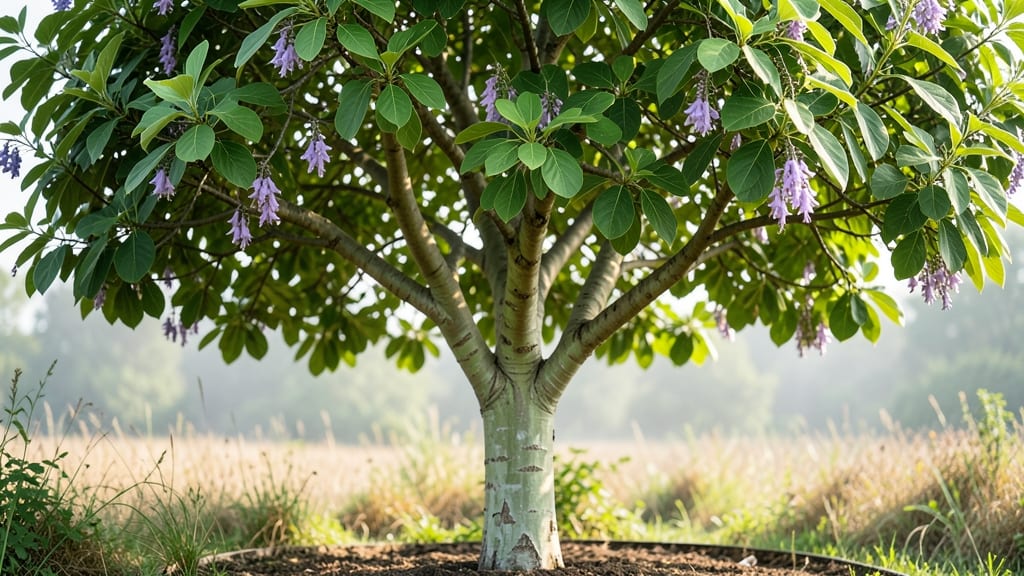
Pruning Tree of Heaven means tackling its aggressive growth in late winter or early spring before new shoots appear, focusing on the root collar to weaken its invasive spread while avoiding the tree’s active sap flow. Always use sharp tools and properly dispose of cuttings to stop regrowth.
Tree of Heaven spreads through both underground root suckers and airborne seeds, making it one of the most challenging invasive species to control. 🌱 The key to effective pruning lies in timing—cutting during dormancy (late winter/early spring) minimizes stress on the tree while preventing its rapid regrowth.
I’ve found that combining pruning with herbicide treatments (like glyphosate) applied to fresh cuts significantly improves long-term results, especially in heavily infested areas.
For best results, wear protective gear when handling cuttings—the tree’s sap can irritate skin. Disposing of pruned material in sealed bags or burning it (where permitted) prevents new sprouts from taking root in your yard. This two-step approach—physical removal followed by chemical treatment—is what actually breaks the tree’s resilience cycle.
💡 In This Article
- Understanding Tree of Heaven’s Invasive Growth Mechanics
- Step-by-Step Tree of Heaven Pruning and Eradication Guide
Understanding tree of Heaven’s invasive growth mechanics
Tree of Heaven (Ailanthus altissima) spreads through two primary mechanisms: underground root suckers and airborne seeds. The root system produces aggressive suckers that can sprout up to 10 feet from the parent tree, creating dense thickets.
These suckers contain stored energy that allows them to emerge even after severe pruning, which is why conventional cutting often fails. The tree’s seeds, released in late summer, contain winged samaras that can travel up to 100 feet on wind currents, ensuring widespread colonization.
The tree thrives in disturbed soils—think construction sites, roadsides, or abandoned lots—because its roots can penetrate compacted ground with ease. Its chemical defenses, like allelopathic compounds in its leaves, suppress competing vegetation, giving it a competitive edge.
What’s fascinating is how its rapid growth (up to 3-5 feet per year) allows it to outcompete native species before they establish. The combination of these biological traits makes Tree of Heaven nearly impossible to eradicate through pruning alone without additional treatments. 🌿
Here’s why timing matters: When you prune during active growth (spring to fall), the tree’s sap flow increases, and new shoots can emerge within weeks. The tree’s cambium layer (growth tissue) becomes hyperactive, accelerating regrowth.
But when you cut during dormancy (late winter/early spring), you’re targeting the tree’s stored energy reserves before they’re redirected into new shoots. This is the biological window where pruning has the highest chance of weakening the tree’s invasive potential.
Another critical factor is the tree’s root system depth—often extending 15-20 feet deep. This makes herbicide treatments more effective when applied directly to fresh cuts (a technique called "hack-and-squirt"), as the chemical can be absorbed through the exposed cambium.
Without this follow-up step, pruned sections can regenerate within 30-60 days, especially in moist soil conditions. The tree’s resilience is hardwired into its biology, which is why a multi-step approach is essential.
Consider this comparison: A single Tree of Heaven can produce 100,000 seeds per year, while its root system can generate 50+ suckers annually. This dual reproductive strategy is what makes it so difficult to control—even a small patch can quickly become an infestation.
The tree’s ability to regenerate from tiny root fragments (as small as 1 inch) means that improper disposal of cuttings can actually spread the problem further. 🌱
For homeowners dealing with this invasive species, understanding these mechanics translates directly to actionable strategies. The goal isn’t just to cut back visible growth but to disrupt the tree’s life cycle at multiple points—root, stem, and seed.
This requires a combination of precise timing, proper tool use, and follow-up treatments to create a sustained defense against its aggressive spread.