
Diseases
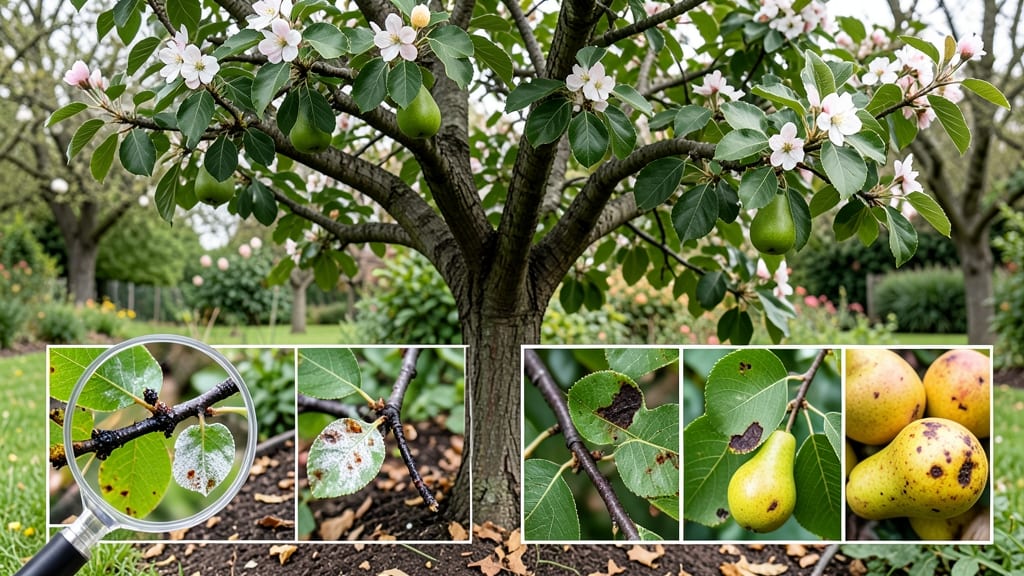
Spotting pictures of pear tree diseases early saves your harvest—and your tree. 🌳 Fire blight, black spot, and powdery mildew are just a few of the fungal foes that can turn lush leaves into a sickly mess if you don’t catch them fast.
This guide gives you the visual clues you need to identify them before they spread, so you can act before it’s too late.
Most diseases start with tiny signs—dark spots, weird growths, or leaves that look like they’ve been singed. I’ve seen fire blight turn entire branches black in weeks, while powdery mildew leaves a white, flour-like coating that spreads like wildfire if you ignore it.
The key is acting at the first sign, whether that’s pruning infected branches or spraying a fungicide at the right time.
With these visual guides, you’ll recognize the early warning signs and know exactly what to do next. No more guessing whether those brown spots are just sun damage or something worse.
You’ll learn how to treat each disease and what steps to take to keep your tree healthy for years to come.
This isn’t just about fixing problems—it’s about preventing them. A few simple habits, like proper pruning and keeping your tree’s environment clean, can make all the difference. Let’s get your pear tree back to thriving in no time.
Root Causes of Pear Tree Ailments
Pear trees, like any other fruit-bearing plant, are susceptible to diseases due to a mix of environmental stressors, biological threats, and cultural mismanagement. Understanding why these issues arise is the first step in prevention and treatment.
Let’s break down the key culprits behind pear tree diseases, from fungal invaders to environmental factors that create the perfect storm for trouble.
Fungi are the most common cause of pear tree diseases, thriving in moist, warm conditions. These microscopic organisms release spores that infect leaves, fruit, and bark, often going unnoticed until symptoms appear.
- Overhead Irrigation or Poor Drainage Fungal spores splash onto leaves and fruit from soil or infected plant debris when water is applied from above. Actionable fix: Use drip irrigation or soaker hoses to keep foliage dry. Ensure well-draining soil to prevent waterlogging, which fungi love.
- High Humidity and Warm Temperatures Fungi like Venturia (causing scab) and Botryosphaeria (causing dieback) flourish in humid climates (70–90% humidity) with temperatures between 60–80°F. Actionable fix: Prune for airflow, avoid dense planting, and consider fungicides during peak spore-release periods (spring for scab, late summer for dieback).
- Weakened Tree Defense Stress from drought, nutrient deficiencies, or physical damage (e.g., pruning wounds) makes trees vulnerable. Actionable fix: Maintain balanced soil pH (6.0–7.0 for pears) and fertilize with nitrogen, phosphorus, and potassium to bolster immunity.
Pear trees don’t just fall victim to pathogens—they’re also pushed to the brink by harsh growing conditions that weaken their natural resistance.
- Extreme Temperature Swings Sudden freezes (<28°F) or heatwaves (>95°F) disrupt cellular function, making trees susceptible to secondary infections like bacterial canker. Actionable fix: Mulch heavily in winter and provide shade cloth in summer to moderate temperatures.
- Poor Air Circulation Dense foliage or overcrowded orchards trap moisture, creating ideal fungal breeding grounds. Actionable fix: Prune to open the canopy and space trees 20–25 feet apart for airflow.
- Soil-Borne Contaminants Compacted or contaminated soil (e.g., from old infected roots) harbors pathogens like Phytophthora, which causes root rot. Actionable fix: Test soil annually and amend with compost or organic matter to improve structure and microbial balance.
Insects and mites don’t just damage fruit—they create entry points for diseases by wounding bark or leaves.
- Pear Psylla and Scale Insects These sap-sucking pests weaken trees and excrete honeydew, a sticky substance that fosters sooty mold (a secondary fungal infection). Actionable fix: Apply horticultural oil in dormant season or use systemic insecticides like imidacloprid during early spring.
- Borers and Woodpecker Damage Invasive borers (e.g., flatheaded apple tree borer) tunnel into bark, creating wounds where fungi like Nectria can invade. Actionable fix: Inspect bark for exit holes and treat with borer-specific sprays (e.g., spinosad) or prune infected branches immediately.
Pro Tip: 💡 Monitor your tree’s stress levels year-round. Healthy trees resist diseases better. Start with a soil test, adjust watering practices, and prune strategically to disrupt fungal lifecycles before they take hold.
Revitalize Your Pear Tree
Now that you’ve identified the issue plaguing your pear tree—whether it’s fire blight, black spot, powdery mildew, or another fungal foe—it’s time to take action. The good news? Most pear tree diseases are manageable with the right steps.
Below, we’ll map out practical, step-by-step solutions tailored to each common problem, plus prevention tips to keep your tree thriving for years.
Fire blight (Erwinia amylovora) is one of the most aggressive diseases, but early intervention can save your tree.
🔪 Step 1: Prune Infected Branches
- When? Late winter or early spring (before buds swell) or immediately if you spot symptoms mid-season.
- How?
- Cut 6–12 inches below the last visible sign of infection (blackened, oozing cankers).
- Sterilize pruners with rubbing alcohol or bleach solution (1 part bleach to 9 parts water) between cuts to prevent spreading bacteria.
- Burn or bag infected branches—do not compost them.
🌡️ Step 2: Apply Copper-Based Bactericides
- Best options: Copper fungicide (e.g., Copper Sulfate 50) or streptomycin (for severe cases).
- When? Apply before blooming and after harvest as a preventive spray.
- How? Follow label instructions—typically 1–2 applications per season.
💡 Prevention Tips
- Space trees properly (15–20 ft apart) for airflow.
- Avoid overhead watering—use drip irrigation instead.
- Remove volunteer pear trees (wild seedlings) nearby, as they can harbor bacteria.
Black spot (Marssonina coronaria) causes unsightly leaf spots, but it’s easily controlled with consistent care.
👨🍳 Step 1: Remove Infected Leaves
- When? Fall cleanup is critical—rake and destroy all fallen leaves (do not compost).
- How? Wear gloves and dispose of leaves in the trash or burn them.
🥘 Step 2: Apply Fungicides Proactively
- Best options: Neem oil, sulfur, or fungicides with myclobutanil (e.g., Immunox).
- When? Start spraying before bud break in spring, then every 2–3 weeks during wet seasons.
- How? Spray both sides of leaves thoroughly, especially the undersides where spores hide.
🌡️ Step 3: Improve Air Circulation
- Thin the canopy if branches are too dense.
- Space trees 10–15 ft apart to reduce humidity.
💡 Prevention Tips
- Water in the morning so leaves dry quickly.
- Avoid nitrogen-heavy fertilizers, which encourage lush (but disease-prone) foliage.
Powdery mildew (Podosphaera leucotricha) coats leaves in white powder, but home remedies work wonders.
🍳 Step 1: Homemade Spray (Early Treatment)
- Mix: 1 tbsp baking soda, 1 tsp dish soap (mild), and 1 gallon water.
- When? Apply every 7–10 days in spring/summer.
- How? Spray until leaves glisten—focus on undersides.
🥘 Step 2: Commercial Fungicides (Severe Cases)
- Best options: Sulfur-based sprays (e.g., Liqui-Cop) or potassium bicarbonate.
- When? Apply at bud break and after harvest.
🌡️ Step 3: Cultural Fixes
- Prune for sunlight—remove shaded branches where mildew thrives.
- Water at the base (avoid wetting leaves).
💡 Prevention Tips
- Plant resistant varieties like ‘Moonglow’ or ‘Kieffer’ pears.
- Mulch with straw to reduce soil-borne spores.
No matter the issue, these universal tips will strengthen your pear tree’s resilience:
| Task | When | How |
|---|---|---|
| Sanitize tools | Before/after pruning | Wipe with bleach or alcohol to prevent spread. |
| Test soil pH | Early spring | Aim for 6.0–7.0; amend with lime (raise) or sulfur (lower). |
| Thin fruit | Summer | Reduces stress; prevents overcrowding (which invites disease). |
| Mulch properly | Fall | Use 3–4 inches of organic mulch (wood chips, straw) away from the trunk. |
- Preventive sprays: Before blooms (spring) and after harvest (late summer).
- Cleanup: Fall (remove debris) and winter (prune).
- Monitor: Check leaves weekly during wet seasons.
🎯 Pro Tip: If your tree is severely infected, consult a local arborist—sometimes systemic fungicides (like Propiconazole) are needed for stubborn cases.
With these steps, your pear tree can bounce back stronger—and you’ll be the hero of your orchard! 🌳💚
Frequently asked questions
How can I tell if those brown spots on my pear tree leaves are just sunburn or a disease?
Sunburn spots are usually dry, crispy, and appear on leaves exposed to direct afternoon sun. Disease spots (like black spot or scab) are often oily, dark, or raised, and may have halos or powdery coatings. Check the undersides of leaves too—diseases often start there first.
Can I use the same fungicide for all pear tree diseases?
No—different diseases need different treatments. Copper works for bacterial issues (like fire blight), while sulfur or neem oil handles fungal problems (like powdery mildew). Always read the label and match the active ingredient to your specific issue. For severe cases, consult a local nursery for targeted solutions.
Why do my pear tree’s branches keep dying back even after I prune them?
Repeated branch dieback often signals fire blight or canker disease. If you’re cutting back but new growth keeps dying, the bacteria/fungus may be deeper in the tree. Try copper-based sprays and remove all infected wood—don’t just trim the visible dead parts.
Is it safe to compost leaves from my diseased pear tree?
Never compost leaves with visible fungal diseases (like black spot or powdery mildew) or bacterial infections (like fire blight). These pathogens survive composting and can reinfect your tree. Burn or trash infected leaves—don’t risk spreading the problem next season.
How often should I inspect my pear tree for diseases?
Check your tree weekly during spring and summer (peak disease season) and monthly in fall/winter. Focus on new growth, undersides of leaves, and any unusual spots or oozing cankers. Early detection is key—catching issues before they spread saves your tree!