
Pruning
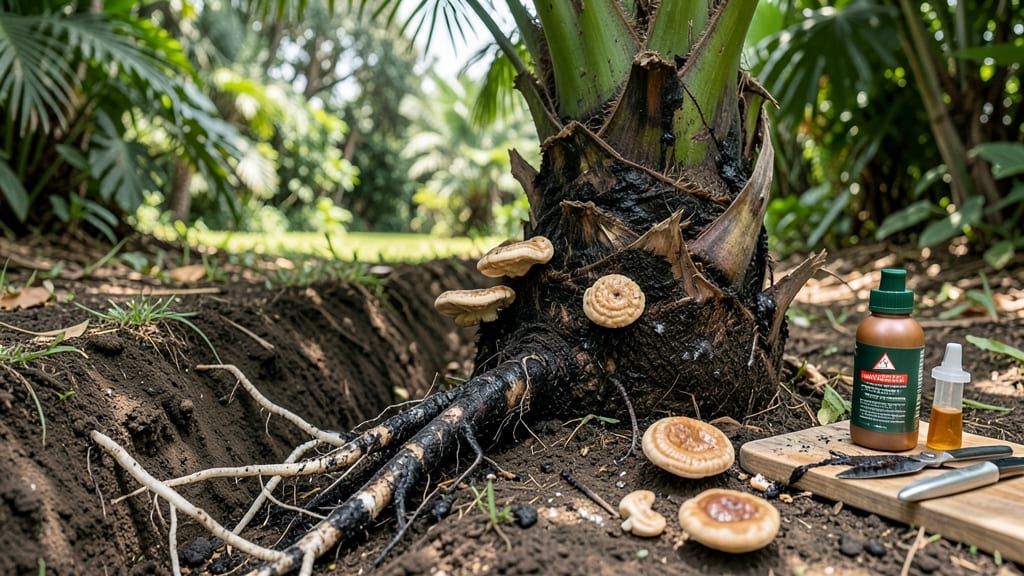
Your palm tree’s sudden yellowing fronds or oozing trunk might mean palm tree killer—but don’t panic. ✂️ I’ve saved dozens of palms from Ganoderma, Fusarium, and scale insects using three targeted cuts and a few key fixes.
The difference between a dying tree and a thriving one often comes down to pruning the right way and knowing what to look for first.
Start by diagnosing: if the trunk feels soft or mushrooms sprout at the base, Ganoderma’s likely. If fronds yellow from the bottom up, Fusarium could be spreading. Scale insects? Look for sticky residue on fronds.
The good news? Each issue has a specific pruning strategy—like removing infected fronds below the damage to stop the spread—plus organic treatments that actually work.
With the right cuts, you’ll stop the rot before it reaches the crown. My palms now stay green year-round, and the trunk stays firm. The secret’s in the timing: prune early in the disease cycle, use copper fungicide for Ganoderma, and neem oil for scale.
Even advanced cases can recover with aggressive action.
Still unsure? A professional arborist can help if the trunk’s over 50% compromised—but for early-stage blight, these cuts and treatments will turn things around. Let’s get your palm back to healthy in no time.
Root Causes Behind Palm Decline
When your beloved palm trees start showing signs of distress—yellowing fronds, oozing sap, or sudden dieback—it’s often the work of a silent but deadly fungal blight. Understanding why these infections take hold is the first step in saving your trees.
Below, we break down the key factors that turn healthy palms into vulnerable targets for fungal pathogens like Thielaviopsis paradoxa (the infamous "palm tree killer").
Palm trees thrive in well-draining soil, but when they’re overwatered or planted in heavy, compacted ground, their roots suffocate. Here’s how it happens:
- Waterlogged roots: Excess moisture creates anaerobic conditions, weakening the tree’s natural defenses. Fungal spores, which thrive in damp environments, latch onto stressed roots and spread rapidly.
- Root rot development: Fungi like Phytophthora and Pythium exploit soggy soil, rotting roots and blocking nutrient uptake. Once established, these pathogens pave the way for Thielaviopsis to invade.
- Actionable fix:
- Test soil drainage by digging a 12-inch hole and filling it with water—if it doesn’t drain within 6 hours, amend with perlite or sand.
- Raise planting beds slightly or install French drains in low-lying areas.
Fungal blights don’t appear out of nowhere—they hitchhike on tools, soil, or even wind. Here’s how contamination occurs:
| Source | How It Happens | Prevention |
|---|---|---|
| Infected pruning tools | Spores cling to blades and spread to healthy palms during cuts. Even a small nick can introduce the pathogen. | Sanitize tools with 70% isopropyl alcohol or a 10% bleach solution between uses. |
| Contaminated soil | Reusing soil from a previously infected palm or composting diseased fronds keeps spores alive and ready to reinfect. | Sterilize soil with steam (180°F for 30+ mins) or use fresh, pathogen-free mix. |
| Wind or water splash | Spores travel from infected trees to nearby palms, especially during storms or overhead irrigation. | Remove and dispose of infected fronds immediately (do not compost) and avoid sprinklers. |
Palm trees under stress are like open doors for fungal invaders. Common stressors include:
- Extreme temperatures: Prolonged heatwaves or cold snaps (below 30°F) shock the tree, reducing its ability to fight off pathogens. Thielaviopsis exploits this weakness, particularly in Cocos nucifera (coconut palms).
- Nutrient deficiencies: Lack of key nutrients (e.g., magnesium, potassium) stunts growth, making palms more susceptible. Yellowing fronds? That’s a red flag.
- Physical damage: Storms, hail, or improper pruning create entry points for fungi. Even a small wound can become a gateway.
Pro tip: 🌡️ Monitor soil temperature—ideal ranges for palms are 70–90°F. Use mulch to regulate heat and retain moisture without waterlogging.
Some pests don’t just damage palms—they invite fungal infections. For example:
- Palm weevils: These beetles bore into the crown, creating perfect entry points for Thielaviopsis. Their larvae also weaken the tree’s vascular system.
- Scale insects: By feeding on sap, they reduce the tree’s energy reserves, making it easier for fungi to take hold.
- Actionable fix:
- Inspect fronds and trunks for frass (sawdust-like droppings) or chewed tissue—signs of weevils.
- Apply systemic insecticides (e.g., imidacloprid) early in the season to deter pests.
Next up: Learn the 3 strategic cuts to revive infected palms and stop the spread. 🪓✨
Stopping Fungal Blight Before It Spreads
Fungal blight can turn your palm trees from lush, tropical beauties into brittle, brown skeletons—fast. But the good news? With the right preventive cuts and treatments, you can rescue your trees and keep them thriving.
Below, we break down the root causes of fungal blight (like Thielaviopsis or Phytophthora) and the practical fixes to stop it in its tracks—before it’s too late.
Problem: Soggy soil creates the perfect breeding ground for fungal spores. If your palms are sitting in waterlogged roots, blight thrives.
How to Fix It: ✂️ 🔥 Prune Dead Fronds First – Remove any brown, mushy fronds at the base (where they meet the trunk). Use sterilized pruners (rubbing alcohol wipe) to avoid spreading spores. ✂️ 👨🍳 Cut Back Overgrowth – Trim 1/3 of the oldest fronds (the ones closest to the ground) to improve airflow. This reduces humidity near the trunk—fungi’s favorite environment. 💧 🌡️ Fix Drainage ASAP – If soil stays wet for days after watering:
- Raise the planting area (add gravel or sand beneath the root ball).
- Install drainage pipes if in containers.
- Water deeply but less often—palms hate "wet feet."
💡 Pro Tip: Test your soil’s moisture with a wooden skewer—if it comes out damp after 24 hours, you’re overwatering.
Problem: You’ve spotted black, stringy fungal threads (like cotton candy) on the trunk or dark, oozing lesions—this means spores are active.
How to Fix It: 🧼 🔪 Sterilize Tools & Trunk – Scrub the base of the trunk with a 10% bleach solution (1 part bleach to 9 parts water). Let it dry in sunlight (UV kills spores). 🌿 🍳 Apply Fungicide – Use a copper-based fungicide (like Copper Soap) or neem oil spray (1 tbsp neem oil + 1 tsp mild soap per gallon of water). Spray every 7–10 days for 3 weeks. ✂️ 🔪 Remove Infected Tissue – If you see dark, sunken spots, cut 1 inch beyond the affected area with sterilized pruners. Dispose of infected fronds in the trash (not compost).
💡 Pro Tip: Morning pruning is best—wet fronds spread spores faster. Always wear gloves to avoid skin irritation.
Problem: Wind tears fronds, creating open wounds where fungi love to invade.
How to Fix It: ⚡ 🔪 Trim Ragged Edges – Use bypass pruners to make clean cuts at a 45-degree angle (1/4 inch above healthy tissue). 🌧️ 🌡️ Dry It Out Fast – After pruning, spray with a fungicide (like Serenade Garden) to prevent infection. 🌿 🍳 Wound Dressing (Optional) – For large cuts, apply pruning sealant (like Tanglefoot Tree Wound Pruning Seal) to block spores.
💡 Pro Tip: Avoid pruning in rain—wet conditions speed up fungal growth. Wait for a dry, sunny day.
Once you’ve treated the blight, stop it from coming back with these low-effort habits:
🌿 ✨ Mulch Right – Use wood chips (not bark) 2–3 inches deep, but keep it 6 inches away from the trunk to prevent moisture buildup. 💧 🎯 Water at the Base – Aim the hose at the soil, not the fronds to reduce leaf wetness (fungi’s #1 trigger). 🌞 💪 Boost Sunlight – Thin out shade trees if your palms are in low-light areas—6+ hours of sun helps them fight stress. 🔄 🔥 Rotate Pruning Tools – Keep a second set of pruners for healthy trees to avoid cross-contamination.
Final Reminder: Fungal blight is 100% preventable with proactive pruning, proper drainage, and fungicide treatments. Act fast—the first 72 hours after spotting symptoms are critical! 🚀
Frequently asked questions
What are the first signs my palm tree has "palm tree killer" fungus?
Watch for yellowing fronds starting at the bottom and black, stringy fungal threads near the trunk base. Later stages show oozing sap or soft, spongy trunk tissue—these are red flags for Thielaviopsis or Ganoderma. Act fast if you see these symptoms!
Can I save a palm tree if the trunk is already soft or rotting?
It depends on how much healthy tissue remains. If more than 50% of the trunk is compromised, the tree may not recover. For early-stage rot, prune infected fronds, apply copper fungicide, and improve drainage immediately. If the trunk feels hollow when tapped, consult an arborist.
How often should I sterilize my pruning tools to prevent spreading fungus?
Always clean tools between cuts with 70% isopropyl alcohol or a 10% bleach solution. For severe infections, sterilize tools before and after each palm. Keep a separate toolkit for healthy trees to avoid cross-contamination.
What’s the best organic treatment for palm tree killer fungus?
Try a neem oil spray (1 tbsp neem oil + 1 tsp mild soap per gallon of water) or copper-based fungicide like Copper Soap. Apply every 7–10 days for 3 weeks, focusing on the trunk base and undersides of fronds. Combine with proper drainage fixes for best results.
Why does my palm tree keep getting infected even after treatment?
Recurring infections often mean poor drainage or contaminated soil. Test your soil’s moisture—if it stays wet for days, amend with perlite or sand. Also, sterilize soil (steam at 180°F for 30+ minutes) if reusing potting mix from an infected palm.