
Pruning
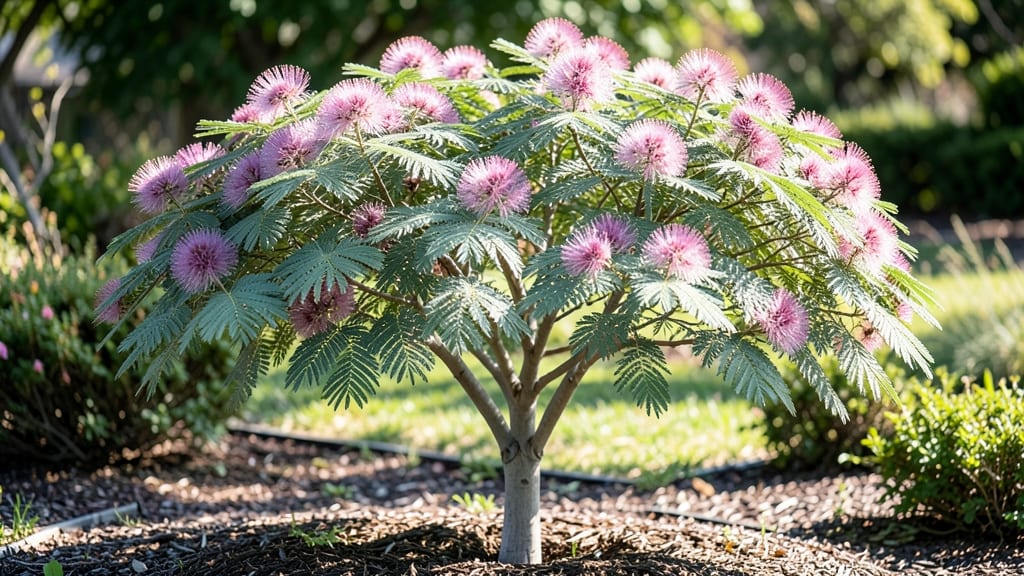
For mimosa trees in Utah, choose cold-resistant varieties such as Albizia julibrissin 'Summer Chocolate' or Acacia dealbata, which handle Utah’s freezing winters when planted in protected spots. Trim in late winter before buds sprout to reshape the tree and clear dead wood, but avoid aggressive cuts that weaken the plant.
Utah's unpredictable winters—where temperatures can plunge below 0°F—make selecting the right mimosa species critical. 🌡️ The varieties I recommend thrive because their genetic adaptations include thicker bark and deeper root systems that insulate against frost.
Planting near south-facing walls or other barriers creates a microclimate that traps heat, giving these delicate trees an extra survival advantage.
Even with cold tolerance, proper pruning timing is everything: cutting too early can expose the tree to late frosts, while waiting too long risks encouraging disease in the new growth.
When you're ready to prune, focus on 3 key goals: removing dead branches to prevent pests, thinning out crowded growth for better airflow, and shaping the tree to highlight its signature feathery foliage. Use sharp bypass pruners and sterilize them with rubbing alcohol between cuts to avoid spreading bacteria.
I always make my cuts just above a leaf node or bud, which encourages healthy regrowth. Remember, mimosa trees are fast growers, so resist the urge to over-prune—they bounce back quickly when given space to recover.
💡 In This Article
- Best Cold-Hardy Mimosa Varieties for Utah Climates
- Step-by-Step Mimosa Tree Pruning Guide for Utah Gardeners
Best cold-hardy mimosa varieties for Utah climates
The key to growing mimosa trees in Utah's harsh winters lies in selecting varieties with natural cold resistance. Albizia julibrissin, commonly called the silk tree, has evolved to withstand temperatures down to -15°F when established, thanks to its thick, corky bark that acts as insulation. 🌡️ The 'Summer Chocolate' cultivar stands out because its darker foliage contains higher concentrations of anthocyanins—pigments that help protect leaves from winter sun damage.
These pigments also give the tree its striking burgundy hues in cooler months, making it both functional and visually stunning.
Another excellent choice is Acacia dealbata, known as the mimosa tree, which handles Utah's Zone 7b-8a winters better than many ornamental trees. Its fine, fern-like foliage thrives in well-draining soil with a pH between 6.0-7.5, which is common in Utah's alkaline soils.
What sets this species apart is its ability to drop leaves early in autumn, reducing winter moisture stress—a critical adaptation for Utah's dry climate. Planting in sheltered microclimates, like near a south-facing wall or under the lee of a building, can add 5-10°F of extra protection during cold snaps.
Soil preparation is equally important. Mimosa trees prefer loose, sandy loam that drains quickly to prevent root rot—a common issue in Utah's clay-heavy soils. Amending native soil with 20-30% compost and a 1-inch layer of gravel at the base improves drainage while retaining moisture during dry spells.
Avoid heavy, compacted soils where water pools, as mimosa roots are sensitive to prolonged saturation. The right soil mix mimics their native Mediterranean and Middle Eastern habitats, where they evolved to handle both heat and cold extremes.
What most gardeners don't realize is that mimosa trees have a unique survival mechanism: their roots extend deep and wide, creating a natural "heat sink" that moderates ground temperatures. In Utah's Zone 7, this means planting at least 10 feet from structures to allow roots to spread freely.
The deeper roots also tap into Utah's 30-50 feet of seasonal frost penetration, giving the tree access to unfrozen water during winter dormancy—a critical advantage in dry climates.
For maximum cold hardiness, consider Acacia koa, a Hawaiian native that thrives in Utah's Zone 8-10 when grown in containers and wintered indoors. Its dense canopy provides excellent shade, and its ability to tolerate brief exposures to 20°F makes it a backup option for gardeners in warmer Utah microclimates.
However, this variety requires more maintenance than native species, so it's best suited for container gardening or urban landscapes with controlled environments.
When selecting a location, prioritize spots with at least 6 hours of sunlight daily and protection from prevailing winds. Utah's Chinook winds can desiccate young foliage, so planting near a windbreak—like a fence or hedge—reduces stress.
The combination of cold-hardy varieties, proper soil preparation, and strategic placement creates the ideal conditions for mimosa trees to flourish in Utah's challenging climate.