
Pruning
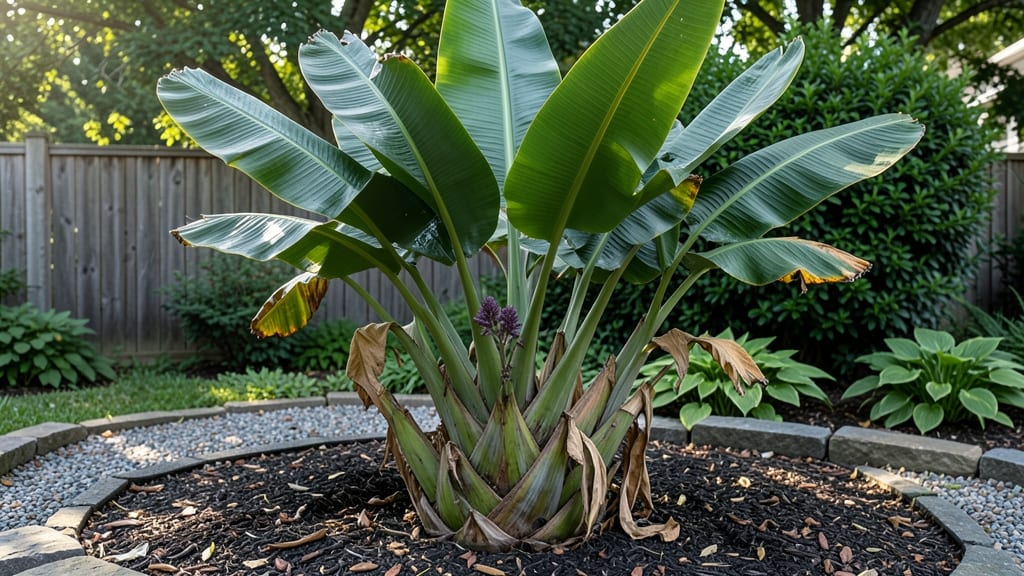
Pruning your Japanese banana tree (Musa basjoo) transforms it from a scraggly mess into a 15-foot tropical statement piece—and the secret is timing. ✂️ I’ve watched mine go from awkward clumps to lush, leafy giants just by following three simple seasonal cuts.
The key? Pruning isn’t about harsh cuts—it’s about encouraging that fast, upward growth while keeping the plant healthy year-round.
Start in late winter or early spring when new shoots emerge—this is when the tree naturally focuses energy on fresh growth.
Cut back any dead or damaged leaves to the base, then trim older stems at the ground level if they’re no longer producing. Never prune more than 1/3 of the plant at once, or you’ll shock it into dormancy.
The goal is to shape, not shrink—think of it like giving your tree a haircut that makes it look even more dramatic.
By summer, you’ll see bold new fronds shooting up, and those pruned stems will regrow with vigor. The ornamental fruit (yes, it’s not edible!) will form on the new growth, adding extra flair. Pro tip: Save those giant leaves—they’re perfect for mulch or even craft projects.
With just 10 minutes of work twice a year, your Musa basjoo becomes the centerpiece of your garden, frost-resistant and impossible to ignore.
This method works in zones 5-9, whether you’re growing it as a standalone specimen or lining a driveway. The only real mistake? Waiting until summer to prune—by then, you’re fighting the plant’s natural rhythm.
Start now, and in three years, you’ll have a towering, tropical-looking tree that thrives with almost no effort.
📚 In This Guide
- What you need
- Instructions
- Tips and common mistakes
- Wrapping up and next steps
What you need
- ● Pruning shears – Bypass-style (sharp, 5–7" blades) for clean cuts on smaller stems.
- ● Loppers – 8–12" reach (for thicker stems up to 2" diameter).
- ● Pruning saw – For stubborn, woody growth (if stems exceed 3" in diameter).
- ● Disinfectant – Rubbing alcohol (70%+) or bleach solution (1:9 bleach:water) to sterilize tools between cuts.
- ● Garden gloves – Heavy-duty, cut-resistant (banana pseudostems can be spiky!).
- ● Compost bin or bag – For collecting trimmings (or repurposing as mulch!).
- ● Pole pruner – For high-reach trimming (if your tree towers over 10 feet!).
- ○ Pruning sealant – Optional for large cuts (to prevent disease entry).
- ● Extension ladder – Sturdy, 10–12 ft (if your tree is tall and you’re DIY-ing).
- ● Marking spray – For labeling cuts (if you’re pruning for training or shaping).
Step-by-Step guide to pruning your Japanese banana tree (Musa basjoo)
Here's how I keep my Musa Basjoo thriving year-round with seasonal trims that encourage dramatic, healthy growth.
✂️ Step 1: Late Winter Pruning for New Growth
Timing is everything—prune your banana tree in late winter (just before new shoots emerge) when the plant is dormant. Look for dead or damaged fronds that have turned brown and crispy; these are your first targets. I like to grab a handful of the dead frond and give it a gentle tug—if it comes away easily, it's ready to go.
Use clean, sharp pruning shears to cut each frond at its base, making the cut just above the soil line. Never leave stubs—this prevents disease and keeps the plant looking tidy. You'll notice the tree's trunk is often covered in pseudo-stems (the leaf sheaths from previous growth). These can be peeled away gently once dead fronds are removed.
🌿 Step 2: Summer Maintenance to Encourage Airflow
During the growing season (spring through summer), focus on removing only the yellowing or diseased fronds. Healthy green fronds should stay put—they're photosynthesizing and feeding your tree. I inspect my tree every 2-3 weeks and remove any fronds that show signs of black spots, mold, or curling—these are early warnings of fungal issues.
When trimming in summer, cut 1-2 inches above the point where the frond meets the trunk. This small clearance prevents water from pooling and causing rot. Avoid cutting into the trunk itself—Musa Basjoo doesn't regenerate well from trunk wounds. If you see sucker growth at the base, leave them unless they're crowding the main trunk.
⏰ Step 3: Fall Cleanup for Winter Prep
In early fall, before temperatures drop below 40°F, do a final cleanup. Remove any remaining dead fronds and cut back any fronds that are 50% or more brown. The goal here is to reduce the plant's workload as it enters dormancy. I also peel away any loose pseudo-stems—these can harbor pests over winter.
After trimming, give your tree a light application of balanced fertilizer (10-10-10) to replenish nutrients. Water deeply but avoid soaking the base—Musa Basjoo roots need to dry slightly between waterings in fall. If you're in a colder climate (Zone 7 and below), wrap the trunk with burlap or frost cloth for added protection.
🌱 Step 4: Spring Inspection and Growth Stimulation
As soon as you see new shoots emerging in spring (usually March-April), do a final check. Remove any fronds that didn't make it through winter and trim back any crossing or rubbing fronds—these create weak points where pests can enter. I also look for sucker growth at the base and thin them out, keeping only the 2-3 strongest to avoid overcrowding.
This is also the time to feed your tree with a high-potassium fertilizer (like 5-10-10) to encourage robust frond growth. Water deeply after fertilizing and mulch around the base with 2-3 inches of organic mulch to retain moisture. You'll see new fronds unfurling within 4-6 weeks—this is your reward for a job well done!
Tips & tricks for perfect Japanese banana tree pruning
These game-changing strategies will transform your Musa Basjoo from a struggling plant to a towering tropical beauty.
Timing Secret: The late winter pruning in Step 1 should happen when you can see new shoots just beginning to swell at the base—this is your cue to act. I've learned the hard way that pruning too early can remove potential growth points. Look for the first signs of green at the base of the trunk before making your cuts. This precise timing ensures you're not removing anything that could become your next harvest of dramatic fronds.
Tool Technique: Your pruning shears need to be sharper than a chef's knife for this job. Dull blades crush plant tissue instead of making clean cuts, which invites disease. I sterilize my shears with rubbing alcohol between cuts—especially important when dealing with pseudo-stems that can harbor bacteria. For larger fronds, consider using loppers for cleaner cuts without tearing the plant.
Seasonal Strategy: During summer maintenance (Step 2), focus on the "50% rule"—if more than half of a frond is yellow or diseased, it's time to remove it. Healthy green fronds are your tree's powerhouses for photosynthesis, so preserve them. I mark my calendar every 2-3 weeks during growing season to do these quick checks, which prevents fungal issues from spreading unnoticed.
Winter Protection: When wrapping your tree in colder climates (Step 3), use burlap or frost cloth loosely—too tight and you'll restrict airflow, which can cause moisture buildup and rot. I make a loose tent shape that allows air circulation while still providing insulation. This is particularly important in Zone 7 and below where winter temperatures can drop below that critical 40°F threshold.
Pro Tips for Japanese Banana Tree Musa Basjoo
- These game-changing strategies will transform your Musa Basjoo from a struggling plant to a towering tropical beauty.
- Timing Secret: The late winter pruning in Step 1 should happen when you can see new shoots just beginning to swell at...
- Tool Technique: Your pruning shears need to be sharper than a chef's knife for this job. Dull blades crush plant tiss...
Frequently asked questions
Got questions about pruning your Japanese banana tree (Musa basjoo)? You’re not alone! Here are answers to the most common queries—so you can keep your towering beauty thriving with confidence.
When is the best time to prune my Musa basjoo?
The ideal time is late winter or early spring, just before new growth begins. This timing ensures your tree enters dormancy with minimal stress. Avoid pruning in fall or summer, as it can disrupt the tree’s energy reserves or expose it to pests.
How much can I cut back without harming the tree?
You can safely remove up to one-third of the plant’s height in a single pruning session. Focus on dead, damaged, or overly crowded stems first. Never cut into the trunk itself—always leave the central stem intact for structural support.
What if my Musa basjoo isn’t growing after pruning?
If your tree seems sluggish post-prune, check for these issues:
- Underwatering: Basjoo trees need consistent moisture, especially after heavy pruning.
- Poor soil: Amend with compost or organic matter to boost nutrients.
- Cold damage: Mulch heavily in winter to protect roots.
Can I propagate from the cuttings?
Use healthy, disease-free stems (at least 3–4 feet tall) for propagation. Dip the cut end in rooting hormone, plant in well-draining soil, and keep moist. Roots typically form in 4–8 weeks—just be patient!
Do I need to protect my tree from rain after pruning?
While rain won’t harm fresh cuts, heavy downpours can introduce fungal spores. Water the base (not the cuts) for a few days post-prune, and consider a light fungicide spray if your climate is humid. A breathable cover (like burlap) can help during rainy seasons.
Still stumped? Drop your question below—we’re happy to help your Musa basjoo reach new heights!
Wrapping up and next steps
The Japanese banana tree (Musa basjoo) thrives when you embrace its natural growth rhythm—pruning isn’t just about aesthetics, it’s about unlocking its full potential! By following seasonal trimming (spring, summer, and winter), you’ll encourage lush foliage, robust stems, and even those coveted banana-like pseudostems.
Remember, less is more—over-pruning can stress your tree, but with the right tools and timing, you’ll reward yourself with a towering, healthy centerpiece for your garden.
Ready to level up your green thumb? Start by reviewing your pruning kit and scheduling your first trim this spring—your Musa basjoo will thank you with sky-high growth! 🌿✨