
Propagation
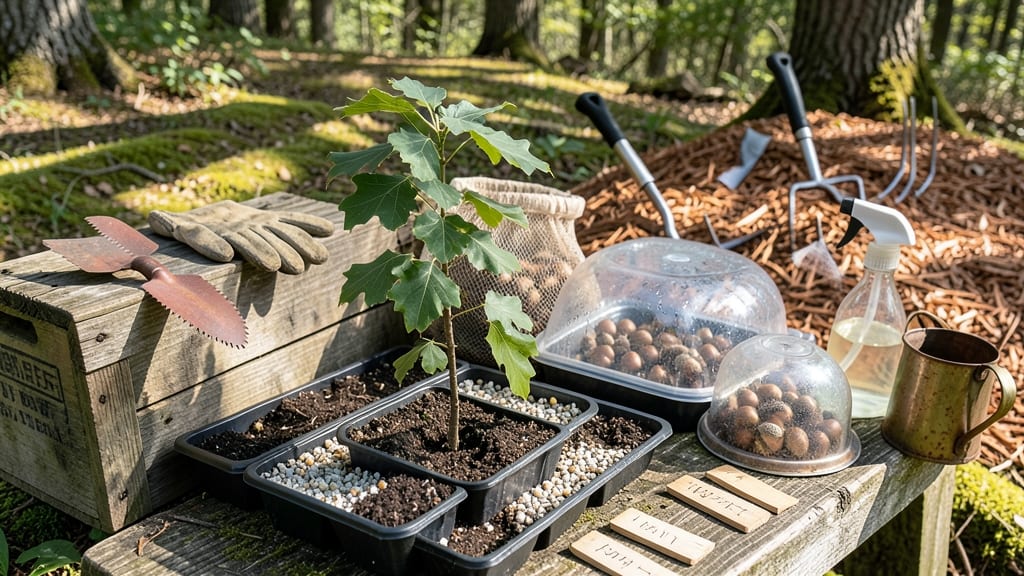
To grow a white oak tree from acorn, you'll need to stratify the seeds for 60-90 days in damp sand or peat moss, then plant them in well-draining soil with consistent moisture after spring arrives. Harvest acorns in fall, remove their caps, and store them in a cool, moist environment before planting.
White oak acorns need this cold treatment to break their natural dormancy—think of it like waking up from a long winter's nap. 🌱 The 60-90 day stratification mimics natural conditions, where freezing temperatures signal the seed that spring (and planting time) is coming.
I've found that using a mix of sand and peat moss keeps the moisture just right without letting the acorns rot, which is critical for germination success. Once sprouted, these young trees need full sunlight and regular watering to establish strong roots before they can handle outdoor conditions.
After the stratification period, plant your acorns about 1 inch deep in a well-draining soil mix. White oaks thrive in slightly acidic to neutral soil with good airflow, so avoid compacted or waterlogged areas.
The first few years are critical—they'll grow slowly but steadily if given the right care, and within 10-15 years, you could have a mature tree providing shade and wildlife habitat. Patience is key here!
💡 In This Article
- White Oak Acorn Stratification Process Explained
- Planting and Caring for White Oak Saplings
White oak acorn stratification process explained
The cold stratification process mimics the natural winter cycle that white oak acorns experience in the wild. When acorns fall in autumn, they remain buried under leaf litter and soil, where temperatures hover between 33-41°F—this chilling period breaks their dormancy by triggering internal biochemical changes.
Inside the seed, enzymes begin converting stored starches into sugars, while the seed coat softens slightly to allow water absorption. This process, called after-ripening, is essential because white oak seeds won't germinate without it—even if you plant them immediately after harvest.
Moisture levels during stratification are just as critical as temperature. The ideal medium—like damp sand or peat moss—should feel like a wrung-out sponge: cool to the touch but not soggy. Too much moisture causes acorns to rot, while too little prevents the necessary hydration for enzyme activation.
I've found that maintaining 30-50% moisture content in the stratification mix yields the best results. 🌱 For visual reference, imagine sprinkling water over the mix until droplets form on the surface but don't pool—this creates the perfect balance for germination readiness.
Timing matters because white oak acorns have a 60-90 day stratification requirement, but pushing beyond 120 days can reduce viability. The key is consistency: place your acorns in a sealed container with ventilation holes, then refrigerate (not freeze) them.
This controlled environment ensures stable conditions without the temperature swings of an outdoor winter.
What most people don't realize is that the stratification period actually prepares the seedling's root system—during these weeks, the radicle (embryonic root) grows and becomes more resilient, giving your young tree a head start when you finally plant it in soil.
There's a scientific reason why stratification works so well: the cold temperatures slow down metabolic processes, which prevents premature germination. This dormancy-breaking period allows the seed to "wait" for ideal growing conditions. Without stratification, acorns might sprout too early or fail entirely—think of it like a seed's version of hibernation.
The process also helps synchronize germination timing, so you'll see more uniform growth when planting season arrives. For best results, start stratification in late fall so your acorns are ready to plant in early spring, when soil temperatures begin to rise naturally.
One common mistake is using materials that don't breathe properly. Plastic bags without ventilation, for example, can trap too much moisture and lead to mold. Instead, opt for a breathable container like a perforated plastic tub or even a mesh bag filled with your damp sand mixture.
The goal is to replicate the natural forest floor environment where acorns would normally germinate—cool, moist, and well-aerated. This attention to detail makes all the difference between a thriving young oak and a failed germination attempt.
After completing stratification, you'll notice the acorns looking slightly plump and firm to the touch—a good sign they're ready for planting. The seed coat may also develop small cracks, indicating the radicle is preparing to emerge.
This is your cue that the internal changes have succeeded, and the seed is now primed for growth. The transformation from dormant acorn to eager seedling happens right before your eyes during this phase! 🌿