
Blooming
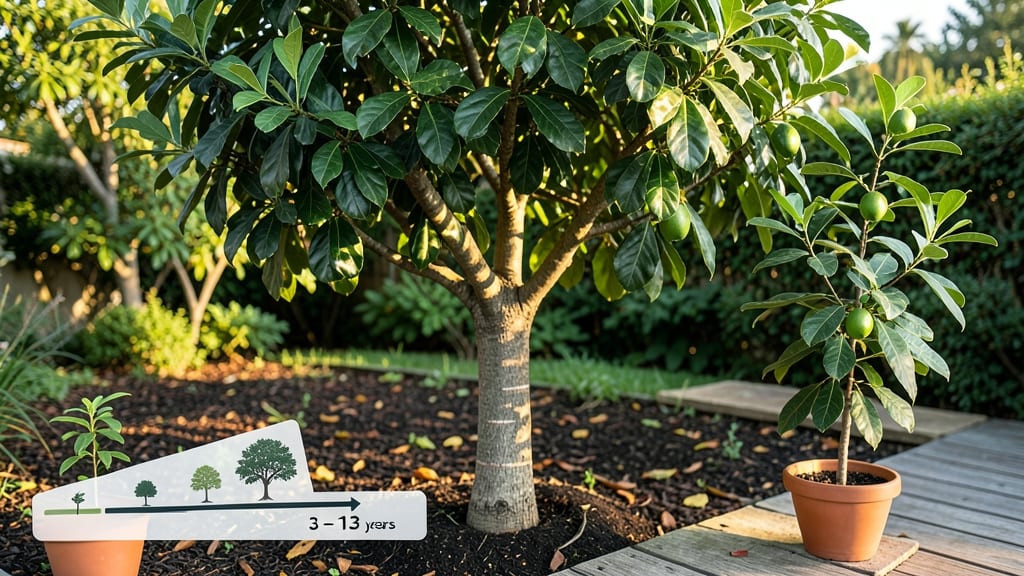
Producing fruit from an avocado tree 🥑 takes 3 to 5+ years—or even longer—depending on whether you start with a seed or a grafted tree, your local climate, and how well you care for it.
If you’ve ever dreamed of harvesting juicy, creamy avocados straight from your own backyard, patience is the first lesson—because growing an avocado tree to fruiting stage can take years, depending on your climate and care approach.
In warmer zones like Florida or California, grafted trees might bear fruit in as little as 3 years, while seed-grown trees in cooler climates like Zone 6 could wait 10 years or more before producing their first harvest.
But don’t let the timeline scare you off—with the right techniques, you can speed up fruiting, avoid common mistakes, and set your tree up for success from day one.
Avocado tree fruiting timeline by climate Zone: from seed to first harvest
Growing an avocado tree 🥑 to fruiting stage depends entirely on your climate zone, growing method, and care practices. In tropical zones (Zone 10+), grafted trees can produce fruit in as little as 3 years, while seed-grown trees in Zone 6 may take 10-15 years or longer.
Understanding these timelines helps set realistic expectations and optimize your tree's growth potential from the start.
The key difference lies between seed-grown and grafted trees. Seed-grown trees are unpredictable—some may never fruit, while others surprise you with fruit in 5-8 years. Grafted trees, however, are bred for fruiting efficiency and can produce in 3-5 years with proper care.
Your local climate plays an equally critical role, as avocados thrive in warm, frost-free environments.
| Climate Zone | Growing Method | Fruiting Timeline | Real-World Example |
|---|---|---|---|
| Tropical (Zone 10-11) | Grafted Tree | 3-5 years | Florida, Hawaii |
| Subtropical (Zone 9) | Grafted Tree | 4-6 years | Southern California |
| Temperate (Zone 8) | Grafted Tree | 5-8 years | Arizona, Mexico |
| Cool Temperate (Zone 6-7) | Seed-Grown | 10-15+ years | Southern Texas, Containers |
| Cool Temperate (Zone 6-7) | Grafted Tree | 7-12 years | Indoor/Greenhouse |
🌱 Note: Timelines assume optimal care, including proper sunlight, water, and nutrients.
In tropical climates, like Florida or Mexico, avocado trees grow rapidly and can fruit in as little as 3 years when grafted. Take the example of a Hass avocado in Miami—with consistent care, gardeners often report their first harvest between years 3 and 4.
The warm, frost-free environment accelerates growth, allowing trees to reach maturity faster than in cooler regions.
For subtropical zones (Zone 9), like Southern California, grafted trees typically fruit between 4 and 6 years. The Mediterranean climate provides ideal conditions, but occasional cold snaps can delay fruiting if not managed properly.
In these areas, microclimate protection—like windbreaks or mulch—can make a significant difference in reducing stress on young trees.
In temperate zones (Zone 8), such as Arizona or parts of Mexico, grafted avocado trees usually take 5-8 years to produce fruit. The slightly cooler nights and seasonal temperature shifts can slow growth, but with proper winter protection and container growing, many gardeners achieve earlier fruiting.
For example, a 'Fuerte' variety in Tucson might bear fruit in 6 years with careful winter care.
Gardeners in cooler climates (Zone 6-7) face the longest timelines, especially with seed-grown trees, which can take 10-15 years or longer to fruit. Even grafted trees in these zones often require 7-12 years to produce fruit.
The challenge lies in mimicking tropical conditions—using large containers, heat lamps, and indoor overwintering can help. In Southern Texas, some container-grown trees fruit in 8-10 years with these techniques.
One critical factor that speeds up fruiting is grafting. Grafted trees are genetically optimized for fruiting and can produce in half the time of seed-grown trees.
For example, a seed-grown Hass in California might take 8-10 years to fruit, while a grafted Hass in the same climate could produce in 4-5 years. If you're serious about avocados, investing in a grafted tree is often the fastest path to harvest.
Regardless of your climate, proper care accelerates fruiting. Focus on full sun exposure (6+ hours daily), well-draining soil, and consistent watering to avoid stress. In cooler zones, container growing gives you flexibility to move your tree indoors during frost, preserving its growth momentum.
With these strategies, even gardeners in Zone 6 can see fruit in 7-10 years instead of 15+.
Monitor your tree for signs of maturity, like flowering
5 Proven ways to accelerate avocado tree fruit production
Want to speed up your avocado tree's fruiting timeline? The average seed-grown tree takes 5-15 years to bear fruit, while grafted varieties can produce in as little as 3-5 years with the right care.
The key lies in understanding your tree's needs and implementing science-backed techniques to encourage faster growth and flowering. Let's dive into the most effective methods to bring those creamy avocados to your table sooner.
First, let's address the biggest bottleneck: pollination. Avocado trees require cross-pollination between different varieties (like 'Hass' and 'Fuerte') to produce fruit. Even in self-pollinating varieties, proper pollination techniques can cut fruiting time by 20-30%.
Pair this with nutrient optimization, especially potassium and magnesium, and you'll create the perfect environment for early flowering.
- 🌱 Year 1-2: Focus on root development with balanced fertilizer (6-6-6 NPK). Avoid flowering—prune suckers to redirect energy to trunk growth.
- 🌿 Year 3: Introduce potassium-rich fertilizer (like greensand) to prepare for flowering. Ensure 6+ hours of sunlight daily.
- 🌳 Year 4: Implement hand pollination if natural pollinators are scarce. Use a soft brush to transfer pollen between compatible varieties.
- 🍃 Year 5: Prune to open the canopy, allowing sunlight to reach inner branches. Apply magnesium sulfate (Epsom salt) to prevent chlorosis.
- 🥑 Year 6+: With proper care, expect first harvest! Thin fruit early to ensure larger, higher-quality avocados.
One of the most effective ways to accelerate fruiting is through pruning for early flowering. Many gardeners mistakenly prune too late in the season, which can delay flowering. Instead, prune in late winter or early spring to encourage new growth that will flower later in the year.
Remove dead or diseased branches first, then thin out overcrowded areas to improve air circulation and sunlight penetration. This not only speeds up growth but also reduces the risk of fungal diseases that can stress your tree.
For gardeners in cooler climates (Zone 6-8), creating a microclimate is crucial. Avocado trees thrive in tropical or subtropical conditions, so if you're in a cooler region, consider growing your tree in a large container that you can move indoors during winter.
Use a heat lamp or space heater to maintain temperatures above 50°F during dormancy. This simple hack can reduce the fruiting timeline by 1-2 years by preventing cold stress that would otherwise delay growth.
Don't overlook the power of soil nutrients. Avocado trees are heavy feeders, especially when it comes to potassium and magnesium. Potassium helps with fruit development and disease resistance, while magnesium prevents yellowing leaves (chlorosis).
Test your soil annually and amend it with composted manure, banana peels (for potassium), and Epsom salt (for magnesium). In container gardens, repot every 2-3 years with fresh, nutrient-rich soil to avoid deficiencies that stall fruiting.
Finally, hand pollination can make a dramatic difference, especially if you live in an area with few natural pollinators. Avocado flowers are perfectly self-compatible but require physical transfer of pollen. Use a soft paintbrush or cotton swab to gently collect pollen from one flower and transfer it to another.
Focus on Type A and Type B flowers, which open at different times of the day (Type A in morning, Type B in afternoon). With consistent hand pollination, you can increase fruit set by up to 40%, bringing your first harvest that much closer.