
Trees
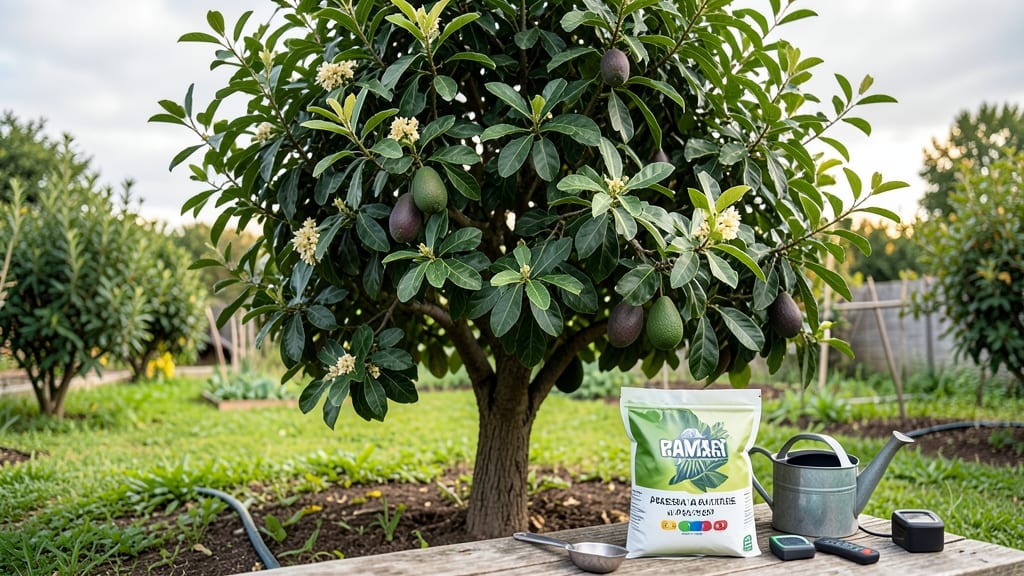
Fertilizing your Hass avocado tree with the right fertilizer is the game-changer for bigger fruit and faster growth.
Picture this: your tree is thriving, but the avocados stay small and sparse. The issue? Most gardeners overdo nitrogen (for leaves) while neglecting potassium (for fruit development). That imbalance is why even healthy-looking Hass trees underproduce.
Here’s the secret: a balanced NPK ratio—like 6-6-6 or 8-3-9—paired with micronutrients, fuels both tree vigor and harvest. I’ll break down the exact blends, organic vs. synthetic trade-offs, and how to adjust timing by season for year-round production.
By the end, you’ll know when to feed, how much to use, and the telltale signs of over- or under-fertilizing (like yellowing leaves or poor fruit set). Let’s get your Hass tree bearing its best.

Optimal nitrogen-potassium ratios for Hass avocado fruit growth
Getting your Hass avocado tree to produce large, high-quality fruit depends heavily on the nitrogen-potassium (N-K) balance in your fertilizer. These two nutrients play distinct but critical roles: nitrogen fuels leafy growth, while potassium strengthens fruit development and disease resistance.
Research shows that imbalanced ratios can lead to stunted fruit size, poor yields, or even tree stress.
The ideal NPK ratio for Hass avocados isn’t one-size-fits-all—it shifts based on your tree’s growth stage and environmental conditions. For example, young trees need more nitrogen (N) to build foliage, while mature trees benefit from higher potassium (K) to support fruit production.
Let’s break down the science and practical applications to help you choose the right blend for your tree’s needs.
Why the N-K balance matters: Too much nitrogen without potassium leads to lush leaves but small fruit, while too much potassium without nitrogen causes weak stems and poor vigor. The golden ratio for Hass avocados typically falls between 6-6-6 and 8-3-9, but adjustments are key depending on your tree’s age and health.
Here’s how these ratios impact your Hass avocado tree’s performance:
A 6-6-6 ratio is ideal for young Hass avocado trees because it provides equal parts nitrogen and potassium, promoting healthy foliage and root development without overwhelming the tree. This balance is especially critical in the first 3 years of growth, when your tree is establishing its structure.
For example, if you’re using a granular fertilizer, apply 1 cup per tree every 6-8 weeks during the growing season (spring to fall).
Once your tree matures (typically 4+ years old), shift to a higher potassium ratio, such as 8-3-9. This blend prioritizes fruit development and tree strength, which is essential for larger avocados and better yields.
Potassium also helps your tree resist diseases and recover from stress, such as drought or heatwaves. Apply this mix 2-3 times per year, starting in late spring and continuing through early fall.
For trees in drought-prone areas, a 4-6-8 ratio can be more effective. The higher potassium content improves the tree’s water-use efficiency, helping it retain moisture and produce hardier fruit even under dry conditions.
This ratio is also great for container-grown Hass avocados, where water stress is more common. Use it sparingly—once every 3 months—to avoid nutrient buildup in the soil.
One common mistake is using a high-nitrogen fertilizer, like 10-0-0, year-round. While this may produce lush green leaves, it often results in smaller, lower-quality fruit and weaker tree structure.
Always pair nitrogen with potassium to ensure your Hass avocado tree allocates energy toward fruit production rather than just foliage. For instance, if you notice your tree has too many leaves but few flowers, it’s a sign you need to reduce nitrogen and increase potassium.
To apply fertilizer correctly, always water your tree deeply a day before and after fertilizing. This helps prevent root burn and ensures nutrients are absorbed efficiently. For mature trees, spread fertilizer 6-12 inches away from the trunk and lightly scratch into the soil to avoid direct contact with roots.
In container-grown Hass avocados, mix fertilizer into the top 2 inches of soil or use a slow-release formula to avoid overloading the root system.
Monitor your tree’s response to the fertilizer ratio by observing leaf color, fruit size, and overall vigor. Healthy Hass avocado leaves should be deep green and slightly leathery, while yellowing leaves may indicate nitrogen deficiency, and brown leaf edges could signal potassium deficiency or over-fertilization.
Adjust your NPK ratio accordingly—if your fruit is small but your tree is vigorous, increase potassium. If your
Best fertilizer types for Hass avocados (organic vs. synthetic)
Choosing the right fertilizer for your Hass avocado tree can make the difference between sparse fruit production and a bountiful harvest. Unlike many fruit trees, Hass avocados thrive on a balanced NPK ratio with extra potassium to support fruit development.
But should you go organic or synthetic? Both have unique benefits, and the best choice depends on your tree's age, soil health, and your gardening philosophy.
Organic fertilizers like compost, manure, and fish emulsion feed your tree slowly while improving soil structure. Synthetic options, such as granular fertilizers or slow-release pellets, provide precise nutrient control but may lack micronutrients.
For Hass avocados, I recommend a 6-6-6 or 8-3-9 NPK ratio to balance growth and fruit production, but let’s dive into the pros and cons of each type.
Organic Fertilizers for Hass Avocados
- Improves soil health long-term
- Releases nutrients slowly, reducing burn risk
- Encourages beneficial microbes in roots
- Safe for children/pets
- Requires frequent applications (every 4-6 weeks)
- May contain pathogens if not composted properly
- Slower results for nutrient deficiencies
- Higher cost per nutrient than synthetics
Synthetic Fertilizers for Hass Avocados
- Precise NPK control for targeted growth
- Fast-acting for quick corrections (e.g., yellow leaves)
- Long shelf life and easy storage
- Cost-effective for large trees
- Can burn roots if overapplied
- No soil improvement benefits
- Requires micronutrient supplements (e.g., iron, zinc)
- Environmental concerns with runoff
🌱 Best for Hass Avocados: A mix of both—use organic for soil health and synthetic for potassium boosts during fruiting.
For young Hass avocado trees (under 3 years), I prioritize organic options like worm castings or composted cow manure to build a strong root system. These fertilizers release nutrients gradually, mimicking natural conditions and reducing the risk of root burn.
In contrast, mature trees (3+ years) benefit from a balanced synthetic fertilizer like 8-3-9 during fruiting seasons to ensure adequate potassium for fruit development.
Timing is critical—apply organic fertilizers in early spring (February-March) and again in late summer (August-September) to support new growth and fruit set. Synthetic fertilizers should be used monthly during active growth (April-July) but reduced in fall and winter when the tree enters dormancy.
Always water deeply after fertilizing to help nutrients penetrate the soil and reach the roots.
One common mistake I see is over-fertilizing Hass avocados, especially with synthetic options. Excess nitrogen can lead to leafy growth at the expense of fruit, while too much potassium may cause magnesium deficiency (yellowing between leaf veins).
To avoid this, always follow the package instructions and monitor your tree’s response. If leaves turn yellow or drop prematurely, it’s a sign to reduce fertilizer and focus on soil health.
If you’re unsure where to start, begin with a soil test to identify deficiencies. For most Hass avocados, a 6-6-6 organic blend in spring paired with a slow-release synthetic in summer strikes the perfect balance.
Remember, consistency is key—your tree will reward you with larger, healthier fruit when its nutritional needs are met year-round. 🌿