
Trees
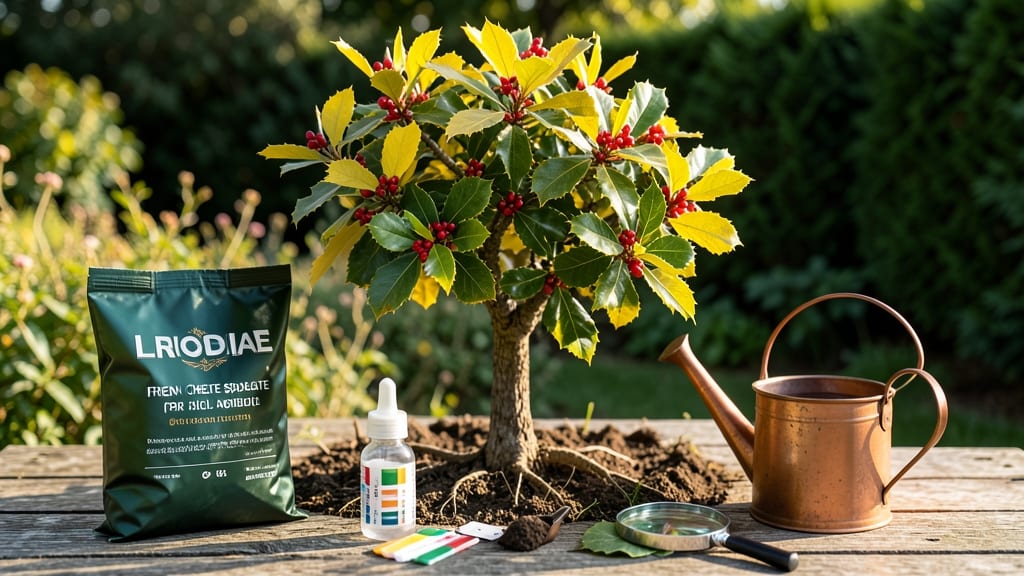
Your holly tree’s yellow leaves scream "help" before they drop. 🌿 I’ve nursed back more than my share of struggling hollies, and the fix often comes down to three simple checks—water, soil, and pests—that most gardeners miss until it’s too late.
First, rule out overwatering or drought by sticking your finger 2 inches into the soil. If it’s soggy, the roots are drowning; if it’s bone-dry, they’re thirsty.
Yellowing often starts with iron chlorosis (that telltale yellow between veins) or fungal leaf spot, both of which thrive when soil pH or moisture is off.
Within 2-3 weeks of adjusting water, adding chelated iron, or pruning diseased branches, you’ll see fresh green growth pushing through. The key is acting fast—before the yellow spreads to new leaves or the tree weakens enough to invite pests.
Prevention is easier than cleanup: test your soil every 2-3 years, mulch to stabilize moisture, and spray with neem oil in spring to deter mites. Your holly’s glossy, dark-green glory is just a few adjustments away.
Understanding Leaf Color Shifts
When your holly tree’s leaves turn yellow, it’s rarely a sign of instant doom—but it is a signal that something’s off. 🌿💡 Before you panic, let’s break down the science behind why this happens, so you can diagnose the issue like a pro.
Below, we’ll explore the most common culprits, from nutrient deficiencies to environmental stressors, with clear explanations and actionable insights.
Yellowing holly leaves often start at the older leaves (a classic sign of chlorosis, or nutrient starvation). The most likely suspects?
- Iron (Fe) Deficiency 🔥 Why it happens: Iron is the backbone of chlorophyll production. Without enough, leaves lose their green pigment, turning yellow—especially between the veins (interveinal chlorosis).
Holly trees in alkaline soils (pH 7.0+) struggle to absorb iron because it binds to soil particles and becomes unavailable. Actionable fix: Test your soil’s pH (aim for 5.5–6.5).
If alkaline, amend with sulfur or peat moss to lower pH. For a quick boost, use a chelated iron supplement (like iron sulfate or EDTA-bound iron) applied to the soil or sprayed on leaves.
- Nitrogen (N) Shortage 🌱 Why it happens: Nitrogen fuels leaf growth. If your holly’s leaves are uniformly yellow (not just older ones), it’s likely nitrogen-deficient.
This is common in fast-growing hollies or after a harsh winter when roots struggle to uptake nutrients. Actionable fix: Apply a balanced fertilizer (10-10-10 or 20-10-10) in early spring. For organic options, try composted manure or blood meal. Avoid over-fertilizing—too much nitrogen can burn roots!
- Magnesium (Mg) or Manganese (Mn) Deficits 🧪 Why it happens: These minerals help chlorophyll function. Yellowing often appears first on older leaves (magnesium) or as yellow patches between veins (manganese).
Compacted or sandy soils may lack these nutrients. Actionable fix: Sprinkle Epsom salt (magnesium sulfate) around the base (1 tbsp per gallon of water, applied monthly). For manganese, use a liquid seaweed extract or manganese sulfate.
Not all yellow leaves mean poor nutrition—sometimes, your holly’s environment is the villain. Here’s how:
- Overwatering or Poor Drainage 💦 Why it happens: Holly trees hate soggy roots. Yellow leaves paired with drooping or wilted foliage suggest root rot, often from overwatering or clay-heavy soil that doesn’t drain well.
Roots suffocate, starving the tree of oxygen and nutrients. Actionable fix: Check soil moisture—stick your finger 2 inches deep; if damp, wait to water. Improve drainage by adding compost or perlite to the soil. If the tree is in a pot, ensure it has drainage holes.
- Underwatering or Drought Stress 🏜️ Why it happens: While hollies are drought-tolerant once established, young trees or prolonged dry spells can cause leaves to yellow and crisp at the edges.
The tree prioritizes survival by shedding water-heavy leaves. Actionable fix: Water deeply 1–2 times per week (depending on climate) during dry periods. Mulch around the base (2–3 inches of wood chips) to retain moisture. Avoid shallow watering—soak the root zone (12–18 inches deep).
- Temperature or Sunburn ☀️❄️ Why it happens: Holly trees thrive in partial shade, but sudden heatwaves or harsh afternoon sun can scorch leaves, turning them yellow or brown.
Similarly, late spring frosts can damage new growth. Actionable fix: If your holly is in full sun, provide afternoon shade with a light fabric or nearby shrubs. For frost damage, cover young trees with frost cloth if temperatures dip below 28°F.
Sometimes, tiny (or not-so-tiny) pests or pathogens hijack your holly’s health. Watch for these red flags:
- Spider Mites or Scale Insects 🕷️🐛 Why it happens: These sap-sucking pests weaken leaves, causing yellowing, stippling, or webbing. They thrive in dry, hot conditions and target stressed trees. Actionable fix: Blast leaves with a strong hose to dislodge mites.
For scale, scrape them off with a soft brush dipped in soapy water. Use neem oil or insecticidal soap as a preventative spray every 2 weeks.
- Fungal Infections (e.g., Leaf Spot or Root Rot) 🍄 Why it happens: Fungi like Phytophthora (root rot) or Septoria (leaf spot) cause yellowing, wilting, or black/brown spots on leaves. Overwatering, poor airflow, or old mulch invite these pathogens. Actionable fix: Remove infected leaves and dispose of them.
Improve airflow by pruning dense branches. Apply copper fungicide or baking soda spray (1 tbsp baking soda + 1 quart water + a drop of dish soap) for leaf spots.
- Bacterial Leaf Scorch 🧫 Why it happens: This bacterial infection clogs a holly’s water-conducting vessels, causing yellowing at leaf edges that progresses inward. It’s often spread by sap-feeding insects like leafhoppers. Actionable fix: Prune and sterilize tools with rubbing alcohol.
Avoid overhead watering. While no cure exists, copper-based bactericides can slow spread.
Not all yellow leaves are a cause for alarm! Hollies naturally shed and regrow leaves in cycles: - Spring flush: New growth may appear yellowish before turning green—this is normal! - Fall senescence: Older leaves yellow and drop as the tree preps for winter.
If only a few leaves turn yellow in autumn, your tree is healthy.
Pro Tip: 🌡️ If >30% of leaves yellow outside of spring/fall, investigate further. Take a close-up photo of the pattern (edges, veins, etc.) to help diagnose the issue.
Revive Your Holly’s Health
Yellow leaves on your holly tree can be a sign of stress, but the good news is that most issues are fixable with the right care. Below, we’ve mapped out practical solutions for common causes—from overwatering to pests—along with prevention tips to keep your tree lush and green.
Fix:
- Check the Soil 🔍
- Stick your finger 2-3 inches deep into the soil. If it feels soggy, your holly is getting too much water.
- Holly trees prefer well-draining soil—if water pools around the roots, it’s a red flag.
- Adjust Your Watering Routine 💦
- Water deeply but infrequently—about 1-1.5 inches per week (less in winter).
- Stop watering if the ground is already moist. Overwatering suffocates roots and leads to yellowing.
- Improve Drainage 🏗️
- If your holly is in a pot, add perlite or sand to the soil mix.
- For in-ground trees, consider amending the soil with compost or organic matter to help water flow better.
Prevention Tip: 🌱
- Plant holly trees in slightly raised beds or slopes to prevent waterlogging.
- Use mulch (2-3 inches) around the base (but keep it 6 inches away from the trunk) to retain moisture without suffocating roots.
Fix:
- Water Deeply and Slowly 💧
- Instead of light, frequent watering, soak the root zone until water drains out the bottom (for potted hollies).
- For in-ground trees, water at the base (not the leaves) for 10-15 minutes every 5-7 days in dry spells.
- Mulch to Retain Moisture 🍂
- Apply 2-3 inches of mulch (wood chips, straw, or shredded bark) around the tree, avoiding the trunk.
- Mulch acts like a natural sponge, keeping soil moist longer.
- Provide Shade (Temporarily) 🌳
- If your holly is in full sun, move it to partial shade for a few weeks to reduce stress while it recovers.
Prevention Tip: 💡
- Install a drip irrigation system for consistent moisture, especially in hot climates.
- Group hollies with other plants to create a microclimate that retains humidity.
Fix:
- Prune Affected Leaves ✂️
- Remove yellow or spotted leaves with sterilized pruners (wipe with rubbing alcohol between cuts).
- Dispose of them in the trash (not compost) to prevent spread.
- Apply Fungicide 🛡️
- Use a copper-based or neem oil fungicide (follow label instructions).
- Spray early in the morning on a dry, wind-free day for best results.
- Improve Airflow 🌬️
- Thin out overcrowded branches to let air circulate.
- Avoid planting hollies in shady, damp areas where fungi thrive.
Prevention Tip: ✨
- Water at the base (not overhead) to keep leaves dry.
- Space trees 3-5 feet apart to reduce humidity around foliage.
Fix:
- Inspect Leaves Closely 🔍
- Look for sticky residue (honeydew), tiny webs, or bugs clinging to stems.
- Common pests on hollies: scale, spider mites, and aphids.
- Blast Off Pests with Water 💦
- Spray leaves thoroughly with water to dislodge soft-bodied pests like aphids.
- Use Insecticidal Soap or Neem Oil 🛡️
- Mix 1 tsp of insecticidal soap per quart of water and spray undersides of leaves (where pests hide).
- Neem oil (1 tbsp per gallon of water + a drop of dish soap) smothers pests and disrupts their life cycle.
- Introduce Beneficial Insects 🐞
- Ladybugs or lacewings eat aphids naturally—release them in the evening when they’re most active.
Prevention Tip: 🌿
- Encourage natural predators by planting marigolds, dill, or fennel nearby.
- Check new plants for pests before bringing them home.
Fix:
- Test Your Soil 📊
- A simple soil test kit (available at garden centers) can reveal deficiencies.
- Holly trees often lack iron (yellow leaves with green veins) or nitrogen (pale yellow leaves).
- Fertilize Correctly 🌱
- Iron deficiency? Use an iron chelate fertilizer (follow package rates).
- Nitrogen deficiency? Apply a balanced fertilizer (10-10-10) in early spring.
- Magnesium deficiency? Sprinkle Epsom salt (1 tbsp per gallon of water) every 2 weeks.
- Use Organic Matter 🍂
- Mix compost or well-rotted manure into the soil to improve nutrient availability.
Prevention Tip: 💪
- Fertilize in early spring (before new growth) and avoid overdoing it—too much fertilizer burns roots.
- Avoid synthetic fertilizers if possible; opt for slow-release organic options.
Fix:
- Protect from Extreme Cold ❄️
- Wrap the tree in burlap or frost cloth in late fall if your area gets below 10°F.
- Water deeply before the first freeze to help roots withstand cold.
- Shade from Harsh Sun ☀️
- If your holly is in full sun, provide temporary shade with a lightweight cloth during heatwaves.
- Mulch heavily (4-6 inches) to insulate roots.
- Windbreak Barriers 🌬️
- Plant a hedge or install a windbreak fence if your holly is exposed to strong winds.
Prevention Tip: 🌳
- Choose cold-hardy holly varieties (like Winter Gem or Nellie R. Stevens) for your climate.
- Avoid pruning in late summer—new growth is more vulnerable to frost.
Final Pro Tip: 🌟 If your holly’s yellowing persists after 4-6 weeks of care, consider consulting a local arborist—it could be a deeper issue like root rot or soil toxicity.
But in most cases, consistent watering, proper fertilization, and pest control will bring those leaves back to a vibrant green!
Frequently asked questions about holly tree yellow leaves
Why do holly leaves turn yellow between the veins first?
This classic pattern is almost always a sign of iron chlorosis, where your holly can't absorb enough iron from alkaline soil. Iron is essential for chlorophyll production, so when it's lacking, leaves lose their green pigment between the veins first. Test your soil pH—aim for 5.5-6.5—and add chelated iron or sulfur if needed.
Can yellow holly leaves turn green again?
Yes! With the right care, most yellow leaves will regrow green within 4-6 weeks. Focus on fixing the root cause—whether it's adjusting water, adding nutrients, or treating pests. New growth will emerge green if you address the issue early. Just avoid fertilizing if the problem is overwatering or poor drainage first.
Is it safe to prune yellow leaves from my holly?
Absolutely—pruning helps your holly redirect energy to healthy growth. Use sterilized pruners to remove only yellow or diseased leaves, cutting just above a leaf node. Dispose of pruned leaves in the trash (not compost) to prevent spreading fungal spores. Never prune more than 25% of the foliage at once.
Why are my holly's new leaves yellow while old ones stay green?
This suggests a manganese or nitrogen deficiency, where the tree can't produce enough chlorophyll for new growth. Older leaves stay green because they've already stored nutrients. Fix it by applying a balanced fertilizer (10-10-10) in spring or using Epsom salt for magnesium support. Organic options like composted manure work too.
Could my holly's yellow leaves be from too much sun?
Yes—hollies prefer partial shade, and harsh afternoon sun can scorch leaves, turning them yellow or brown at the edges. If your tree is in full sun, provide afternoon shade temporarily while it recovers. Mulch heavily (2-3 inches) to protect roots from heat stress and water deeply 1-2 times per week during heatwaves.