
Propagation
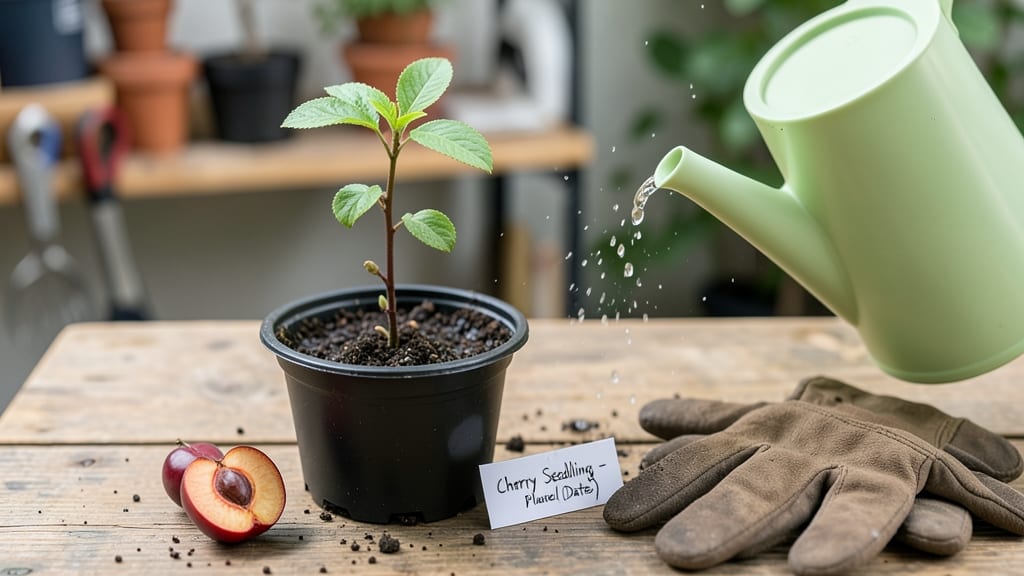
You can grow a cherry tree from store-bought cherries, but success is unlikely to produce edible fruit since most commercial varieties are hybridized and sterile. The process involves extracting pits, drying them completely, then cold-stratifying for 6-8 weeks before planting in well-draining soil with full sun exposure. Germination rates and tree viability depend heavily on seed quality and growing conditions.
Most grocery store cherries come from hybrid varieties bred for sweetness and shelf life—not seed viability. 🌱 The pits you collect are often genetically modified to prevent natural reproduction, meaning any sapling that sprouts won't grow into a fruit-bearing tree.
Even if you succeed in germination, the resulting tree will likely produce small, bitter cherries that resemble wild varieties. For better odds, try sour cherries like Montmorency—they're more likely to produce true seeds that can grow into productive trees over time.
If you're determined to try, start by cleaning the pits thoroughly to remove all fruit residue, then let them dry for 1-2 weeks in a warm, dry place.
After drying, place them in a plastic bag with slightly damp peat moss or sand, then refrigerate for the full 6-8 weeks of cold stratification. This mimics winter conditions and breaks seed dormancy.
Once planted outdoors in spring, keep the soil consistently moist but never soggy—cherry seedlings are particularly sensitive to root rot during their early growth stages.
💡 In This Article
- Why Store-Bought Cherry Pits Rarely Yield Fruitful Trees
- Step-by-Step Guide to Germinating Cherry Tree Seeds
Why store-bought cherry pits rarely yield fruitful trees
Most grocery store cherries you find are the result of decades of selective breeding focused on sweetness, size, and shelf life—not seed viability. 🌱 The pits inside these cherries often contain sterile seeds due to a process called polyembryony, where multiple embryos develop from a single fertilized egg.
In sweet cherries, this frequently results in non-viable seeds that won't grow into true trees. Even if germination occurs, the resulting tree may produce small, tart cherries resembling wild varieties rather than the sweet, uniform fruit you bought.
The issue goes deeper than just sterility. Cherry trees have evolved complex dormancy requirements to survive harsh winters. Their seeds require cold stratification—a period of cold, moist conditions—that mimics natural winter chilling. Without this, seeds may fail to germinate entirely or produce weak seedlings that struggle to survive.
For example, sweet cherry pits need 6-8 weeks at 35-45°F to break dormancy, while sour cherries like Montmorency are slightly more forgiving but still demand precise conditions. 🌡️
Another critical factor is the genetic modification of commercial varieties. Many sweet cherries are grafted onto rootstocks that produce sterile seeds, ensuring consumers can't grow their own trees.
This practice, combined with the fact that seed-grown cherry trees take 5-7 years to bear fruit (compared to 2-3 years for grafted trees), makes the process impractical for most gardeners.
Even if you succeed in growing a seedling, the tree's fruit quality will likely be inconsistent and far inferior to its parent.
For better results, focus on sour cherries like Montmorency or tart cherries, which are more likely to produce viable seeds. These varieties retain some of their wild traits, including the ability to reproduce through seeds.
However, expect the resulting tree to be a seedling rather than a true clone of the parent plant—meaning its fruit may differ significantly in taste, size, and ripening time. This genetic variability is why horticulturists prefer grafting to maintain consistent fruit quality.
If you're determined to try, remember that even successful germination doesn't guarantee a fruitful tree. The odds are stacked against you due to hybridization, dormancy requirements, and the long wait for fruit production. For a more reliable cherry tree, consider purchasing a grafted sapling from a nursery.
These trees are bred specifically for fruit production and will bear edible cherries much sooner than a seed-grown tree. 🌳