
Diseases
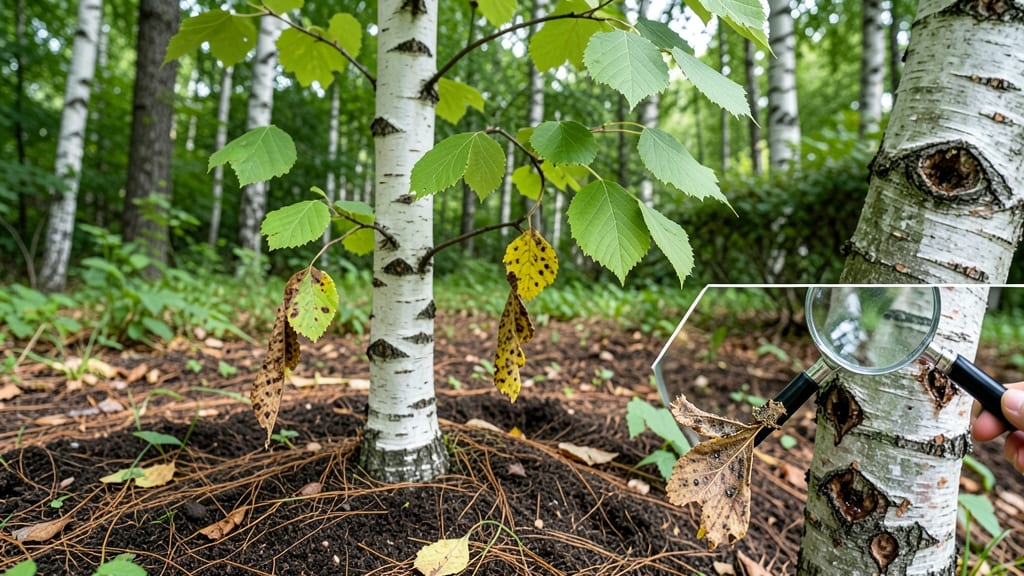
Your birch tree’s leaves are showing signs of birch tree diseases: yellowing, spotting, or browning—don’t panic, but act fast. 🌿 Birch trees are tough, but fungal infections like birch leaf blight or environmental stress can turn them into a sad, patchy mess if ignored.
The key to saving them is early diagnosis and the right treatment plan. Most leaf diseases start with tiny brown spots or yellowing edges, often caused by too much moisture or poor air circulation.
I’ve seen birch trees recover fully when treated early, but if you wait too long, the damage spreads—and that’s when you start losing branches. The good news? Organic sprays and proper pruning can bring them back to life.
You’ll learn to identify the exact problem (fungal, bacterial, or stress-related) and how to treat it without harsh chemicals. Pruning infected branches in dry weather, applying neem oil, or even just improving drainage can make a huge difference.
Your tree will start pushing out fresh, healthy leaves within weeks if you catch it early. This works for all birch varieties—paper, yellow, or river birch. Let’s get your tree back to its vibrant best before summer heat makes things worse.
Root Causes Behind Birch Leaf Issues
Birch trees are stunning additions to any landscape, but their leaves can become a canvas for disease when environmental and biological factors align. Understanding why these issues arise is the first step toward prevention and treatment.
Below, we break down the most common culprits behind birch tree leaf diseases, explained in clear, actionable terms.
Fungal pathogens are the #1 cause of birch leaf diseases, thriving in damp, humid conditions. These microscopic organisms latch onto weakened trees, spreading through spores that ride the wind or cling to tools and insects.
- **🍄 Birch Leaf Spot (Marssonina spp.)
- Key triggers: -
- Frequent leaf wetness (e.g., morning dew + dense foliage)
- Compacted or waterlogged soil (restricts root growth)
- Lack of pruning (crowded branches trap moisture)
- 🔍 How to spot it: Tiny brown or purple spots with yellow halos appear on leaves, often in concentric rings. Severe cases cause premature leaf drop.
- 🍃 Anthracnose (Apiognomonia veneta)
- Why it happens: This fungus explodes in outbreaks during prolonged rainy seasons (especially 50+ inches of rain annually). It overwinters in fallen leaves and buds, then bursts into action when temperatures hover between 50–75°F.
- Key triggers: -
- Overhead watering (splashing spores onto leaves)
- Young, stressed trees (common in newly planted birches)
- High humidity + stagnant air (e.g., shaded or container-grown trees)
- 🔍 How to spot it: Dark, sunken lesions with raised edges appear on leaves, stems, and even fruit (if present). Leaves may curl or blister before dropping.
Insects don’t just eat birch leaves—they transmit diseases and create wounds that invite fungal infections. Here’s how pests turn your tree into a buffet:
- 🐛 Birch Leafminers (Fenusa pusilla)
- Key triggers: -
- Drought-stressed trees (weakened defenses)
- Lack of natural predators (e.g., birds, parasitic wasps)
- Over-fertilization with nitrogen (attracts pests)
- 🔍 How to spot it: Wavy, brown trails inside translucent leaf sections. Heavy infestations cause premature leaf drop.
- 🐜 Aphids & Scale Insects
- Why it happens: These sap-sucking pests weaken trees by robbing them of nutrients and excreting sticky honeydew, which fosters sooty mold (a black fungal growth). They swarm in crowded or nutrient-deficient trees.
- Key triggers: -
- Soft new growth (aphids love tender leaves)
- Poor soil drainage (stresses roots, attracts pests)
- Adjacent infested plants (e.g., roses, grapes)
- 🔍 How to spot it: Sticky residue on leaves, yellowing or curled foliage, and black mold on undersides.
Diseases rarely strike healthy trees. When birches face environmental stressors, their defenses crumble—opening the door for pathogens.
- 💧 Overwatering or Drought
- Key triggers: -
- Clay soil (poor drainage + compacted roots)
- Irregular watering (feast-or-famine cycles)
- Shallow root systems (common in container-grown trees)
- 💡 Pro tip: Test soil moisture 1 inch below the surface—if it’s dry, water deeply; if it’s muddy, improve drainage with organic matter.
- ☀️ Sun Scorch & Poor Airflow
- Why it happens: Birches in full sun with no airflow (e.g., against a fence or in a dense planting) suffer from sunburn and high humidity, both of which stress leaves and invite diseases like powdery mildew.
- Key triggers: -
- Sudden exposure to intense sunlight (e.g., after pruning nearby trees)
- Tightly packed branches (traps moisture)
- Urban heat islands (paved surfaces radiate heat)
- 🌿 Solution: Prune to open the canopy and plant birches 15–20 feet apart for airflow.
- 🌍 Nutrient Deficiencies
- Why it happens: Birches need balanced nutrients (especially magnesium, nitrogen, and potassium) to fight disease. Deficiencies (often from over-fertilizing with nitrogen alone) lead to weak, yellow leaves—a buffet for fungi.
- Key triggers: -
- Soil pH < 5.0 (birches prefer 5.0–7.0)
- Overuse of synthetic fertilizers (burns roots)
- Competing weeds (steal nutrients)
- 📊 Test your soil:** A simple home test kit can reveal deficiencies. Amend with compost or Epsom salt (for magnesium).
Now that you know the why, the next step is what to do. Stay tuned for actionable fixes—from organic sprays to cultural fixes—that can restore your birch’s health! 🌿🔧
Fixing Birch Tree Leaf Problems
Once you’ve identified the issue plaguing your birch tree’s leaves—whether it’s fungal infections, pests, or environmental stress—taking action early can save your tree from decline. Below are practical, step-by-step solutions tailored to the most common causes, along with prevention tips to keep your birch thriving for years.
Fungal diseases like birch leaf spot or canker thrive in damp conditions and can turn vibrant green leaves into unsightly brown patches. Here’s how to tackle them:
🔥 Remove Infected Foliage
- How: Prune and dispose of (not compost) all diseased leaves and branches. Fungi spread via spores, so containment is key.
- When: Do this on a dry day to prevent spore dispersal.
Wear gloves to avoid skin irritation. - Pro Tip: 💡 Sterilize pruners with rubbing alcohol between cuts to prevent cross-contamination.
🍳 Apply Fungicide
- How: Use a copper-based fungicide or a neem oil solution (1 tbsp neem oil + 1 quart water + a drop of dish soap). Spray both sides of leaves thoroughly.
- When: Apply early morning or late evening to avoid burning leaves in sunlight.
Reapply every 7–10 days until new growth appears. - Pro Tip: 🌡️ For severe cases, baking soda spray (1 tbsp baking soda + 1 quart water + a few drops of soap) can help, but test on a small area first.
⏰ Improve Air Circulation
- How: Thin out dense branches to reduce humidity around the tree. Avoid overwatering—birches prefer well-draining soil.
- Prevention: 🎯 Mulch properly (2–3 inches of organic mulch, keeping it 6 inches away from the trunk) to regulate moisture.
Pests like birch leafminers or scale insects suck nutrients from leaves, causing yellowing, curling, or webbing. Here’s how to evict them:
👨🍳 Blast Off Pests with Water
- How: Use a strong hose spray to dislodge scale insects or aphids. Focus on the undersides of leaves where pests hide.
- When: Do this early in the morning for best results. Repeat every 5–7 days for severe infestations.
🔪 Introduce Natural Predators
- How: Encourage ladybugs, lacewings, or parasitic wasps—they love munching on leafminers. Plant dill, fennel, or marigolds nearby to attract them.
- Pro Tip: ✨ Avoid chemical pesticides if possible—they can harm beneficial insects too!
🥘 Use Horticultural Oil
- How: Apply horticultural oil (like Neem oil or dormant oil) to smother pests like mites or scale. Follow label instructions for dilution.
- When: Apply in early spring or late fall (when pests are dormant) for maximum effect.
If your birch’s leaves are yellowing, wilting, or dropping due to drought, poor soil, or sun scorch, these fixes will help:
💧 Water Deeply and Infrequently
- How: Birches prefer deep watering (1–2 inches per week) rather than frequent shallow watering.
Use a soaker hose to avoid wetting leaves (which can cause fungal issues). - When: Water early morning to reduce evaporation. Stop watering 2–3 days before a heavy rain.
🥗 Amend the Soil
- How: Test your soil’s pH (birches like slightly acidic to neutral, 5.0–7.0). Add compost or peat moss to improve drainage and nutrient content.
- Pro Tip: 📊 Avoid over-fertilizing—birches are low-maintenance and can suffer from fertilizer burn.
🌳 Provide Shade or Windbreaks
- How: If leaves are scorched or brown at the edges, your birch may be getting too much direct sun or wind damage.
Plant nearby shrubs or install a windbreak (like a fence or tall plants). - Prevention: 🔥 Mulch heavily in hot, dry climates to retain moisture and cool roots.
Once your birch is healthy, keep it that way with these easy maintenance habits:
- 🌿 Prune in Late Winter: Remove dead or crossing branches before new growth starts to prevent fungal entry points.
- 🚫 Avoid Overwatering: Birches hate soggy roots—ensure proper drainage in the planting hole.
- 🐞 Encourage Beneficial Bugs: Plant native flowers to attract pollinators and pest-eating insects.
- 🔍 Monitor Regularly: Check leaves weekly for early signs of spots, holes, or discoloration.
By acting quickly and targeting the root cause (literally and figuratively), your birch tree can bounce back to its lush, green glory—without the unsightly leaf problems. 🌳💚
Frequently asked questions about birch tree leaf problems
What are the most common signs of fungal infections on birch leaves?
Look for tiny brown or purple spots with yellow halos, often forming concentric rings. Severe cases show premature leaf drop or dark sunken lesions with raised edges. These are classic signs of birch leaf spot or anthracnose, which thrive in damp conditions.
Can I save my birch tree if half the leaves are already infected?
Yes, but act fast! Prune and remove all infected leaves immediately (don't compost them), then apply a copper fungicide or neem oil spray every 7–10 days. Improve airflow by thinning dense branches and avoid overhead watering. With prompt treatment, new healthy growth should emerge within 4–6 weeks.
Why are my birch leaves turning yellow but not dropping?
This could signal nutrient deficiencies (like magnesium or nitrogen), overwatering, or root stress. Test your soil pH—birches prefer 5.0–7.0. If the yellowing starts at the leaf edges, it might be drought stress or sun scorch. Apply Epsom salt (for magnesium) or adjust your watering schedule.
How do I prevent birch leafminers from returning next year?
Start by removing all infested leaves and dispose of them. Apply horticultural oil (like neem oil) in early spring before eggs hatch. Plant dill or marigolds nearby to attract natural predators like lacewings. Avoid over-fertilizing with nitrogen, as it attracts more pests.
Is it safe to use baking soda spray on my birch tree?
Yes, but dilute it properly! Mix 1 tablespoon baking soda with 1 quart water and add a few drops of dish soap. Test on a small leaf first—some birch varieties may react sensitively. Use this spray every 10–14 days during fungal outbreaks, but avoid applying it if rain is forecasted within 24 hours.