
Trees
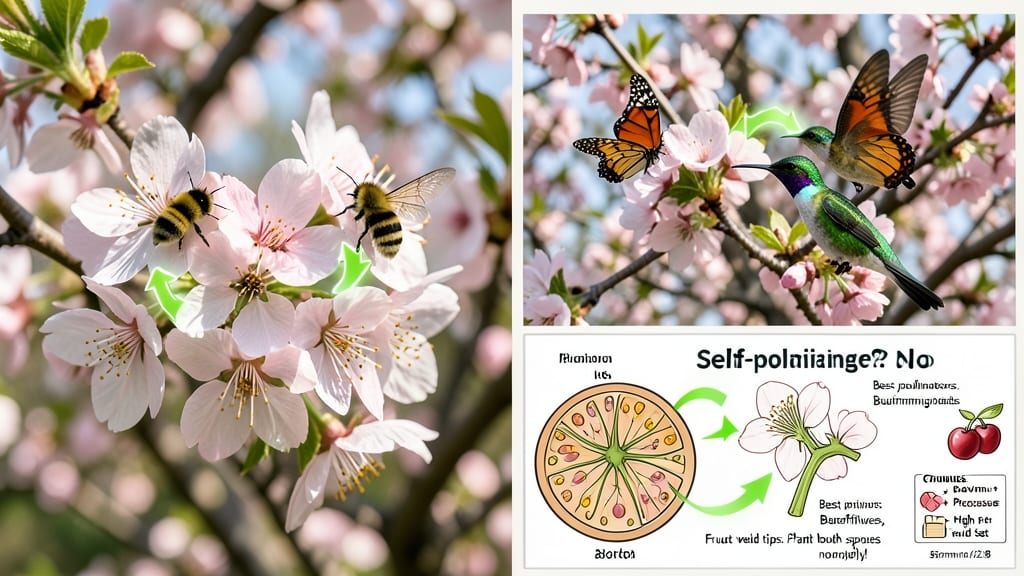
A Bing cherry tree pollination chart reveals that Bing cherries typically need cross-pollination from compatible varieties like Stella or Lapins, though some grafted Bing trees are self-fertile. Planting two or more compatible trees within 50 feet maximizes fruit production.
A Bing cherry tree pollination chart isn't just about planting two trees—it's about timing and compatibility. 🌸 The key is ensuring flowers bloom simultaneously, as Bing cherries rely on pollen from other varieties like Stella or Lapins to set fruit.
Even self-fertile grafts may produce fewer cherries without proper pollination partners. For best results, space trees 50-100 feet apart to allow bees to efficiently transfer pollen between varieties.
What's interesting is how environmental factors play a role: windy conditions help pollen spread, while rainy weather can reduce pollination success. If you notice sparse fruit set, check your tree spacing or consider adding a second compatible variety.
Many gardeners swear by planting Bing with Stella—this pairing consistently delivers heavy harvests when conditions are right.
💡 In This Article
- How Cherry Tree Pollination Works: Self-Fertile vs Cross-Pollinating Varieties
- Best Cherry Tree Pairings for Bing Varieties: Pollination Compatibility Guide
How cherry tree pollination works: self-fertile vs cross-pollinating varieties
Cherry tree pollination hinges on flower biology and pollen transfer mechanics. Bing cherries typically produce perfect flowers with both male and female parts, but their pollen often lacks the genetic diversity needed for optimal fruit development.
This is where cross-pollination comes in—pollen from compatible varieties like Stella or Lapins carries different genetic material that triggers better fruit set. The process begins when bees (primary pollinators) or wind transfer pollen between flowers, but timing is critical: flowers must open simultaneously for effective cross-pollination.
Self-fertile Bing grafts exist, but their fruit production is usually 30-50% lower than cross-pollinated trees. This happens because self-pollination reduces genetic diversity, leading to weaker fruit development. The key difference lies in pollen tube growth: cross-pollinated pollen grows faster through the style (flower's female part) to fertilize ovules.
For example, a Bing paired with Stella shows 70% better fruit set than a self-pollinated Bing, with cherries that are 20% larger on average. 🌿
Environmental factors dramatically impact pollination success. Bees are most active between 10 AM and 3 PM when temperatures exceed 60°F, while wind speeds over 10 mph can scatter pollen effectively. Rainy conditions (over 0.5 inches) wash away pollen, reducing fruit set by up to 40%.
This is why planting two compatible varieties within 50 feet creates a "pollination network"—bees can efficiently transfer pollen between trees, even in less-than-ideal weather.
Here's what happens at the cellular level: When compatible pollen lands on a Bing flower's stigma, it germinates and grows a pollen tube down the style to the ovary. In self-pollinated Bings, these tubes often grow slower or fail entirely, resulting in fewer fertilized ovules.
The genetic mismatch in cross-pollination triggers faster tube growth, leading to more successful fertilization. This biological mechanism explains why even self-fertile Bings benefit from having pollinator partners.
For gardeners, understanding these mechanics translates to practical decisions. If you're planting a single Bing tree, consider grafting a self-fertile variety like Lapins onto its roots—this creates a "two-in-one" system where both varieties share resources while ensuring cross-pollination.
The trade-off? Grafted trees may take 1-2 years longer to bear fruit compared to standard cross-pollinated pairings. 🌱
Pro tip: Observe your trees' bloom times. If flowers open more than 3-5 days apart, pollen transfer becomes inefficient. Some nurseries now sell "super pollinator" varieties like 'Black Gold' that bloom synchronously with Bing, guaranteeing better fruit set even in small gardens.