
Pruning
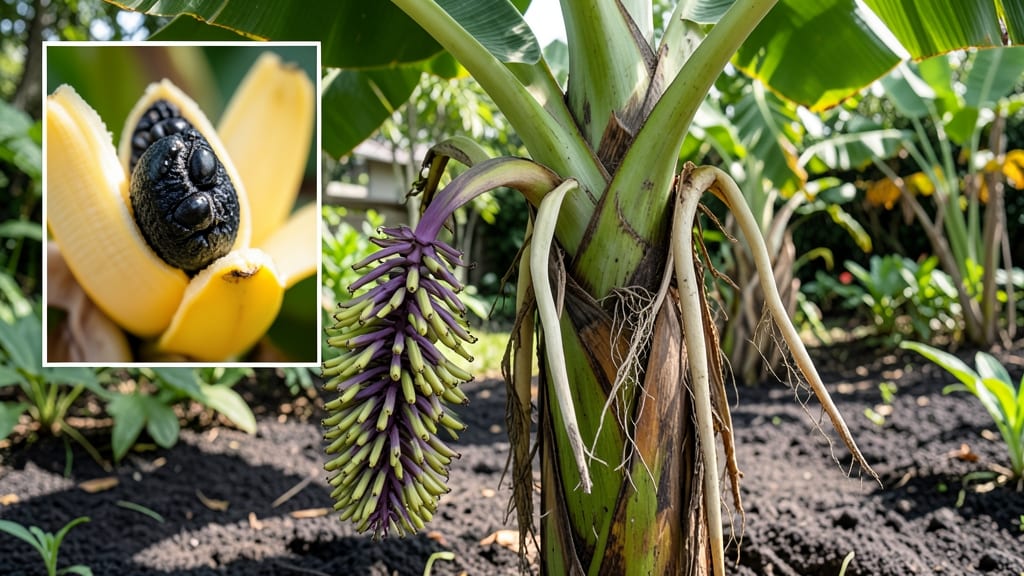
Banana tree adaptations thrive where others freeze—year-round growth in pots, patios, or even garages. 🌱 I learned the hard way that these tropical giants aren’t just for Florida: with the right tricks, you can grow them anywhere, even in Zone 5.
The secret lies in understanding how they naturally adapt to heat, humidity, and drainage—and then mimicking those conditions at home.
Think of their giant leaves as built-in humidity factories. In the wild, they capture moisture from the air, then funnel it to the roots. Without that natural boost, your banana tree will wilt faster than a store-bought bouquet.
The fix? Group plants together, mist them daily, and use a pebble tray under the pot to keep roots hydrated without drowning them. Their fibrous roots also hate soggy soil—so drainage is non-negotiable.
With these adaptations in mind, you’ll see your banana tree push out new fronds even in winter. The trick is keeping the soil warm (a heat mat helps in cold climates) and consistently moist without waterlogging.
Before you know it, you’ll be harvesting fruit—or at least admiring those dramatic, tropical leaves—no matter where you live.
Works for dwarf varieties like ‘Dwarf Cavendish’ or even ‘Ice Cream’ banana trees. The same principles apply whether you’re growing in a 15-gallon container or a greenhouse. Let’s make your space feel like a jungle retreat—without the travel costs.
📚 In This Guide
- What you need
- Instructions
- Tips and common mistakes
- Wrapping up and next steps
What you need
- ● Banana tree plant: Choose a Musa variety (e.g., Musa acuminata or Musa balbisiana) suited for your climate zone (USDA Zones 10–12 or container-friendly varieties for cooler areas).
- ● Container (if not planting in-ground): Minimum 15–20 gallon pot (24+ inches deep) for dwarf varieties; 30+ gallons for standard-sized trees.
- ● Drainage holes (non-negotiable!) and a cache pot or saucer to catch runoff.
- ● Well-draining potting mix: 60% cactus/succulent mix, 30% peat or coconut coir, and 10% perlite or pumice (avoid garden soil—it compacts!).
- ○ Organic fertilizer: Balanced 10-10-10 or 6-6-6 (low nitrogen to prevent leafy growth over fruit). Optional: Slow-release pellets or liquid seaweed extract for a nutrient boost.
- ● Mulch: 3–4 inches of straw, wood chips, or pine bark to retain moisture and regulate temperature.
- ● Pruning tools: Sharp bypass pruners (for small stems).
- ● Sterilized pruning saw or loppers (for thicker pseudostems, 2+ inches in diameter).
- ● Safety gear: Gloves (cut-resistant for thorns), long sleeves, and eye protection (banana trees have razor-sharp edges!).
- ● Watering supplies: Hose with adjustable nozzle or watering can with a long spout (reach those top leaves!).
- ○ Support (optional but helpful): Stakes or bamboo poles (3–4 feet tall) to prop up heavy fruit clusters.
- ● Soft plant ties (avoid wire—it can damage the pseudostem).
- ● Climate control (for containers): Grow lights (LED, full-spectrum) if indoors (12–14 hours/day).
- ● Space heater or heat mat (for temps below 60°F/15°C).
Instructions for year-round banana tree adaptations in small spaces
Here’s how to coax tropical growth from a banana tree without needing a greenhouse or warm climate.
🌱 Step 1: Select the Right Variety for Your Climate
Not all banana trees are created equal—choose a cold-hardy variety like Dwarf Cavendish or Red Dacca if you live in zones 8-11. These tolerate brief dips to 28°F without permanent damage. For colder climates (zones 6-7), opt for Musa acuminata hybrids, which recover better from frost. Avoid tropical varieties like Gros Michel unless you’re in a frost-free zone.
Check your local nursery for labeled "ornamental" banana trees—they’re bred to handle temperature swings better than fruit-bearing types. I always plant mine in late spring after the last frost date, giving roots time to establish before winter sets in. If you’re in a marginal zone, start with a potted specimen first to test its resilience.
🪴 Step 2: Optimize Container Size and Soil for Year-Round Growth
Banana trees need deep, well-draining soil to prevent root rot, which is their #1 killer in containers. Use a mix of 50% potting soil, 30% perlite, and 20% compost for the best aeration. A 15-gallon container is the minimum for a mature Dwarf Cavendish—any smaller, and roots will circle and strangle the plant. Add a 3-inch layer of gravel at the bottom for extra drainage.
Here’s the thing—banana trees are heavy feeders. I fertilize mine every 4-6 weeks during growing season with a balanced 10-10-10 formula, then switch to a low-nitrogen 5-10-10 in fall to harden them off. Mulch the top inch of soil with straw to retain moisture without suffocating roots. Overwatering is the silent killer: let the top 2 inches of soil dry out between waterings, even in summer.
☀️ Step 3: Master Light and Temperature Control
Banana trees crave full sun (6+ hours daily), but they’ll tolerate morning sun + afternoon shade in hot climates. If growing indoors near a window, rotate the pot quarter-turn weekly so the trunk doesn’t lean. A south-facing window works best, but supplement with a grow light 12 hours/day if natural light is weak—you’ll see leaves yellow if it’s insufficient.
Temperature is the real game-changer. Keep pots in 65-85°F during active growth, and never let it drop below 50°F for more than a few hours. In winter, move containers to a garage or shed (unheated but protected from wind) if temps fall below 40°F. I’ve had banana trees survive 20°F for a night if the soil is dry, but they’ll lose leaves—new growth returns once warmth returns.
✂️ Step 4: Prune Strategically to Encourage Regrowth
Banana trees are dramatic pruners—don’t be afraid to cut back. When leaves yellow or brown in winter, remove them at the base to redirect energy to the corm (the swollen stem base). Leave 2-3 healthy leaves if possible, as they photosynthesize for regrowth. In spring, trim any dead or split pseudostems (the "trunk") with clean, sharp shears to prevent disease.
Here’s where it gets fun: if your banana tree flowers (a rare indoor occurrence), remove the bloom unless you’re prepared for fruit. The energy drain can weaken the plant, and indoor bananas rarely ripen properly. Instead, focus on keeping the corm plump and healthy—it’s the key to next year’s growth. I’ve had banana trees regrow from just the corm after a harsh winter, so don’t toss it if the top dies back.
🌿 Step 5: Overwinter Like a Pro
Banana trees go dormant in winter, but they’re not dead—just biding their time. Reduce watering to every 2-3 weeks once growth slows, and stop fertilizing entirely. Wrap the pot in burlap and bury it halfway in straw for insulation if outdoor temps drop below 32°F. Move it to a bright, cool (50-60°F) spot indoors if possible—basements with windows work well.
Watch for pest pressure in winter: mealybugs and scale love dormant banana trees. Spray with neem oil every 2 weeks as a preventative. Come spring, you’ll see new shoots emerging from the corm—this is your signal to resume normal care. If the corm shrivels, it’s a sign of overwatering or poor drainage during dormancy. Adjust your winter routine next time.
Tips & tricks for thriving banana trees in small spaces
Small-space gardening with banana trees is entirely doable—here's how to maximize success with the right approach.
Variety Selection: The choice between Dwarf Cavendish and Musa acuminata hybrids makes all the difference. For zones 6-7, I've found that Musa acuminata hybrids recover more gracefully from frost damage than tropical varieties. If you're in a marginal zone, consider starting with a potted specimen first—it gives you a chance to test its resilience before committing to an in-ground planting. The key is observing how your specific variety handles temperature swings throughout the seasons.
Container Strategy: That 15-gallon minimum isn't arbitrary—it's what prevents root circling, which can strangle your plant. For indoor growing, I've had great success with 20-gallon containers because they provide extra stability and drainage. When choosing containers, look for ones with sturdy handles—they're heavy when wet! Also, consider adding a 3-inch layer of expanded clay pebbles instead of gravel at the bottom for even better drainage and aeration.
Light Optimization: The 12-hour grow light recommendation is critical for indoor growers. I've found that a full-spectrum LED grow light positioned 12-18 inches above the plant works best. For outdoor containers, place them where they get morning sun (which is less intense) and afternoon shade—this mimics the tropical understory environment they prefer. If you notice leaves yellowing between veins, that's your plant's way of saying "I need more light!"
Winter Care: The 50-60°F winter range is ideal for dormancy. I've learned the hard way that moving pots too early can shock the plant—wait until you see new shoots emerging from the corm before resuming regular care. For extra protection, you can also wrap the pot in bubble wrap before adding the burlap and straw insulation. This creates an additional barrier against cold winds while still allowing some airflow.
Pro Tips for Banana Tree Adaptations
- Small-space gardening with banana trees is entirely doable—here's how to maximize success with the right approach.
- Variety Selection: The choice between Dwarf Cavendish and Musa acuminata hybrids makes all the difference.
- Container Strategy: That 15-gallon minimum isn't arbitrary—it's what prevents root circling, which can strangle your plant.
Frequently asked questions
Got questions about maximizing your banana tree’s growth in small spaces? You’re not alone! Here are answers to the most common queries—from pruning tips to troubleshooting—so you can keep your tropical friend thriving year-round.
How often should I prune a banana tree in a small space?
Prune your banana tree once or twice a year—typically in late winter or early spring—to remove dead fronds and encourage new growth. In tight spaces, trim aggressively to prevent overcrowding, but never cut more than 1/3 of the plant at once. Focus on fronds that are yellow, brown, or blocking sunlight from reaching the center.
Can banana trees survive winter in small containers?
Banana trees are tropical and need protection in cold climates. If growing in containers, move them indoors (near a sunny window or under grow lights) when temps drop below 50°F (10°C). For outdoor pots, use insulating wraps or frost cloths and mulch the base. Avoid pruning heavily before winter—wait until spring for a fresh start!
Why aren’t my banana tree’s fruits ripening?
Unripe bananas often stem from lack of sunlight, poor pollination, or overcrowding. Ensure your tree gets at least 6–8 hours of direct light daily. If indoors, supplement with grow lights. For outdoor trees, hand-pollinate flowers with a small brush. Patience is key—some varieties take 9–12 months to fruit!
What’s the best alternative if my banana tree keeps dying?
If your banana tree struggles, try hardier, space-friendly alternatives like:
- Dwarf Cavendish – Compact, cold-tolerant, and great for containers.
- Red Dacca – Faster-growing with striking red stems (but needs more space).
- Cardaba – Drought-resistant and produces edible “plantains.”
For non-fruiting options, consider ornamental banana trees (Musa basjoo), which thrive in small spaces and add tropical flair without the fruit commitment.
How do I revive a banana tree with yellow leaves?
Yellow leaves usually signal overwatering, nutrient deficiency, or pests. First, check the soil—it should be moist but not soggy. Adjust your watering schedule and repot if roots are waterlogged. Fertilize with a banana-specific feed (high in potassium and magnesium) every 4–6 weeks. For pests (like spider mites), spray with neem oil or insecticidal soap. Pro tip: Trim yellow fronds at the base to redirect energy to healthy growth.
Wrapping up and next steps
From maximizing space with vertical training to leveraging microclimates and container gardening, banana trees prove that year-round growth is totally doable—even in small spaces! 🌱 Their adaptability isn’t just about survival; it’s about thriving with creativity and care.
Whether you’re a seasoned gardener or a curious beginner, these hacks show how a little strategy can turn your tiny plot into a tropical oasis.
Ready to put these adaptations into action? Start small—pick one technique (like pruning or container selection) and experiment this season. Watch your banana tree flourish, and soon, you’ll be sharing your green thumb success with neighbors (and maybe even a few extra bunches!).