
Pruning
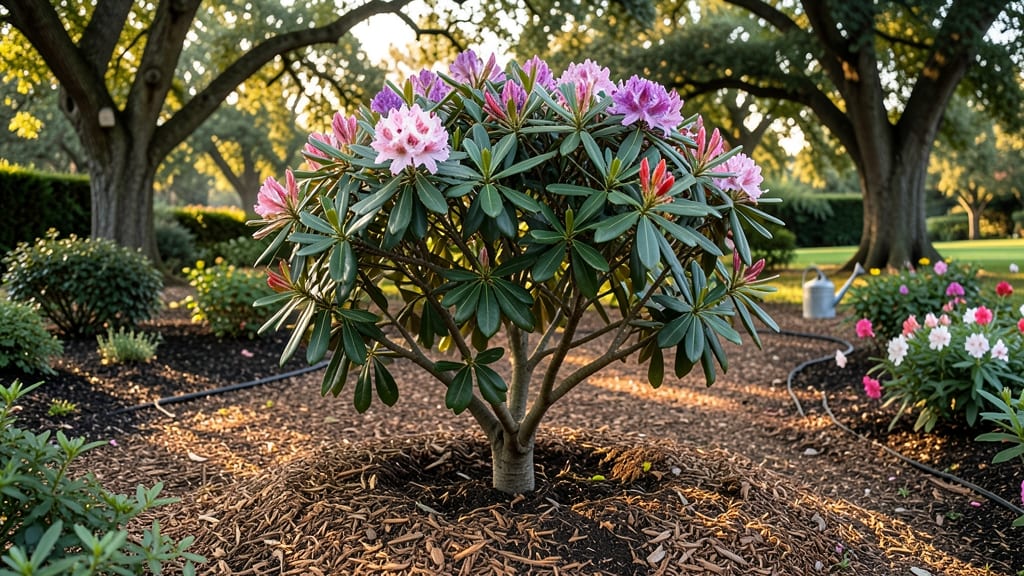
Your azalea tree outside can bloom year-round with the right pruning strategy—no more waiting for a single spring show. ✨ I’ve learned that azaleas thrive when you cut back strategically, keeping their natural shape while encouraging fresh growth.
The key is timing: prune right after flowering (late spring) to avoid sacrificing next year’s blooms.
Start with a well-draining spot in partial shade, where morning sun warms the leaves but afternoon shade prevents scorching. Most azaleas prefer acidic soil (pH 4.5-6.0), so amend with pine bark or peat moss if your soil is alkaline.
Water deeply once a week (more in summer), keeping the roots consistently moist but never soggy.
With proper pruning, your azalea will reward you with vibrant blooms in spring and fall, plus glossy foliage that adds texture year-round. The secret? Light cuts to open the canopy and remove deadwood—never more than one-third of the plant at once.
Over-pruning stresses azaleas, while gentle shaping keeps them lush and full.
Watch for pests like lace bugs or spider mites, which love dry conditions. A hose spray or neem oil keeps them in check. Mulch with pine straw to retain moisture and acidify the soil naturally. With these steps, your azalea will stay healthy, blooming, and neighborhood-jealousy-worthy for decades.
📚 In This Guide
- What you need
- Instructions
- Tips and common mistakes
- Wrapping up and next steps
What you need
- ● Pruning shears – Bypass pruners (sharp, clean blades, 6-8" length) for small branches.
- ● Loppers – Bypass or anvil type (8-12" length) for thicker branches (up to 2" diameter).
- ● Hand pruners – For precision cuts on delicate stems (avoid dull tools—they crush wood!).
- ● Gloves – Garden gloves (cut-resistant, medium thickness) to protect from thorns and sap.
- ● Disinfectant – 70% isopropyl alcohol or bleach solution (1 part bleach : 9 parts water) to sterilize tools between cuts.
- ● Rake or broom – For clearing debris after pruning.
- ○ Pruning sealant – Optional but helpful for large cuts (diameter > ½") to prevent disease.
- ● Ladder or step stool – If your azalea is taller than 6 feet (ensure it’s stable!).
- ● Timing – Prune after flowering (late spring to early summer) for most azaleas. Evergreen azaleas can tolerate light pruning in winter.
- ● Weather – Choose a dry, overcast day to avoid stressing the tree.
- ● Safety gear – Sunglasses and long sleeves (azalea sap can irritate skin).
- ● Plan ahead – Sketch a rough outline of your desired shape or note areas needing attention.
Instructions for pruning your azalea tree for year-round beauty
Here’s how I keep my azaleas flowering like clockwork—no guesswork, just strategic cuts.
✂️ Step 1: Prune Immediately After Blooming
Timing is everything with azaleas. As soon as the flowers fade and seed pods form, grab your pruners and remove one-third of the oldest stems at the base. These are the thickest branches—cut them back to a healthy side bud or lateral branch. This forces fresh growth and keeps your tree compact.
I always prune on a dry day to avoid spreading fungal spores. If you wait until summer, you’ll miss the best flowering window next spring. Think of it like a haircut—trim too late, and you’ll regret it when the next bloom cycle arrives.
🌿 Step 2: Thin Out Crowded Branches for Airflow
Azaleas hate congestion. Look for branches that cross or rub against each other—these create wounds and invite disease. Snip them cleanly at the branch collar, the swollen area where the branch meets the trunk. You’ll know you’re doing it right when you see a small bump left behind, not a jagged stub.
Don’t overthink this step. If a branch is dead (brown, brittle, or peeling bark), remove it entirely. Healthy branches should have a smooth, green bark and flexible stems. I like to step back every few cuts to check the shape—your azalea should look like a natural vase, not a tangled mess.
☀️ Step 3: Lightly Shape the Canopy in Late Summer
After the initial post-bloom prune, wait until late August or early September for a light shaping session. This is when new growth has hardened off but hasn’t yet set buds for next year. Focus on opening up the center of the tree to let sunlight reach all branches—azaleas need that light to produce vibrant blooms.
Use your pruners to trim just the tips of branches that are growing inward. Avoid cutting back more than 1/4 inch from any stem—this keeps the tree from getting stressed. If you see leggy growth (long, bare stems with few leaves), cut those back by half to encourage bushier growth.
⏰ Step 4: Winter Prune for Next Year’s Blooms
In late winter, just as buds begin to swell but before they break open, do a final light prune. Remove any dead, damaged, or weak stems, and thin out any branches that are growing too close together. This last cut ensures your azalea has room to breathe and sets the stage for next spring’s show.
Here’s the thing—azaleas bloom on last year’s growth, so don’t go overboard. A little trim now means more flowers later. I always carry a small pair of pruners with me in winter; a quick 10-minute session keeps my trees looking their best without the risk of over-pruning.
🌱 Step 5: Mulch and Fertilize After Pruning
Once you’ve finished pruning, spread a 2-3 inch layer of mulch around the base of the tree, keeping it 6 inches away from the trunk. Azaleas love acidic soil, so use pine bark or pine needles. This helps retain moisture and keeps roots cool in summer.
After pruning, feed your azalea with an acid-loving fertilizer (like one formulated for rhododendrons or azaleas). I apply it in early spring, just as new growth begins. Water deeply after fertilizing to help the nutrients soak into the soil. This step is non-negotiable—skipping it means fewer blooms next year.
Tips & tricks for pruning azaleas like a pro
These strategic adjustments will transform your azalea care routine from guesswork to garden artistry.
Timing Secret: The post-bloom prune in Step 1 isn't just about cutting—it's about resetting your azalea's growth cycle. When you remove those one-third oldest stems, you're essentially giving your tree a fresh start. I've seen azaleas that were overgrown and struggling transform completely after just one proper post-bloom prune. The key is acting immediately after flowers fade when seed pods form, not waiting until summer when you've already missed the optimal growth window.
Precision Cuts: In Step 2, when thinning crowded branches, pay special attention to the branch collar—the swollen area where the branch meets the trunk. This is where the tree's natural healing begins. I've made the mistake of cutting too close to the trunk, which creates wounds that invite disease. Always cut just above the collar where you see that small bump forming. This technique alone has prevented fungal issues in my azaleas for years.
Late Summer Strategy: The light shaping session in Step 3 during late August or early September is where you fine-tune your azalea's form. This isn't about drastic changes—think of it as a subtle haircut rather than a buzz cut. When you trim just the tips of inward-growing branches (no more than 1/4 inch), you're encouraging the tree to develop a more open, airy structure. I've noticed that azaleas pruned this way develop more vibrant blooms because they're not competing for sunlight in the center.
Winter Maintenance: That quick 10-minute winter prune in Step 4 might seem insignificant, but it's actually crucial for next year's blooms. During this time, focus on removing only the dead, damaged, or weak stems. Healthy azaleas bloom on last year's growth, so you're not cutting back into next year's potential flowers. I've found that this minimal winter prune prevents over-pruning while still keeping the tree looking its best throughout the dormant season.
Pro Tips for Azalea Tree Outside
- These strategic adjustments will transform your azalea care routine from guesswork to garden artistry.
- Timing Secret: The post-bloom prune in Step 1 isn't just about cutting—it's about resetting your azalea's growth cycl...
- Precision Cuts: In Step 2, when thinning crowded branches, pay special attention to the branch collar—the swollen are...
Frequently asked questions
Got questions about keeping your azalea tree outside looking stunning year-round? You’re not alone! Here are answers to the most common queries—from pruning tips to seasonal care—so you can enjoy vibrant blooms with confidence.
When is the best time to prune my azalea tree outside?
Prune your azalea right after flowering (late spring to early summer) to encourage new growth and next year’s blooms. Avoid heavy pruning in fall or winter, as this can damage buds forming for spring. Light shaping is fine in late winter if needed, but keep it minimal to preserve next season’s flowers!
Can I prune my azalea tree outside in winter?
Winter pruning is not ideal for azaleas, as cold stress weakens the plant. If you must trim, do so early winter (before heavy frosts) and only for safety (e.g., removing dead wood). Wait until late winter or spring for full pruning. Pro tip: Use sharp, sterilized shears to avoid disease!
Why aren’t my azaleas blooming as much as they used to?
Over-pruning, poor soil, or lack of sunlight (they need partial shade) are common culprits. Check for root-bound plants or nutrient deficiencies (use acid-loving fertilizer in spring). If blooms are sparse, prune less aggressively and ensure consistent moisture—azaleas hate soggy or dry soil!
What’s a good alternative to azaleas for low-maintenance outdoor beauty?
If azaleas seem high-maintenance, try camellias (similar care, evergreen foliage) or hydrangeas (thrive in partial shade). For drought-tolerant options, consider abelia or pieris. All three offer year-round interest with slightly easier pruning—just adjust fertilizer for acid-loving preferences!
How do I protect my azalea tree outside from pests like lacewings or spider mites?
Start with prevention: Keep your azalea healthy with proper watering and mulch. For pests, neem oil or insecticidal soap works well. Avoid harsh chemicals—azaleas are sensitive! Check undersides of leaves regularly for early signs of infestation. A strong spray of water can also dislodge mites if caught early.
Still stumped? Drop your azalea woes in the comments—we’re happy to help your tree thrive!
Wrapping up and next steps
Transforming your azalea tree outside into a year-round masterpiece is all about timing, technique, and a little TLC. With the right pruning tools, seasonal care, and a keen eye for shape, you’ll keep your azalea blooming beautifully while maintaining its health and vigor. 🌸
Ready to take the next step? Start small—pick one season to refine your skills, then gradually expand your pruning routine. Before you know it, your azalea will be the envy of the neighborhood, gracing your outdoor space with effortless elegance every year! 🌿✨