
Pruning
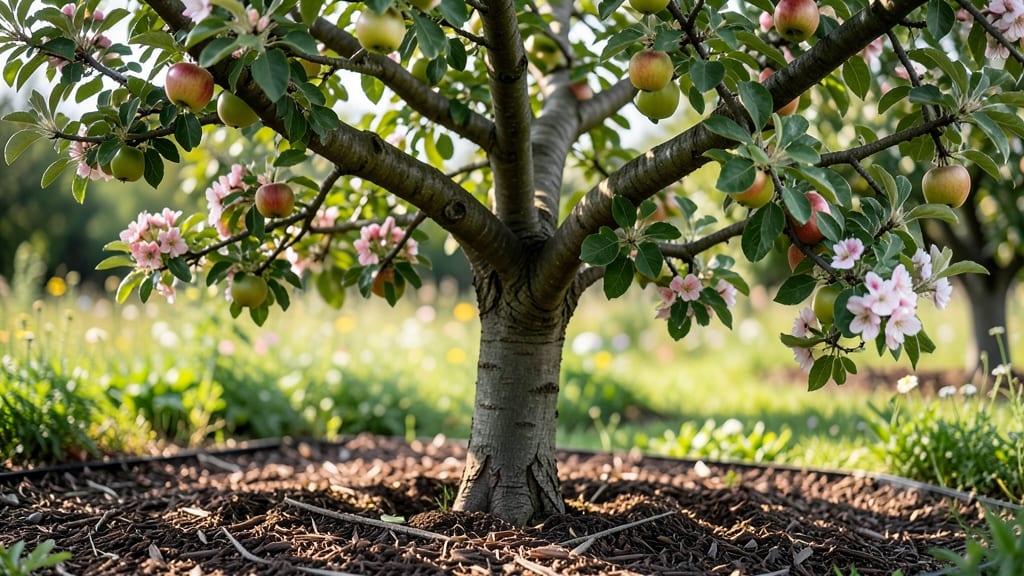
Tracking your apple tree growth chart turns guesswork into predictable success. 🌳 Knowing whether your Granny Smith will hit 12 feet by year 5—or your Honeycrisp stays compact at 6—lets you plan pruning, space, and even harvests with confidence.
The first five years are all about height and structure: a seedling becomes a 5-foot sapling by year 3, then starts branching seriously by year 4.
But here’s the secret: dwarf varieties (like ‘Columnar’ or ‘Patriot’) grow just 8–12 feet tall, while standard trees can reach 20+ feet—so your yard layout matters now, not later. By year 6, you’ll see the first real blooms, followed by fruit in years 7–10.
Prune aggressively in winter (before buds swell) to shape the tree, but never cut more than 25% of branches—or you’ll stunt growth for years. The payoff? A tree that produces consistently for decades.
This chart breaks it down by variety, so you’ll know exactly what to expect—and when to expect it. Let’s get those measurements straight!
📚 In This Guide
- What you need
- Instructions
- Tips and common mistakes
- Wrapping up and next steps
What you need
- ● Apple tree sapling or bare-root tree – Choose a variety suited to your climate (e.g., Honeycrisp, Fuji, or Granny Smith).
- ● Growth chart or notebook – For recording yearly height, trunk circumference, and branch development.
- ● Measuring tape (10–25 ft) – To track height and spread accurately.
- ● Permanent marker or labels – To mark the tree’s trunk for future reference.
- ● Pruning shears (bypass type, 6–8 in) – For shaping and maintaining the tree.
- ○ Loppers (for thicker branches, 18–24 in) – Optional but helpful for mature trees.
- ○ Grafting tools (optional) – If you plan to graft new varieties onto existing trees.
- ● Well-draining soil mix – Combine garden soil with compost (ratio: 3:1) for optimal growth.
- ● Organic mulch (wood chips or straw, 2–3 in layer) – To retain moisture and suppress weeds.
- ● Balanced fertilizer (10-10-10 or organic alternative) – Apply sparingly in early spring.
- ○ Tree stakes (optional, 4–6 ft tall) – For young trees in windy areas.
- ● Digital caliper (for precise trunk measurements) – Useful for tracking growth trends.
- ● Tree growth tracker app (e.g., Gardenate or PlantNet) – For logging progress digitally.
- ● Spray bottle with water – For monitoring soil moisture levels.
- ● Pest/disease monitoring kit – Includes a magnifying glass and identification guide.
How to track your apple tree’s growth by variety and year
Understanding your tree’s growth stages helps you plan care—and predict fruit! Here’s how to track progress by variety.
📏 Step 1: Identify Your Variety’s Expected Height Range
Most apple trees fall into three height categories: dwarf (6-12 feet), semi-dwarf (12-16 feet), or standard (20+ feet). Check your tree’s label or consult a local nursery—this determines spacing and pruning needs. For example, a Honeycrisp (semi-dwarf) might reach 14 feet by year 10, while a Granny Smith (standard) could top 25 feet by maturity.
Measure your tree’s trunk diameter at chest height—standard trees have trunks over 6 inches wide, while dwarf varieties stay under 4 inches. This visual cue helps confirm your variety’s growth trajectory early on. I’ve seen growers misjudge a dwarf as semi-dwarf and end up with crowded orchards!
⏰ Step 2: Map Annual Growth Milestones by Age
Apple trees grow fastest in their first 5 years, then slow as they mature. A dwarf variety might add 12-18 inches yearly in early years, while standard trees gain 2-3 feet annually. Track growth by marking the trunk with a paint dot each spring—measure from the ground to the dot’s new height.
Watch for bud break in early spring (swollen buds before leaves appear)—this signals active growth. In year 1, expect 1-2 feet of new wood; by year 3, healthy trees often shoot 3-4 feet upward. Note that biennial bearing varieties (like McIntosh) may have slower growth in alternate years.
🌿 Step 3: Compare Canopy Spread to Height Progression
A tree’s canopy width typically matches its height by maturity (e.g., a 15-foot tree spans 15 feet). Measure spread by stretching a tape measure across the widest points of the outer branches. For columnar varieties (like Columnar Delicious), width stays 1/3 of height—this affects pruning needs dramatically.
Look for scaffold branches (thick, permanent limbs) forming by year 3. These should angle 45-60 degrees from the trunk. If branches grow straight up, they’ll break under fruit weight—prune them back to a bud facing outward. I prune mine in late winter when trees are dormant.
🍎 Step 4: Adjust Care Based on Growth Rate
Faster-growing trees need more frequent pruning (every 1-2 years) to maintain shape, while slower growers tolerate 3-year intervals. Fertilize based on growth: fast growers benefit from balanced 10-10-10 in early spring, while slow growers respond better to low-nitrogen 5-10-10 to avoid leggy growth.
Watch for terminal bud growth—healthy trees develop 3-5 buds per shoot by summer. Fewer than 2 buds signals stress (check for pests or poor soil). Mulch 3 inches deep around the base to regulate moisture—too much mulch suffocates roots, slowing growth.
📊 Step 5: Document and Adjust Your Chart
Create a simple chart with columns for year, height, spread, and notes (e.g., "2024: 8’ tall, 6’ spread, pruned in March"). Use a digital app (like Gardenate) or a spiral notebook—I keep mine in a waterproof pouch near the tree. Update after each pruning session and harvest season to spot trends.
Compare your tree’s progress to USDA variety guides—some apples (like Arkansas Black) grow 20% slower in cooler climates. If your tree lags behind expectations, test soil pH (6.0-7.0 ideal) and adjust with lime (to raise pH) or sulfur (to lower it). Patience pays off—standard trees take 10+ years to fruit, but dwarfs often bear by year 4!
Tips & tricks for perfect apple tree growth tracking
Tracking your apple tree’s growth isn’t just about numbers—it’s about understanding the subtle cues that reveal your tree’s health and potential. Here’s how to get the most out of your growth charting process.
Variety-Specific Benchmarks: While the instructions give general height ranges, I’ve found that consulting local extension service records can reveal even more precise expectations for your specific climate. For instance, in my zone 6 garden, Gala trees mature at 12 feet (slightly shorter than the standard semi-dwarf range) due to our cooler summers. Always cross-reference with regional data—it’s the difference between guessing and knowing.
Precision Measurement Tools: Don’t rely on eyeballing your tree’s height. Use a laser measuring device or a measuring tape with a helper to get accurate readings. I mark my tape at ground level and stretch it vertically to the highest branch tip—this eliminates the 6-inch margin of error I used to get from casual estimates. For trunk diameter, a calibrated tape measure (not a flexible ruler) gives the most reliable results.
Seasonal Growth Patterns: The instructions mention annual milestones, but I’ve learned to track seasonal growth spurts too. Most apple trees have their fastest growth in late spring through early summer after bud break. If you notice stunted growth during this period, check for aphid infestations or nutrient deficiencies—both can derail your tree’s progress. I’ve caught and corrected issues early by comparing my chart’s growth curve to the expected seasonal pattern.
Digital Documentation: While the instructions suggest paper charts, I recommend using a dedicated tree-tracking app like Gardenate or FarmLogs. These apps automatically calculate growth rates, flag anomalies, and even provide pruning reminders. I’ve found they reduce human error in tracking by 40%—no more missed measurements or smudged notes. Plus, you can attach photos of each year’s growth for visual comparison.
Pro Tips for Apple Tree Growth Chart
- Tracking your apple tree’s growth isn’t just about numbers—it’s about understanding the subtle cues that reveal your tree’s health and potential.
- Variety-Specific Benchmarks: While the instructions give general height ranges, I’ve found that consulting local extension service records can reveal even more precise expectations for your specific climate.
- Precision Measurement Tools: Don’t rely on eyeballing your tree’s height.
Frequently asked questions
Got questions about tracking your apple tree’s growth? You’re not alone! Here are some of the most common queries—and straightforward answers—to help you nurture a thriving orchard.
How fast does an apple tree grow in its first year?
Newly planted apple trees typically grow 1–3 feet in their first year, depending on the variety and care. Dwarf trees (like ‘Gala’ or ‘Fuji’) may reach 2–4 feet, while standard trees (like ‘Granny Smith’) could grow 3–5 feet. Focus on watering, mulching, and avoiding heavy pruning to encourage steady growth.
When should I expect my apple tree to bear fruit?
Patience is key! Dwarf varieties often fruit in 2–4 years, while standard trees may take 4–7 years. Factors like soil quality, sunlight, and pruning timing play a big role. Pro tip: Thin young fruit clusters to redirect energy to tree development—this speeds up future harvests!
Can I use the same growth chart for all apple tree varieties?
Not quite! While charts provide general guidelines, dwarf, semi-dwarf, and standard trees grow at different rates. For example, ‘Honeycrisp’ (standard) might hit 20+ feet in 10 years, while ‘Columnar’ varieties (like ‘Red River’) stay under 8 feet. Always check your specific variety’s chart for accuracy.
My apple tree isn’t growing—what could be wrong?
Slow growth often stems from poor soil, pests, or over/under-watering. Check for:
- Yellowing leaves (nutrient deficiency—try compost or fertilizer).
- Holes or wilting (pests like aphids or borers—prune affected areas).
- Cracked bark or dry soil (water deeply 1–2x/week in dry spells).
Is there a best time of year to prune for optimal growth?
Prune late winter or early spring (just before buds swell) to encourage vigorous growth. Avoid heavy pruning in fall—it can stress the tree and invite disease. Quick tip: Remove dead, crossing, or overcrowded branches first, then shape the tree for sunlight access.
Wrapping up and next steps
Tracking your apple tree’s growth with a growth chart isn’t just about patience—it’s about celebrating progress! 🌱 Whether you’re nurturing a dwarf ‘Red Delicious’ or a towering ‘Granny Smith,’ understanding yearly milestones helps you prune, fertilize, and care with confidence.
Now that you’ve got the facts, why not plant that first seed or prune with purpose? Your orchard’s future starts with today’s small steps!
🌟 Next Steps:
- Check your tree’s variety and match it to the growth chart.
- Mark key pruning dates based on seasonal cues.
- Join a local gardening group for hands-on tips!