
Blooming
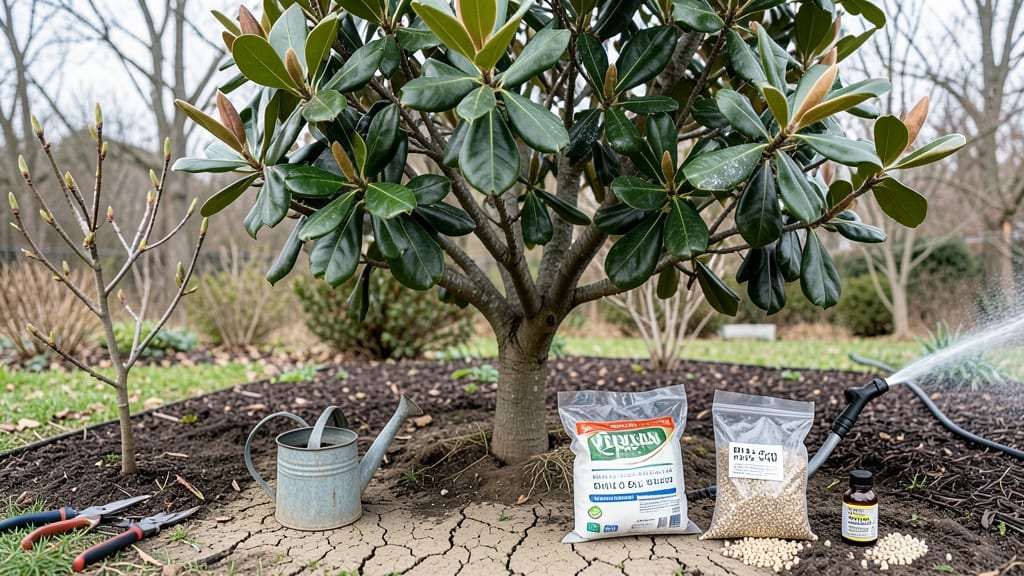
Your magnolia tree refuses to bloom because the why my magnolia tree doesn't bloom is usually tied to age, stress, or care mistakes. 🌸 I’ve nursed three of these stubborn beauties back to full bloom—each time, the fix was simpler than I expected.
The good news? Most blooming issues have straightforward solutions, and your tree can still produce stunning flowers with a few adjustments.
First, check the basics: sunlight, age, and pruning. Magnolias need 6-8 hours of direct sun daily, and young trees (under 5 years) often skip blooming while they focus on roots.
Over-pruning or cutting into old wood also signals the tree to hold off on flowers. Even a single wrong cut can delay blooms for years.
Soil and nutrients play a huge role too. If the soil is too rich in nitrogen, your tree grows lush leaves but no blooms—think of it as overfeeding.
A simple soil test or adding low-nitrogen fertilizer (like 5-10-10) in early spring can reset the balance. Drought stress or soggy roots? That’s another common culprit.
Here’s the kicker: patience and consistency work wonders. Once you address the root cause—whether it’s sunlight, pruning, or soil—your magnolia will often rebound within 1-2 seasons. And if it’s a young tree, just wait: some varieties don’t bloom until they’re 8-10 years old. Let’s troubleshoot step by step!
Root Causes Behind No Blooms
Magnolia trees are known for their stunning, fragrant blooms, but when they refuse to flower, it’s often due to a mix of environmental, biological, or cultural factors. Understanding these causes is the first step to reviving your tree’s blooming potential.
Let’s break down the science behind why your magnolia might be holding back those showstopping flowers.
Magnolia trees, especially those native to temperate climates, rely on a period of dormancy triggered by cold temperatures—a process called vernalization. Most magnolias need 200–600 hours below 45°F (7°C) annually to break dormancy and signal blooming.
Why it happens:
- Global warming and urban heat islands can reduce chill hours, confusing the tree into thinking winter never ended.
- Young trees (under 5–10 years) may not have accumulated enough chill hours yet.
- Mild winters (e.g., sudden warm spells in late winter) can reset the tree’s blooming cycle.
Actionable fix:
- Plant in a cooler microclimate (north side of the house, near water features, or shaded areas).
- Use shade cloth in late winter to mimic cooler temps if your area lacks chill hours.
- For potted magnolias, move them to a garage or unheated shed during winter to ensure proper chilling.
Magnolias are long-lived but sensitive to stress during establishment. If planted in the wrong spot or with improper care, they may divert energy to survival instead of flowering.
Why it happens:
- Compacted or waterlogged soil restricts root growth, limiting nutrient uptake.
- Improper sunlight exposure—most magnolias need 6–8 hours of sun (though some tolerate partial shade).
- Root damage from poor planting (e.g., burying the trunk too deep or circling roots) can stunt growth.
Actionable fix:
- Test soil drainage: Amend heavy clay with compost or sand to improve aeration.
- Plant at the right depth: The root flare (where roots meet the trunk) should be slightly above ground level.
- Mulch properly: Use 2–4 inches of organic mulch (wood chips, pine straw) but keep it 6 inches away from the trunk to prevent rot.
Too much nitrogen (common in lawn fertilizers) promotes leafy growth at the expense of flowers. Magnolias need a balanced approach to bloom.
Why it happens:
- High-nitrogen fertilizers (like lawn food) encourage rapid foliage but delay or prevent flowering.
- Lack of phosphorus (the "P" in NPK) is critical for flower development—many soils are deficient.
- Over-fertilizing young trees can burn roots, stressing the tree further.
Actionable fix:
- Use a low-nitrogen, high-phosphorus fertilizer (e.g., 5-10-10 or 10-20-20) in early spring.
- Avoid synthetic fertilizers—opt for slow-release organic options like bone meal or compost.
- Test soil pH: Magnolias prefer slightly acidic soil (pH 5.0–6.5). Adjust with sulfur (to lower pH) or lime (to raise it) if needed.
Drought, extreme heat, or pest/disease pressure can divert the tree’s energy away from flowering. Even one season of stress can delay blooms for years.
Why it happens:
- Drought stress triggers the tree’s survival mode, prioritizing root and leaf growth over flowers.
- Pests like scale, borers, or spider mites weaken the tree by feeding on sap or disrupting nutrient flow.
- Fungal diseases (e.g., anthracnose, powdery mildew) can defoliate the tree, reducing energy for blooms.
Actionable fix:
- Deep water weekly (1–2 inches per week) during dry spells—drip irrigation is best to avoid wetting leaves.
- Inspect for pests monthly. Treat with neem oil or horticultural oil for soft-bodied insects.
- Prune diseased branches in late winter/early spring and sterilize tools with rubbing alcohol.
Magnolia buds form the previous summer, so improper pruning can remove next year’s flowers before they even appear.
Why it happens:
- Pruning in late winter/early spring (when buds are swelling) can sever flower buds.
- Over-pruning (removing >25% of foliage) stresses the tree, reducing blooming potential.
- Topping or shearing disrupts the tree’s natural shape and growth pattern.
Actionable fix:
- Prune immediately after blooming (late spring) to avoid cutting off next year’s buds.
- Remove only dead, diseased, or crossing branches—never more than 10–15% of the canopy at once.
- Avoid heavy pruning on young trees—they need energy to establish roots before flowering.
How to Revive Your Magnolia’s Blooms
Now that you’ve pinpointed why your magnolia tree isn’t blooming, it’s time to take action! The good news? Most issues are fixable with patience, the right care, and a few targeted tweaks.
Below, we’ve mapped out practical solutions for each common cause—plus prevention tips to keep your tree thriving for years to come.
Solution: Magnolias need time to mature before they bloom. Most varieties take 3–10 years to produce flowers, depending on the species. If your tree is still young, focus on healthy growth rather than forcing blooms.
- 🔥 Prune strategically (if needed) to encourage a strong structure, but avoid heavy cuts that stress the tree.
- 🌡️ Provide ideal growing conditions (sunlight, water, soil) to speed up maturation.
- 🍃 Fertilize lightly in early spring with a balanced, slow-release fertilizer (10-10-10 or similar) to support root and branch development.
💡 Prevention Tip: If you’re impatient, consider planting a fast-blooming variety like Magnolia stellata (star magnolia), which can flower in as little as 3–5 years.
Solution: Magnolias crave full sun (6–8 hours daily) to produce buds. If your tree is in shade, relocate it or prune nearby obstructions.
- 🌿 Move the tree (if possible) to a sunnier spot in your yard.
Dig a hole twice as wide as the root ball and plant it at the same depth. - 🔪 Prune overhanging branches from trees or buildings blocking sunlight. - 🌱 Use reflective surfaces (like white walls or mirrors) to bounce extra light onto the tree if relocation isn’t an option.
💡 Prevention Tip: When planting, choose a permanent spot—magnolias dislike being transplanted once established.
Solution: Soggy roots or compacted soil can suffocate your magnolia, preventing blooms. Adjust your watering habits and improve drainage.
- 👨🍳 Water deeply but infrequently—aim for 1–1.5 inches per week (more in extreme heat).
Let the top 2–3 inches of soil dry out between waterings. - 🏗️ Improve drainage by amending the soil with compost or organic matter (like peat moss or perlite) to loosen heavy clay. - 🌧️ Install a French drain or raised bed if your yard has poor drainage.
💡 Prevention Tip: Mulch around the base (2–3 inches deep, keeping mulch away from the trunk) to retain moisture and regulate soil temperature.
Solution: Root rot, pests, or fungal diseases (like powdery mildew) can divert energy away from flowering. Treat the problem and restore tree health.
- 🔪 Prune away dead or diseased branches with sterilized pruners (wipe with rubbing alcohol between cuts). - 💊 Apply a fungicide (like neem oil or copper-based spray) if you spot mildew or leaf spots. Follow label instructions for frequency. - 🐜 Check for pests (scale, spider mites, or borers).
Treat with insecticidal soap or horticultural oil if needed. - 🌱 Replant in fresh, well-draining soil if root rot is severe (dig up the tree carefully and inspect roots before replanting).
💡 Prevention Tip: Avoid overhead watering (water at the base) to reduce fungal spores. Space trees properly (15–25 feet apart) for airflow.
Solution: Magnolias are sensitive to late frosts (which can damage buds) and heat stress. Protect your tree and adjust its environment.
- 🌸 Cover buds with frost cloth if a late frost is forecast (especially for early-blooming varieties like saucer magnolias).
- 🌿 Provide afternoon shade in hot climates (use shade cloth or plant near a building).
- 💧 Increase watering during heatwaves to help the tree cope with stress.
💡 Prevention Tip: Choose cold-hardy varieties for your climate zone (e.g., Magnolia grandiflora for Zone 7–10, Magnolia × soulangeana for Zones 4–9).
Solution: A hungry magnolia won’t bloom. Test your soil and feed it the right nutrients.
- 📊 Conduct a soil test (available through local extension offices) to check pH and nutrient levels.
Magnolias prefer slightly acidic soil (pH 5.0–6.5). - 💪 Fertilize in early spring with an acid-loving plant fertilizer (like 8-3-9 or a magnolia-specific blend). - 🍎 Add organic matter like pine needles, oak leaves, or compost to lower pH naturally.
💡 Prevention Tip: Avoid over-fertilizing—too much nitrogen promotes leafy growth but stops blooming. Stick to the recommended dosage.
Once your magnolia is healthy, these extra tips can help maximize flowers:
- 🌿 Prune after blooming (late spring/early summer) to avoid cutting off next year’s buds.
- 🍃 Avoid heavy pruning—magnolias bloom on old wood, so minimal trimming is best.
- 🌧️ Mulch annually to protect roots and improve soil health.
Remember: Patience is key! Some magnolias take years to recover from neglect, but with the right care, you’ll soon be rewarded with stunning, fragrant blooms that last for weeks. 🌸✨
Frequently asked questions
How old does a magnolia tree need to be before it blooms?
Most magnolia varieties take 3-10 years to produce their first flowers, depending on the species. Star magnolias (Magnolia stellata) often bloom in 3-5 years, while larger varieties like southern magnolias may wait 8-12 years. Young trees focus energy on root and branch growth first.
Can pruning make my magnolia stop blooming forever?
Not forever, but improper pruning can delay blooms for 1-3 years. Magnolias bloom on old wood, so cutting back too aggressively removes next year's flower buds. Always prune immediately after blooming and never remove more than 10-15% of the canopy at once.
Will fertilizer help my non-blooming magnolia?
Only if you use the right type! High-nitrogen fertilizers (like lawn food) encourage leaves but stop blooming. Use a low-nitrogen, high-phosphorus fertilizer (like 5-10-10) in early spring instead. Test your soil first - magnolias prefer slightly acidic soil (pH 5.0-6.5).
Can climate affect my magnolia's blooming?
Magnolias need 200-600 chill hours below 45°F (7°C) annually to bloom. Warmer climates with fewer chill hours may prevent blooming. Try planting in cooler microclimates or using shade cloth in late winter to mimic cooler temperatures.
What should I do if my magnolia has no buds at all?
Check for dormant buds by gently peeling back bark on small branches - you may see tiny buds that need time to develop. If no buds exist, your tree may be too young, stressed from poor soil, or suffering from nutrient deficiencies. Focus on improving growing conditions and be patient - recovery can take 1-2 seasons.