
Companion Plants
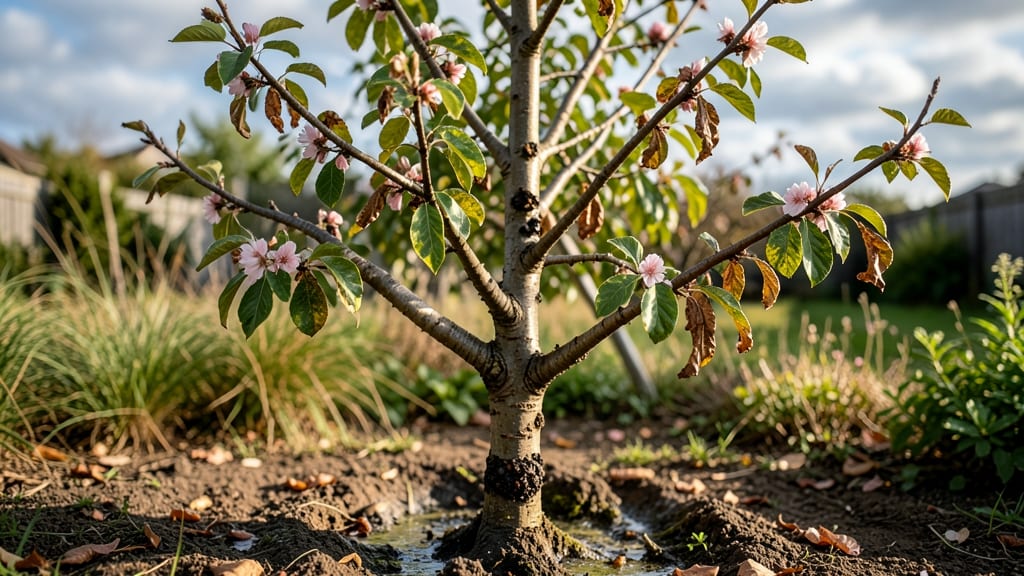
What does an overwatered peach tree look like? Look at those sad, drooping leaves—they’re not just thirsty, they’re drowning. 🌱 Overwatered peach trees show yellowing foliage, mushy roots, and a wilting trunk even when the soil is soaked, and the difference from underwatering is critical to saving your harvest. The first clue? Leaves turn yellow or brown at the edges while staying soft, unlike crispy underwatered leaves. Roots rot in soggy soil, cutting off nutrients, and fungal growth like mold or mushrooms appears at the base. It’s not just water—it’s a suffocating environment. Fix it by checking soil moisture before watering (stick your finger in—if it’s damp, wait). Improve drainage with organic matter like compost or sand, and prune any dead branches to redirect energy to healthy growth. Peach trees thrive with 1-1.5 inches of water per week, including rain. Adjust your schedule, and you’ll see new green leaves within weeks—proof your tree is breathing again.
Root Causes Of Overwatering
Overwatering a peach tree isn’t just about giving it too much water—it’s a cascade of environmental and human factors that disrupt the tree’s delicate balance. Understanding these causes helps you adjust care routines and prevent long-term damage.
Let’s break down the science behind why your peach tree might be drowning in its own moisture.
Peach trees thrive in well-draining soil, but when the ground holds water like a sponge, roots suffocate. Here’s why this happens:
- Clay-heavy soil: Clay particles pack tightly, trapping water and blocking oxygen flow to roots.
A simple percolation test (digging a hole, filling it with water, and timing how long it drains) can reveal if your soil is too dense. - Compacted soil: Heavy foot traffic, machinery, or poor mulching compresses soil, reducing pore space for air and water movement. Aerate the soil with a garden fork or tilling tool to restore airflow. - Lack of organic matter: Soil rich in compost or aged manure improves drainage by creating air pockets.
If your soil feels dense or smells sour, amend it with 1-2 inches of compost before planting.
💡 Pro Tip: If you’re unsure about your soil type, send a sample to a local extension office for a free or low-cost analysis—they’ll tell you exactly how to fix it!
Even well-meaning gardeners can drown their trees. Here’s how it happens:
- Frequent light watering: Short, shallow waterings encourage roots to stay near the surface, where they’re more prone to rot.
Instead, water deeply but infrequently—aim for 1-2 inches of water per week, including rainfall. - Ignoring weather conditions: Watering on a schedule without checking soil moisture leads to overwatering during rainy spells. Stick your finger 2 inches into the soil—if it’s damp, skip watering. - Using the wrong tools: Sprinklers or hoses can create a shallow water layer, while drip irrigation or soaker hoses deliver water directly to the root zone, reducing waste.
🔥 Warning: Peach trees hate soggy feet! If you’re unsure, wait until the top 3 inches of soil are dry before watering again.
Mulch is a double-edged sword—it can either save your tree or suffocate it. Here’s how bad mulching leads to overwatering:
- Too much mulch: A 3-4 inch layer is ideal; anything thicker traps moisture and blocks oxygen.
Pile mulch away from the trunk (keep it 6+ inches back) to prevent rot. - Wrong mulch type: Organic mulches like wood chips break down over time, improving soil structure, but plastic or landscape fabric can trap moisture and heat, creating a greenhouse effect. - No mulch at all: Without mulch, soil dries out unevenly, but if you overdo it, you’re essentially waterproofing the ground.
✨ Bonus Hack: Use pine straw or gravel for better airflow if your soil drains poorly. Just avoid piling it against the trunk!
Peach trees in pots are especially vulnerable. Here’s why containers can lead to overwatering:
- Small or poorly draining pots: Roots outgrow containers quickly, and terracotta or fabric pots dry faster than plastic.
If your pot lacks drainage holes, water pools at the bottom, causing root rot. - No watering schedule adjustments: Container soil dries out faster, but if you water on a fixed schedule, roots can’t adapt. Check moisture daily in hot weather—containers dry out in hours! - Overpotting: A pot that’s too large holds excess water, while one that’s too small causes stress. Choose a pot 1-2 sizes larger than the root ball and upgrade as the tree grows.
🎯 Target Fix: Use self-watering pots with moisture sensors or grow bags for better airflow if you love container gardening.
Sometimes, Mother Nature is the culprit. These conditions make overwatering more likely:
- High humidity: Damp air slows evaporation, keeping soil wet longer.
In humid climates, reduce watering frequency by 20-30%. - Poor air circulation: Dense foliage or nearby structures trap moisture. Prune lower branches and space trees 15-20 feet apart for airflow. - Frost or cold soils: Cold temperatures slow root activity, making trees less able to absorb water. Avoid watering in freezing conditions—roots can’t process excess moisture.
🌡️ Temperature Tip: If your area gets below 50°F at night, hold off on watering until the soil warms up.
When roots or stems are compromised, they can’t regulate water properly. Here’s how pests and diseases contribute:
- Root rot (Phytophthora): Fungal infections thrive in waterlogged soil, clogging root cells and preventing water uptake. Yellow leaves and mushy roots are classic signs—see our [diagnosis guide](#) for details.
- Boring insects (e.g., peach tree borers): Larvae tunnel into roots, disrupting water transport. Inspect roots for tunnels and treat with neem oil or beneficial nematodes.
- Bacterial canker: Caused by Pseudomonas syringae, this disease creates oozing cankers that block water flow. Remove infected branches immediately and sterilize pruning tools.
🔪 Emergency Action: If you suspect root rot, dig up the tree, trim affected roots with sterilized shears, and repot in fresh, dry soil.
Sometimes, the simplest mistakes lead to the biggest problems:
- Not adjusting for new growth: Young trees need less water than mature ones. Halve watering amounts for newly planted peach trees until they establish roots (usually 1-2 years).
- Using the wrong fertilizer: Too much nitrogen promotes leafy growth but weakens roots, making them more susceptible to rot. Switch to a balanced 10-10-10 or low-nitrogen fertilizer in spring.
- Skipping seasonal checks: Trees in spring (active growth) or fall (root development) need careful monitoring. Adjust watering every 4-6 weeks based on seasonal needs.
📊 Data-Driven Tip: Keep a watering journal—note dates, amounts, and soil conditions. Over time, you’ll spot patterns (e.g., "Every time I water after rain, the leaves yellow").
Overwatering doesn’t happen in isolation—it’s often a combination of factors. For example:
- Clay soil (poor drainage) + daily sprinklers = roots drowning.
- Compacted soil (from construction) + no mulch = water pooling.
- Container growth (small pot) + humid climate = fungal explosion.
💡 Final Insight: The key to prevention is observation. Check soil moisture, leaf color, and root health weekly. If you catch overwatering early, your peach tree can bounce back—but neglect turns a minor issue into a fatal one.
Reviving Your Peach Tree: Step-by-Step Fixes
Overwatering can stress your peach tree, but the good news is that with the right adjustments, you can nurse it back to health. Below are practical, actionable solutions tailored to the most common signs of overwatering—drooping leaves, yellowing foliage, and mushy roots—along with prevention tips to keep your tree thriving.
If your peach tree’s leaves are turning yellow or wilting, the soil may be waterlogged, cutting off oxygen to the roots. Here’s how to correct it:
🔥 Step 1: Stop Watering Immediately
- Why? Overwatering is the root cause (pun intended). Let the soil dry out before watering again.
- How? Skip irrigation for 3–5 days to allow excess moisture to evaporate.
🍳 Step 2: Improve Soil Drainage Poor drainage traps water, suffocating roots.
Fix it with these tweaks: - Amend the soil with compost, perlite, or coarse sand (mix 2–3 inches into the topsoil). - Raised beds or mounds can help if your yard has heavy clay soil. - Avoid compacting soil—loosen it gently with a fork to encourage airflow.
👨🍳 Step 3: Prune Damaged Leaves (If Necessary)
- Severely yellow or brown leaves won’t recover and may attract pests. Snip them off with sterilized pruners.
- Focus on lower branches first, as they’re often the most affected.
💡 Pro Tip:
🌡️ Test soil moisture before watering—stick your finger 2–3 inches deep. If it’s damp, wait another day.
Mushy, dark roots signal root rot, a fungal infection from prolonged soggy conditions. Act fast:
⏰ Step 1: Check the Roots (Gently!)
- Carefully dig around the base (1–2 inches deep) to inspect roots.
- Healthy roots are firm and white; rotten roots are mushy, black, or smell foul.
🔪 Step 2: Trim Affected Roots
- Use clean pruners to cut off only the mushy, discolored sections.
- Do not over-prune—remove only what’s clearly dead.
🌿 Step 3: Repot or Replant (If Needed)
- If root rot is severe, transplant the tree to fresh, well-draining soil in a larger pot (if container-grown) or a new spot in the garden.
- Add fungicide (like copper-based or mycorrhizal treatments) to prevent reinfection.
✨ Pro Tip:
💧 Water deeply but infrequently—peach trees prefer 1–1.5 inches of water per week, including rainfall. Use a drip irrigation system for consistent moisture control.
Once your peach tree recovers, keep it happy with these long-term strategies:
📊 Monitor Soil & Weather
- Use a moisture meter (or the finger test) to check soil before watering.
- Adjust for rain—skip watering if the forecast predicts 1+ inch of rain.
💪 Mulch Properly
- Apply 2–4 inches of organic mulch (wood chips, straw) 3–4 inches away from the trunk.
- Mulch retains moisture but prevents soil compaction—keep it loose!
🍎 Choose the Right Location
- Plant peach trees in full sun (6+ hours/day) with well-draining soil.
- Avoid low spots where water pools after rain.
🎯 Companion Plants for Balance
Plant drought-tolerant companions like:
- Rosemary (repels pests, improves drainage)
- Thyme (suppresses weeds, retains moisture)
- Marigolds (natural fungicide)
Remember: Peach trees are resilient! With proper drainage, smart watering, and a little TLC, your tree will bounce back—and you’ll enjoy juicy peaches for years. 🍑🌟
Frequently asked questions
How can I tell if my peach tree is overwatered vs. underwatered?
Overwatered trees show yellow, soft leaves that stay droopy even when soil is wet, while underwatered trees have crispy, brown edges and dry soil. Check roots too—overwatered roots are mushy and dark, while underwatered roots are dry and brittle. A simple finger test helps: if the top 2 inches of soil are damp, you're likely overwatering.
What should I do if I see white mold growing at the base of my peach tree?
White mold is a sign of fungal growth from excess moisture. Stop watering immediately, improve drainage by adding compost or sand, and prune any affected leaves. Apply a copper fungicide to prevent spread. This is a red flag for root rot—check roots for mushiness and trim affected areas if needed.
Can I save a peach tree with root rot?
Yes, but act fast! Trim all mushy, black roots with sterilized shears, then repot in fresh, well-draining soil. Add mycorrhizal fungi to help roots recover. Reduce watering to 1-1.5 inches per week and avoid compacting soil. With proper care, new healthy roots can grow within 4-6 weeks.
Why does my peach tree keep getting overwatered even when I'm careful?
Common culprits include clay soil that holds water like a sponge, poor drainage in containers, or automatic sprinklers that don't account for rain. Test your soil's drainage by digging a hole, filling it with water, and timing how long it drains—ideal is 4-6 hours. For containers, use pots with drainage holes and check moisture daily in hot weather.
Will overwatering kill my peach tree permanently?
Not necessarily! If caught early, trees can recover with proper drainage fixes and reduced watering. However, chronic overwatering (months of soggy soil) can lead to irreversible root rot. The key is prevention: always check soil moisture before watering and improve drainage with organic matter. Even stressed trees can bounce back with the right care!